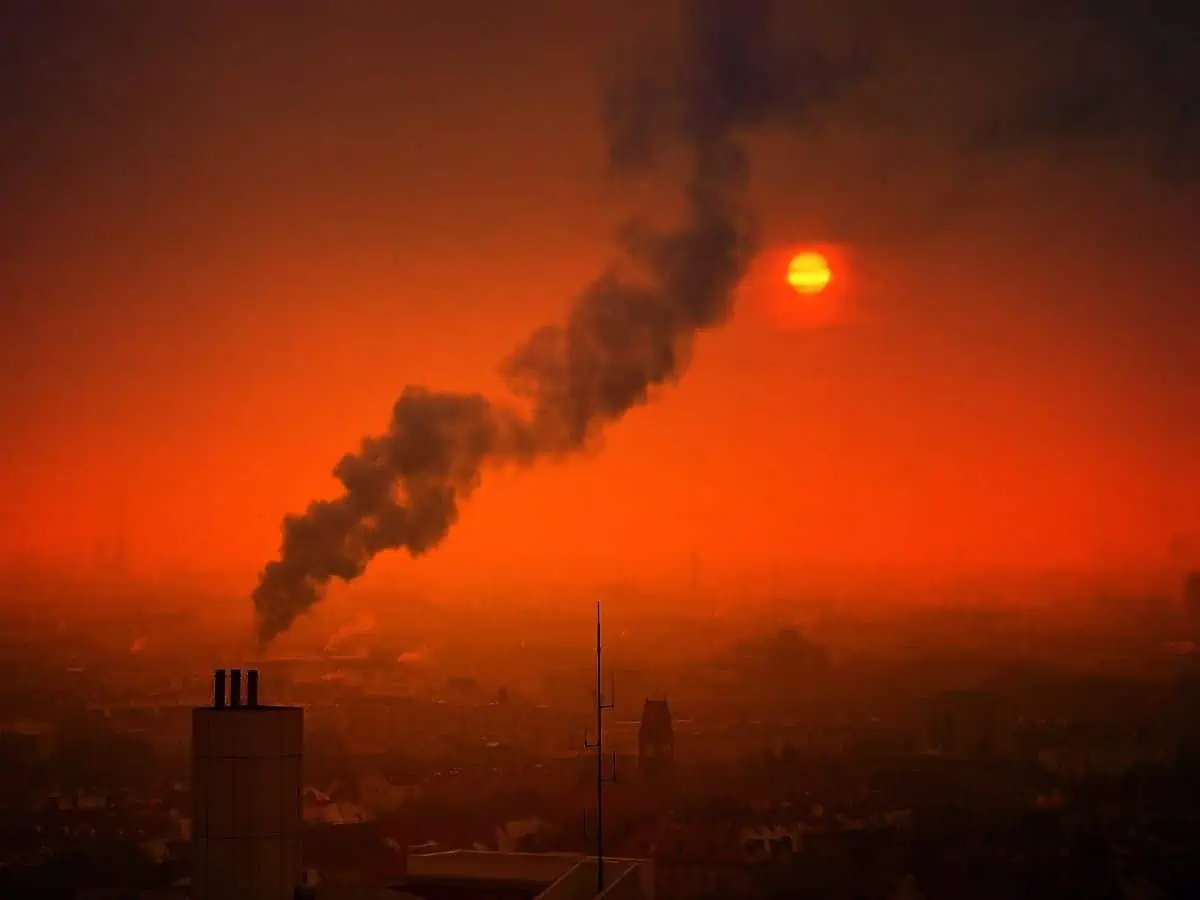
Hyderabad has slipped into its worst air quality phase this year, with several neighbourhoods recording Air Quality Index (AQI) levels above 200 for the first time in 2025. The sudden deterioration, driven by a mix of emissions, construction dust, and weather-related stagnation, has pushed the city into the ‘very poor’ category a zone where prolonged exposure carries serious health risks and raises urgent questions about urban planning and environmental governance.
Monitoring stations across the capital reported steep spikes over the past four days. Data from the national air monitoring network showed that AQI levels at Hyderabad Central University doubled to 209, while locations such as Sanathnagar, Patan Cheru, Jubilee Park, and IITH Kandi also crossed the 200 threshold. An official from the pollution control department noted that particulate matter concentrations had risen “far faster than expected for early winter”, signalling a breakdown in routine pollution management systems.
Experts attribute the rise primarily to vehicular congestion, unregulated construction activity, and emissions from industrial clusters on the city’s periphery. A senior environmental scientist said that changes in wind patterns had trapped pollutants close to the ground, causing smog to accumulate during morning and evening hours. This seasonal inversion effect, which cities like Delhi experience annually, appears to be intensifying in Hyderabad as urbanisation expands and green buffers shrink.
The findings underscore a broader challenge confronting rapidly growing Indian cities: the struggle to balance economic expansion with public health and environmental equity. Hyderabad, long considered less polluted than northern metros, is now confronting the same structural vulnerabilities high dependency on private vehicles, limited enforcement of dust-control guidelines, and rising energy consumption in industrial zones. Poor air quality also disproportionately affects low-income communities living near transport corridors and industrial belts, highlighting the need for inclusive, people-centred mitigation strategies.
Officials warned that without immediate corrective measures from regulating construction sites to accelerating clean mobility adoption the city could inch towards smog episodes resembling those in Delhi. Public health experts estimate that exposure to AQI levels above 200 can be equivalent to inhaling several cigarettes per day, significantly increasing risks for respiratory and cardiovascular illnesses.
Urban planners argue that Hyderabad’s long-term resilience will depend on adopting clearer emission-control frameworks, expanding green public spaces, and strengthening real-time monitoring. Investments in mass transit, low-emission zones, and sustainable city design could reduce pollution while supporting the transition to a zero-carbon urban future. As air quality worsens earlier each winter, the city faces mounting pressure to recalibrate its development model and prioritise healthier, more climate-resilient neighbourhoods.
Hyderabad Air Quality Plunges As Toxic Smog Pushes AQI Beyond 200 Mark