


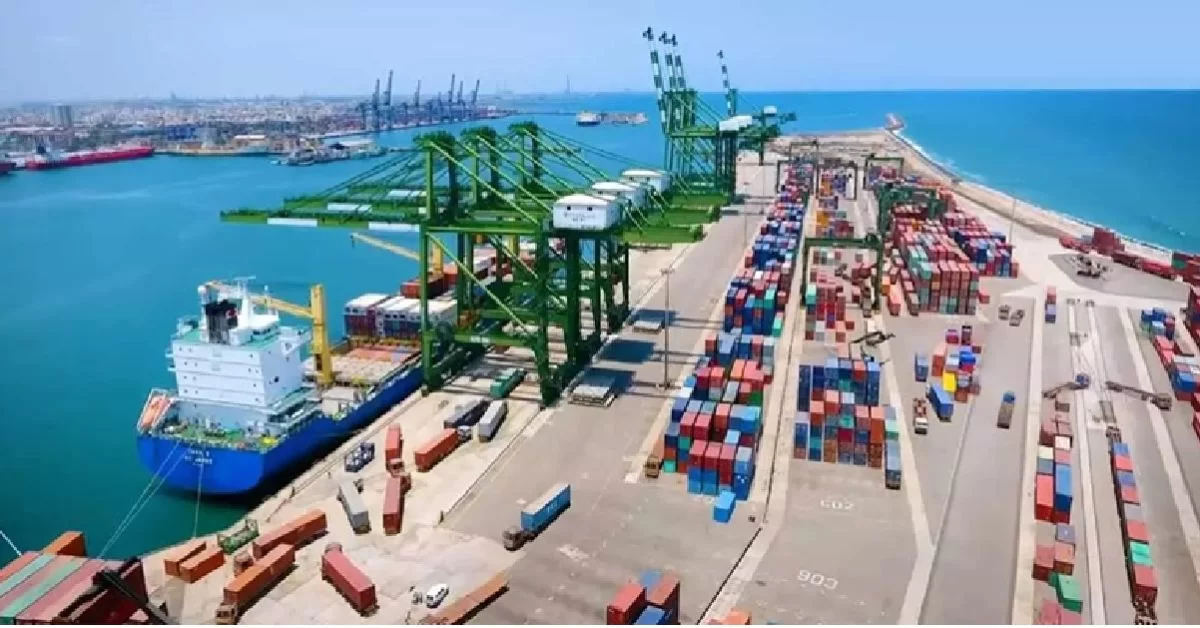
Housing and Urban Development Corporation Ltd. (HUDCO) has signed a Memorandum of Understanding (MoU) with the Jawaharlal Nehru Port Authority (JNPA) for an estimated ₹5,000 crore initiative to finance and develop critical port-linked projects. The collaboration marks HUDCO’s entry into large-scale maritime financing, broadening its role beyond traditional housing and urban infrastructure.
The non-binding agreement, formalised in mid-October, seeks to explore joint opportunities in developing container terminals, cargo berths, and allied port infrastructure at Jawaharlal Nehru Port. The framework will guide both organisations in identifying viable projects that align with India’s port-led growth agenda and the government’s Maritime India Vision 2030. According to senior officials, the proposed development will cover both operational and upcoming terminals at JN Port — including five container terminals, one general cargo berth, and one liquid cargo berth. The financial outlay of around ₹5,000 crore is expected to be mobilised in phases beginning in FY 2025–26. The initiative aims to modernise facilities, improve cargo handling efficiency, and reduce logistics costs — factors that are central to India’s target of transforming its ports into global trade hubs.
Officials clarified that the MoU does not establish a financial or legal partnership. Instead, it serves as a preliminary framework to explore funding models, public-private collaborations, and refinancing mechanisms to accelerate project execution. The partnership highlights a growing recognition of the need for multi-sectoral collaboration in urban and port infrastructure to achieve economic resilience and sustainability. For HUDCO, this step represents a natural extension of its mandate. The corporation, under the Ministry of Housing and Urban Affairs, has been instrumental in financing housing, sanitation, and civic infrastructure projects across India for over five decades. With this agreement, HUDCO is positioning itself as a critical enabler of integrated infrastructure that connects cities with ports — a key requirement for low-emission logistics and sustainable trade corridors.
Experts view this collaboration as a pivotal opportunity to promote green port development. Integration of renewable energy systems, efficient cargo movement, and smart waste management are likely to be part of the upcoming projects. The initiative also complements India’s climate goals by encouraging low-carbon maritime operations, thereby aligning with global sustainability standards. If effectively implemented, the HUDCO–JNPA collaboration could redefine the future of India’s port financing model — creating a replicable template for similar partnerships across other major and minor ports.
Also Read: Delhi Unveils India’s First Vande Bharat Sleeper Train with Aircraft-Style Interiors
