


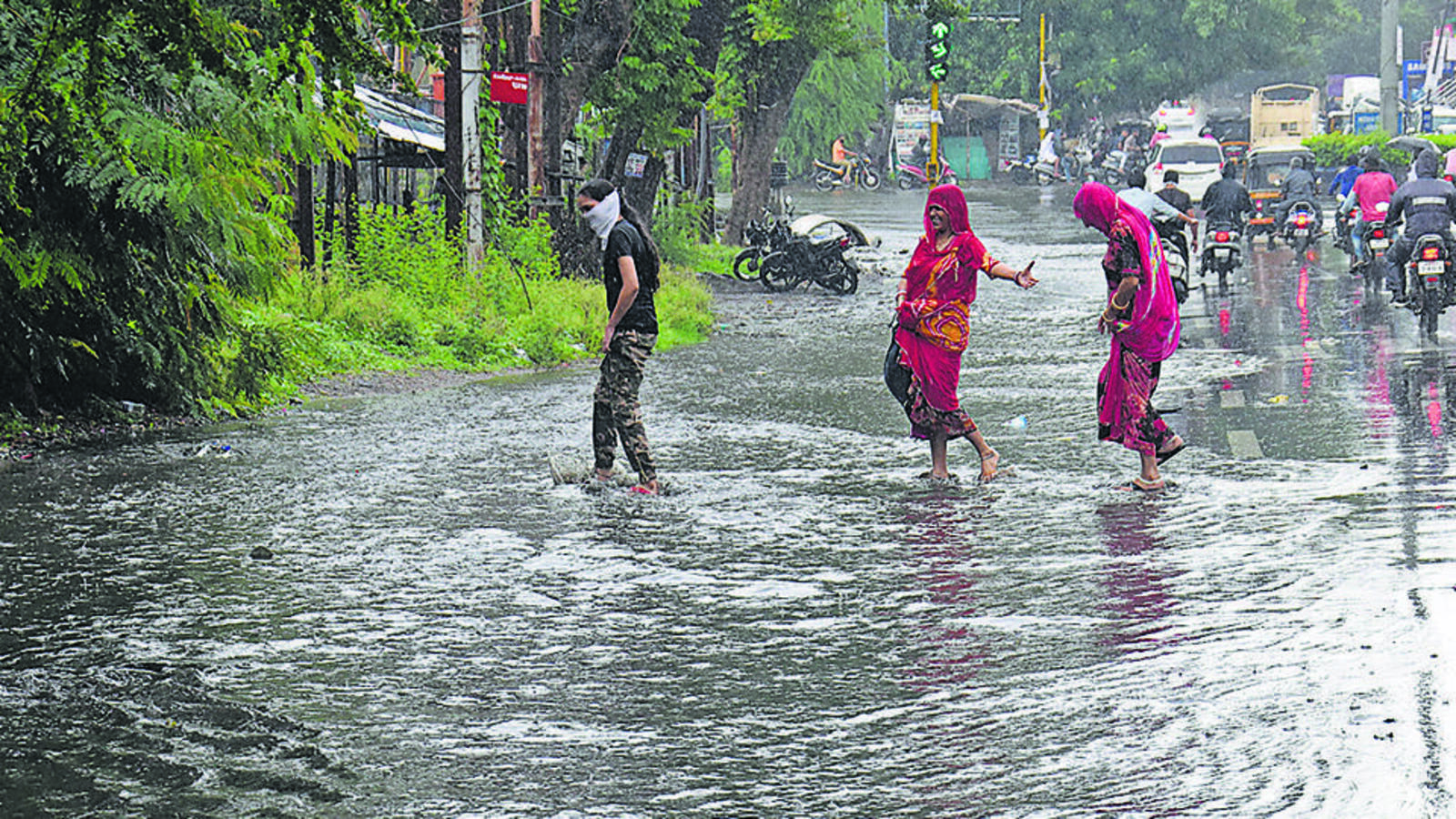
Despite a clear June 15 deadline, flood remediation and infrastructure works in Hinjewadi persist following severe waterlogging on June 7 and 13. Officials from PMRDA and MIDC convened for a second site review on Monday, underscoring the urgency and complexity of urban drainage planning in one of Pune’s fastest-expanding IT corridors.
The recent deluge transformed Hinjewadi’s arterial roads into flood zones, after barricades installed during metro construction by Tata Projects disrupted natural drainage. MIDC identified that these barriers had choked rainfall runoff, causing inundation on one side of the road—a situation now partially resolved after the barricaded segments were removed the following day. However, road repairs and comprehensive drainage realignment remain underway well past PMRDA commissioner’s designated deadline. Local oversight intensified after Hinjewadi IT Park Residents Welfare Association leaders flagged persistent water accumulation even after initial cleanup. One resident noted that while median gaps were reopened and drains cleared, these measures were insufficient to process the estimated 20 crore litres of runoff generated by the surrounding 5,000-acre catchment. He emphasised that restoring natural streams and removing unauthorised constructions are essential for sustainable flood mitigation.
PMRDA and MIDC’s joint CEO reassured stakeholders that the task would be completed within two to three days, citing ongoing clearing operations. Yet, continuous rainfall—delaying road repairs—casts doubt on the timeline, prompting PMRDA to escalate the matter to the chief minister’s office in an imminent progress report. This unfolding scenario reflects broader regional tensions between rapid urbanisation and infrastructure adaptation. Hinjewadi, the site of India’s first IT Park in the mid-90s, has seen its population swell exponentially, straining stormwater networks not designed for such scale. The disruption caused by metro-related barricades illustrates the disconnect between infrastructure expansion and ecological resilience planning. Urban drainage experts caution that reactive interventions—removing barriers and clearing drains—are vital yet inadequate. True flood resilience demands restoration of water channels historically absorbed by local streams. They advocate for integrated blue-green infrastructure, permeable paving, and regulation of construction in sensitive catchment zones. Government bodies have committed to structural upgrades.
The Public Works Department is set to strengthen roads, replace damaged surfaces, and install secondary drainage outlets. Meanwhile, MIDC engineers are conducting flow-capacity analyses to align final repair designs with anticipated monsoon peaks. To deter future blockages, the WLOA and PMRDA are also discussing zoning reforms to limit new obstructions near natural drainage basins. The current crisis underpins equity implications in urban mobility. Flooded roads compromise last-mile connectivity for lower-income workers relying on public transport, two-wheelers, or walking. Addressing drainage issues is therefore not just a technical fix—it is crucial for social access to economic opportunities. Strategic planning can also deliver environmental co-benefits. Revitalised streams double as carbon sinks, urban coolers, and biodiversity corridors—reinforcing PMRDA’s mandate for sustainable, climate-resilient development. Use of native landscaping and natural overflow basins could turn flood challenges into green boosts for Pune’s ecosystem.
As works continue, PMRDA officials have pledged fortnightly inspections and public progress updates to enhance accountability. Proposed community consultation forums aim to bring local residents into the planning process, a move likely to improve maintenance outcomes and build trust in urban governance. In the meantime, commuters and residents are urged to stay informed via official channels and avoid waterlogged stretches for safety. Emergency response protocols are being refreshed, and thematic alerts may be issued via SMS and traffic advisory boards during heavy rains. Hinjewadi’s flood recovery efforts highlight a critical inflection point: whether Pune’s metropolitan authorities can shift from immediate fixes to long-lasting, inclusive water management systems.
Achieving this will require concerted cooperation among PMRDA, MIDC, municipal bodies, environment planners, and local communities. If successful, Hinjewadi could emerge as a regional showcase for eco-sensitive urban redevelopment.
Also Read : Maharashtra Orders Closure of Tourist Spots Amid Rising Monsoon Risk
