


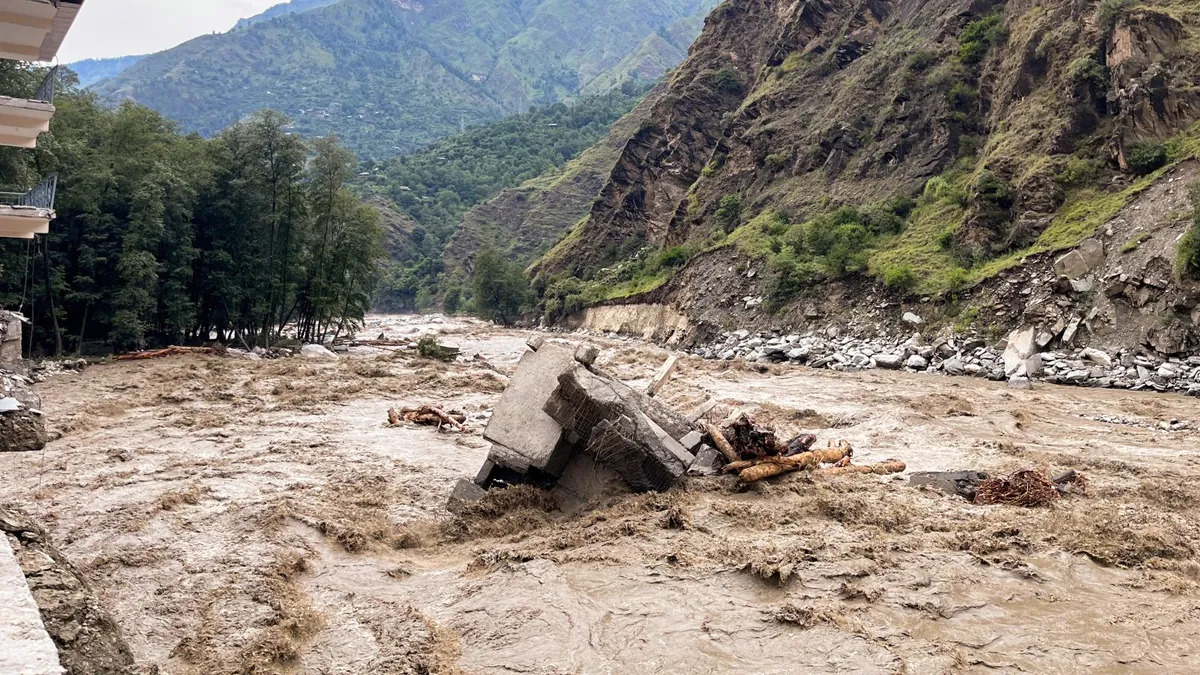
Himachal Pradesh is grappling with widespread disruption as heavy rains have led to the closure of 328 roads, including two vital national highways. This environmental event has not only paralysed vehicular traffic but has also impacted critical infrastructure, leaving communities cut off and without essential services. The ongoing situation highlights the urgent need for a resilient and zero-net-carbon urban and rural infrastructure that can withstand extreme weather events, which are becoming increasingly common due to climate change.
The state’s Emergency Operation Centre has confirmed that the road closures are concentrated in districts like Mandi and Kullu, which have been hit hardest by the rain. A particularly symbolic incident occurred when a fallen tree blocked a major circular road, causing significant inconvenience for students and office workers who rely on buses for their daily commute. While such disruptions are often viewed as temporary, they have a profound impact on the local economy and social fabric, underscoring the necessity of gender-neutral and equitable planning. When transport links are severed, it disproportionately affects the elderly, children, and women, who may have limited mobility options.
Beyond the immediate travel disruption, the monsoon’s impact extends to essential utilities. Authorities have reported that 37 transformers have been affected, leading to power outages, and 181 water supply schemes have been disrupted, posing a severe challenge to public health and sanitation. These cascading failures reveal the vulnerabilities in the state’s infrastructure and the need for a more sustainable and robust approach to development. By adopting eco-friendly construction techniques and investing in smart grids and decentralised water solutions, the state can build a more resilient system that serves its citizens better during and after natural disasters.
The Meteorological Department has issued an orange alert for heavy to very heavy rainfall in several districts, signalling that the worst may not be over. The state has already recorded a 13 per cent surplus in rainfall this monsoon season, leading to 58 flash floods, 30 cloudbursts, and 54 major landslides. With a tragic loss of life and an estimated loss of more than ₹2,000 crore, the human and economic cost of this natural calamity is devastating. The end of this story is a call to action: The state needs to move beyond reactive measures to proactive, sustainable development that serves the long-term interests of the city and society.
Also Read :PMC Launches Road Mitra App To Track And Fix Road Complaints
Himachal Rains Disconnect Hundreds of Roads, Triggering Widespread Disruption
