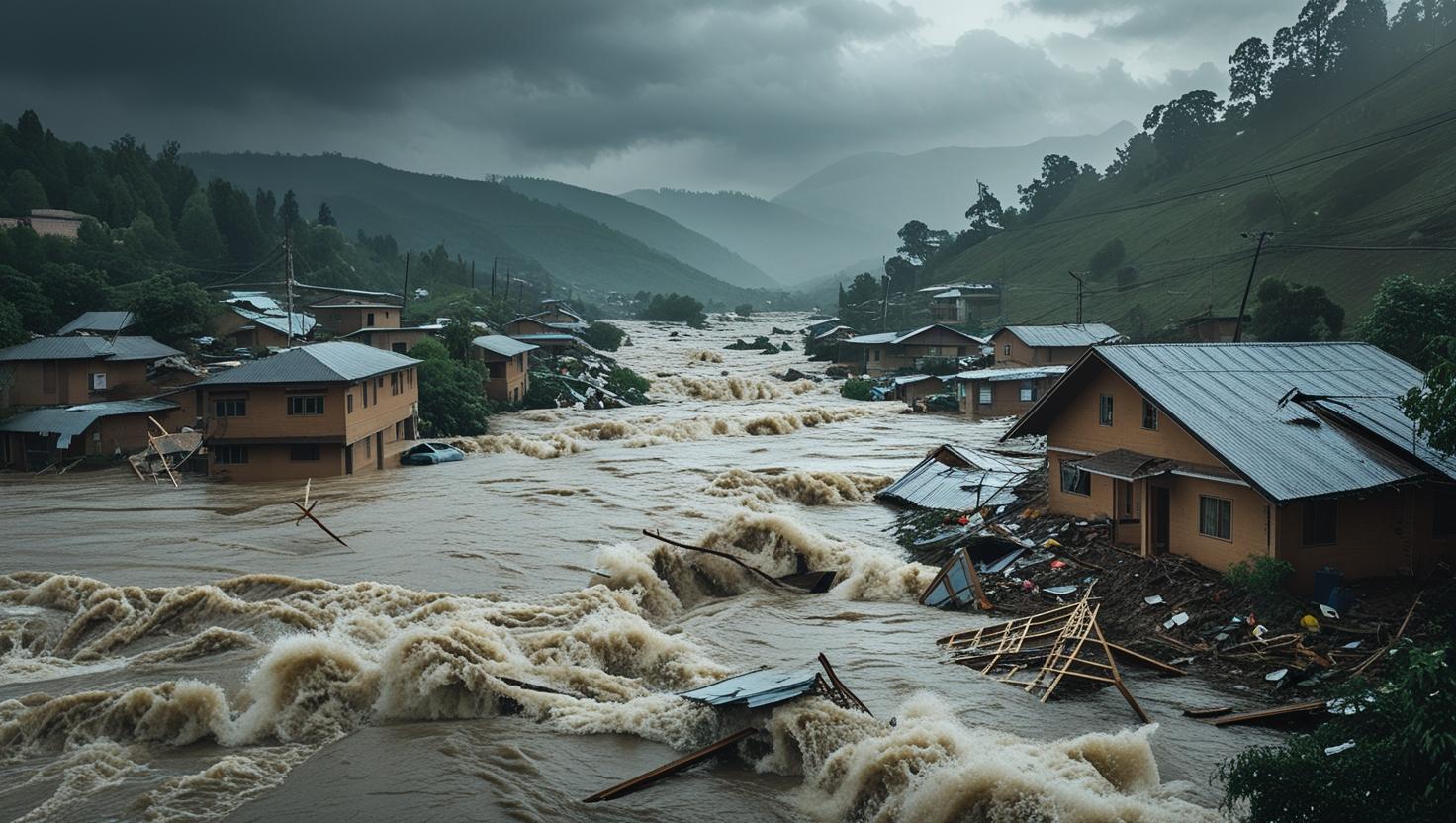
Himachal Pradesh Reels Under Monsoon Fury as Landslides Cloudbursts Leave Trail of Devastation
Himachal Pradesh is facing one of its most severe monsoon disasters in recent years, as torrential rains, landslides, and cloudbursts wreak havoc across Mandi and nearby districts. At least 13 people have been confirmed dead, and 29 others remain missing after 11 cloudbursts, four flash floods, and a major landslide ripped through the hilly terrain on Tuesday. With critical infrastructure damaged, rescue efforts underway, and the weather forecast remaining grim, authorities are grappling with a crisis that underscores the increasing frequency and intensity of climate-related disasters in India’s northern states.
In Mandi, the worst-hit district, rescue teams on Thursday recovered two more bodies from the wreckage, taking the confirmed death toll to 13. Seven bodies were found in Gohar subdivision, five in Thunag, and one in Karsog. The cloudbursts have devastated lives and livelihoods—sweeping away over 150 houses, damaging 104 cattle sheds, destroying 14 bridges, and rendering several key roads impassable. The sudden surge of water also killed 162 cattle and stranded entire communities in remote mountain villages.
The State Emergency Operation Centre (SEOC) confirmed that more than 370 people have been rescued, with five temporary relief camps established to house those displaced by the catastrophe. While weather remains a challenge, teams from the State Disaster Response Force (SDRF), local police, and the Border Roads Organisation (BRO) are engaged in a round-the-clock effort to locate the missing and clear debris.
The India Meteorological Department (IMD) has issued an orange alert for Himachal Pradesh, warning of continued heavy rainfall and possible flash floods in the next 24 to 48 hours. The rainfall is attributed to an active monsoon trough running across central and eastern India, further intensified by an offshore trough along the Maharashtra-Karnataka coastline. With saturated soil and swollen rivers, further landslides remain a looming threat.
The crisis isn’t limited to Himachal. In Uttarakhand, the sacred Kedarnath Yatra was suspended temporarily on Thursday after a landslide struck near Munkatiya, Sonprayag. Debris and boulders blocked the pilgrimage route completely, forcing authorities to halt the yatra and carry out emergency rescues. Several pilgrims returning from Gaurikund were trapped but later evacuated safely by the SDRF. The route remains inaccessible, and the pilgrimage will not resume until clearance operations are completed and weather conditions stabilize.
Meanwhile, Karnataka has been placed under weather watch, with the IMD forecasting heavy to very heavy rainfall across coastal and interior districts for the coming week. Areas including Dakshina Kannada, Udupi, and Uttara Kannada are likely to see “extremely heavy rainfall” at isolated locations, accompanied by strong winds reaching up to 40 km/h. The persistent downpours could trigger localized flooding and traffic disruptions, especially in low-lying coastal belts.
Telangana has also been alerted, with light to moderate rain expected across most districts. Thunderstorms and lightning, accompanied by gusty winds, are forecast through July 6, prompting the state disaster management teams to prepare contingency measures. In Rajasthan, heavy rain caused severe waterlogging in parts of Ajmer, straining the city’s drainage infrastructure. Emergency teams were deployed to pump out floodwaters and restore road access. Meanwhile, Delhi reported a minimum temperature of 27.7°C on Thursday, with light rain and thunderstorms expected during the day. The Air Quality Index (AQI) in the capital was recorded at 70—classified as ‘satisfactory’ by the Central Pollution Control Board.
As climate change accelerates the intensity of monsoons in India, extreme weather events like those witnessed in Himachal Pradesh are becoming more frequent and deadlier. According to data from the IMD, incidents of cloudbursts and landslides in hill states have sharply risen in the last decade, often overwhelming outdated infrastructure and exposing gaps in disaster preparedness. Environmental experts are now calling for urgent reforms in urban planning, especially in vulnerable mountain states. “We cannot treat monsoon disasters as isolated incidents anymore,” said a senior climate scientist from the Indian Institute of Tropical Meteorology. “These events are part of a growing pattern of erratic climate behaviour linked to global warming, and India needs climate-resilient infrastructure, early warning systems, and strong coordination between states.”
As the monsoon continues its sweep across the subcontinent, many states remain on high alert. The Ministry of Home Affairs is reportedly coordinating with state disaster response teams and the National Disaster Management Authority (NDMA) to ensure relief material, rescue support, and emergency shelters are made available wherever needed.
For the people of Mandi and the many others caught in the throes of nature’s fury, recovery will take time. But with warnings of more rain to come, the immediate priority remains saving lives—and preparing for whatever the next storm may bring.