


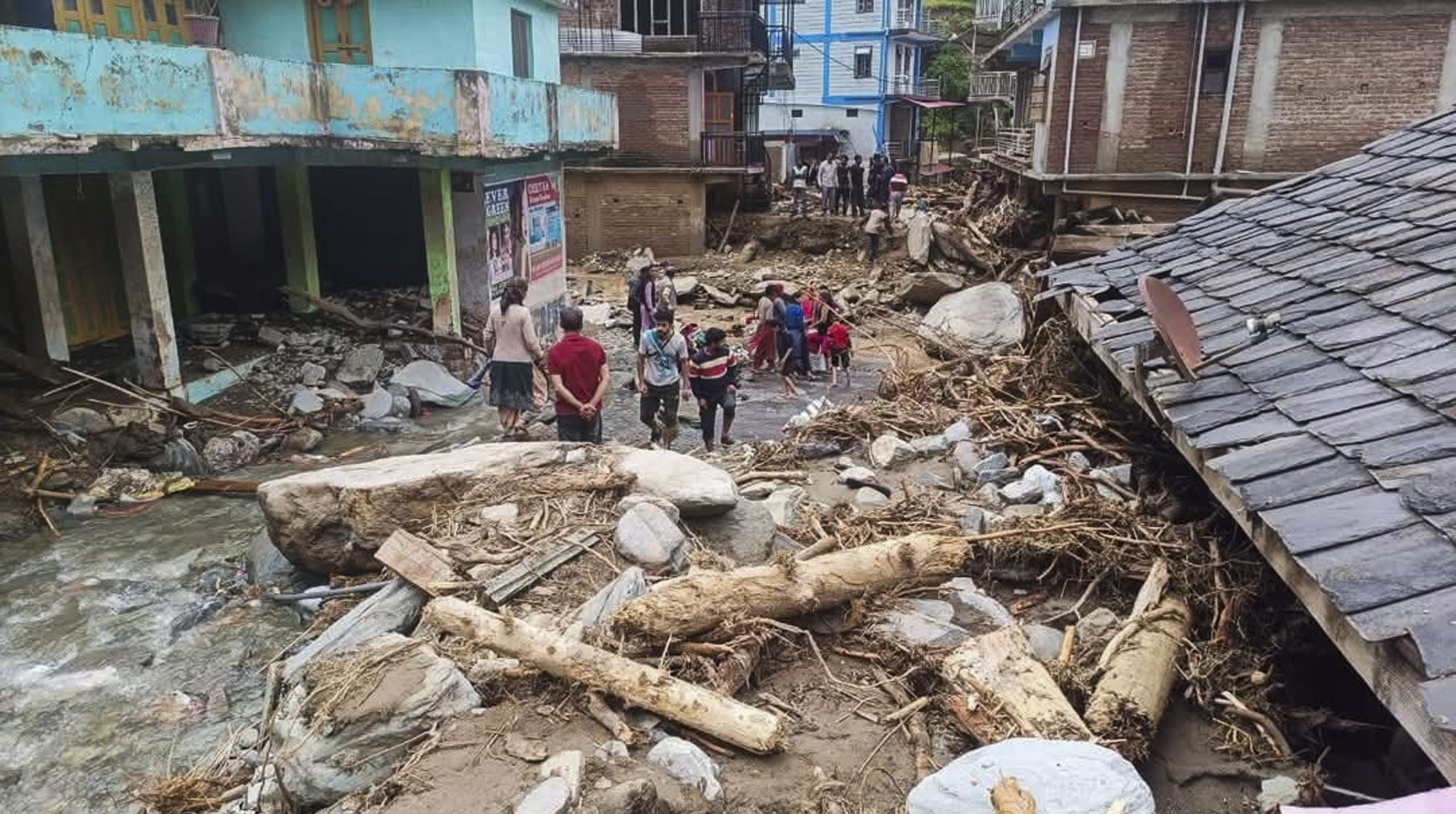
Himachal Pradesh is grappling with widespread disruption as relentless heavy rainfall and subsequent flooding have crippled travel across the state. Numerous roads, including vital national highways, remain impassable due to landslides, while essential services like electricity and water supply have been severely impacted. This escalating crisis underscores the urgent need for robust, climate-resilient infrastructure to safeguard lives and ensure economic stability in the vulnerable Himalayan region.
The mountainous state has witnessed extensive damage, with hundreds of roads rendered inaccessible. In Mandi district alone, 244 routes, including critical stretches of the Chandigarh-Manali National Highway, are blocked by fresh landslides, bringing vehicular movement to a standstill. Similarly, Shimla district has reported over 460 roads and 680 water supply schemes disrupted, illustrating the pervasive nature of the monsoon’s impact across the region. Commuters, local residents, and tourists face immense hardships, with long queues of stranded vehicles and isolated communities struggling to access daily necessities.
Also Watch: “Mumbai will rock, shine and always be India’s best city to live.” In an exclusive, MHADA CEO Sanjeev Jaiswal (IAS) talks about Mumbai’s enduring charm, livability, and the government’s focus on making it affordable for all
Beyond transport, the heavy downpour has inflicted significant damage on critical utilities. Hundreds of power transformers are out of commission, leading to widespread electricity outages, while numerous water supply schemes have ceased functioning, exacerbating the challenges for affected populations. These disruptions not only impede daily life but also pose a substantial threat to the state’s economy, which heavily relies on tourism and seamless road connectivity for trade and commerce. The unpredictable nature of these extreme weather events highlights the fragility of existing infrastructure in the face of a changing climate.
The escalating frequency and intensity of such monsoon-related disasters in Himachal Pradesh are increasingly linked to broader climate change patterns. The region’s delicate geological balance, combined with rapid and often unplanned development, renders it highly susceptible to landslides and flash floods. This situation necessitates a fundamental shift towards proactive, sustainable urban and rural planning that integrates ecological considerations with infrastructure development. Implementing nature-based solutions, such as enhanced drainage systems, slope stabilisation, and increased green cover, is crucial for mitigating future risks.
Authorities are engaged in extensive rescue and road clearance operations, though intermittent rainfall continues to challenge these efforts. Deputy Commissioners across affected districts have issued advisories, urging residents to avoid unnecessary travel and to stay away from riverbanks, as water levels in major rivers like the Beas have risen dangerously. This collective challenge demands a collaborative approach, involving government agencies, local communities, and private stakeholders, to invest in resilient, eco-friendly infrastructure and develop robust early warning systems. Only through such concerted efforts can Himachal Pradesh build a sustainable future, ensuring the safety and well-being of its people and preserving its vital natural ecosystems.
Also Read: Air India Flight AI 2744 Skids Off Mumbai Runway Amid Rain Today
