


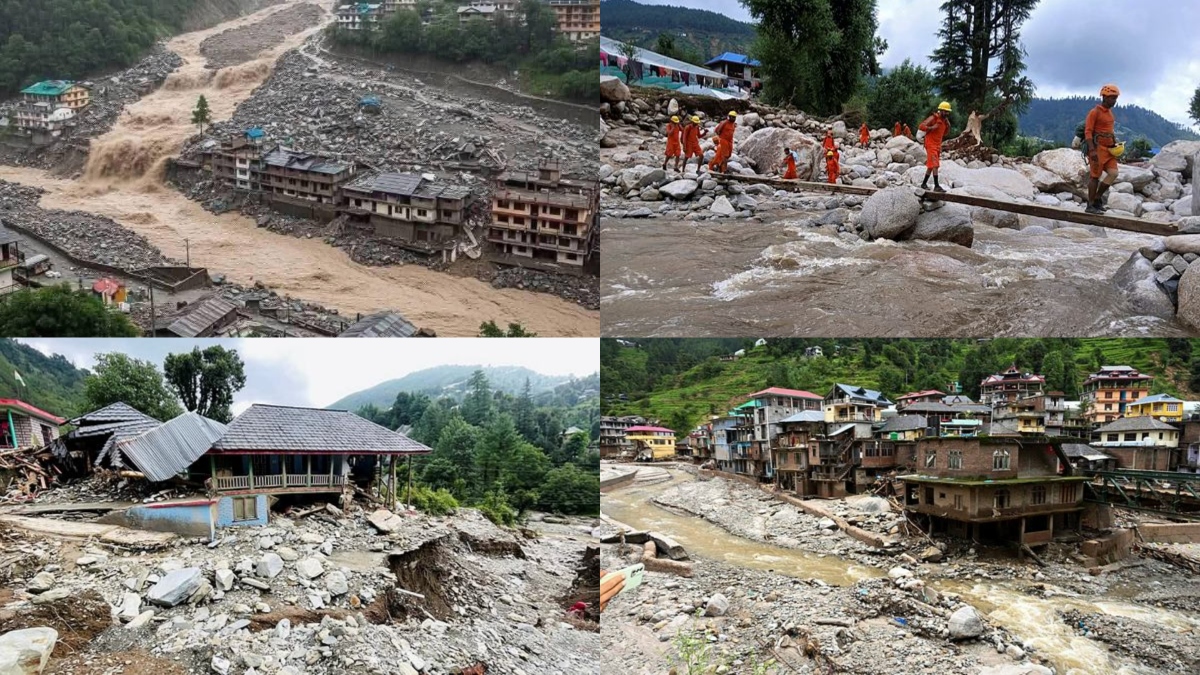
Himachal Pradesh has witnessed a devastating escalation of monsoon disruptions, resulting in the loss of 173 lives since June 20. The State Emergency Operation Centre (SEOC) confirmed 95 deaths due to landslides, flash floods and house collapses, with a further 78 fatalities occurring in road accidents caused by slippery terrain and poor visibility.
The state continues to grapple with extensive damage to critical infrastructure. As of August 2, about 383 roads remain blocked, 747 power distribution transformers are out of service, and 249 water supply schemes have been disrupted, according to SEOC data. Major national highways—NH‑305, NH‑505, NH‑21, and NH‑03—are impassable in key districts like Kullu, Chamba, Mandi, and Una. NH‑505 is shut near Chhatru in Lahaul‑Spiti, while NH‑305 remains closed at Jhed in Kullu, cutting off entire valleys for consecutive days. Interior roads are also inaccessible, hampering rescue and relief missions significantly.
The situation in Una district has become especially critical. A single day’s rainfall of 222.8 mm—an astonishing 1,854% above normal—flooded roads, markets and homes overnight. Schools have shut down, while residents have been advised to avoid water bodies and prepare for extended hardship. Amid the deluge, a cofferdam at the Malana‑I hydroelectric project in Kullu collapsed, triggering flash floods that swept away heavy machinery and infrastructure. Nearby dams including Bajoli Holi and Baira in the Ravi basin and Sainj and Largi barrages on the Beas River have halted power generation due to high silt. The gates of Malana‑II dam remain open following surging water levels. Officials have assured that reservoir levels remain within permissible ranges as of Saturday evening.
Mandi, Kullu, and Chamba districts remain worst affected in terms of both human casualties and public utility disruption. Mandi alone reports the highest number of casualties. Damage to roads, power infrastructure, water schemes and agriculture is estimated at over ₹1,71,495 lakh. In response, state authorities are working round‑the‑clock on road clearance, dam monitoring and restoration of essential services. Yet, persistent rains and unstable terrain continue to impede progress. The State Disaster Management Authority (SDMA) has issued high landslide risk alerts across several rainfall-prone zones, while the India Meteorological Department (IMD) forecasts more rain in affected regions.
Climate analysts warn that increasingly erratic and intense monsoon patterns, exacerbated by climate change, are amplifying risks in vulnerable Himalayan ecosystems. Calls are growing for strengthened infrastructure resilience, better early-warning systems, and climate-sensitive urban planning. As life-threatening blockages and outages persist across the state, Himachal’s monsoon crisis underlines the urgent need for sustainable planning in mountainous regions—where infrastructure fragility, human lives and ecological systems converge.
Also Read : Samruddhi Highway Set to Hit Toll Revenue on Old Routes
