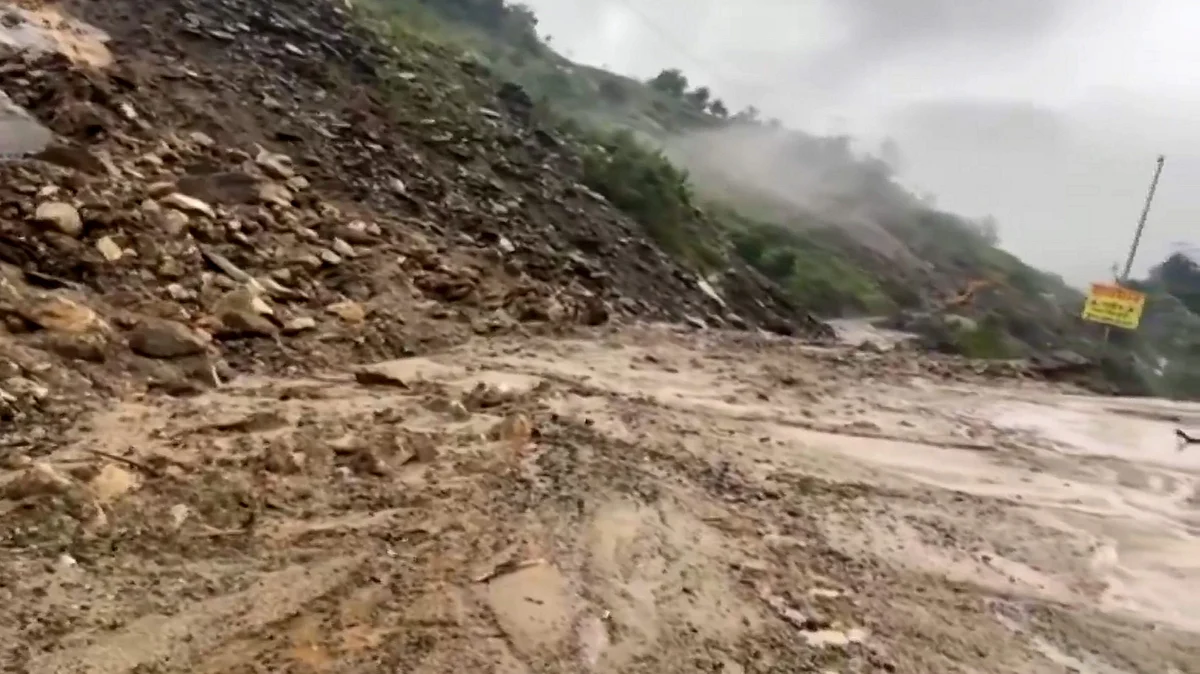
Himachal Landslides Damage Roads Disrupt Travel Across Delhi Punjab Uttarakhand
Relentless monsoon showers have once again exposed the fragile climate resilience of northern India, with the Yamuna river in Delhi breaching the danger mark and devastating floods battering Punjab, Haryana, Himachal Pradesh, Uttarakhand, and Jammu and Kashmir. Over the past 72 hours, incessant rainfall has submerged towns, triggered landslides, and paralysed transport, reminding policymakers of the urgent need for sustainable urban and rural planning.
In Delhi, officials confirmed that the Yamuna swelled beyond safe levels, submerging low-lying neighbourhoods and forcing thousands of residents to evacuate. Metro and road traffic faced heavy disruption as waterlogging brought mobility to a standstill. The overflowing river, already infamous for pollution and encroachment, has now turned into a symbol of how climate stress is compounding urban vulnerabilities.Punjab and Haryana have witnessed widespread flooding, with farmlands submerged and critical crops destroyed. Farmers and experts warn that the economic setback could be significant, with food supply chains once again under strain. The loss of standing crops not only threatens rural livelihoods but also intensifies food inflation pressures in urban markets. Officials on the ground described the situation as a humanitarian crisis, with relief camps set up to accommodate displaced families.
In the Himalayan states, the picture is grimmer. Landslides in Himachal Pradesh and Uttarakhand have washed away roads and cut off remote villages. Officials report that major highways have been blocked, hampering rescue operations and isolating mountain communities. In Jammu and Kashmir, heavy rains have destabilised fragile slopes, raising fresh fears about the safety of hillside settlements and hydropower infrastructure.Urban experts argue that the recurring floods and landslides are not merely “natural” disasters but consequences of years of unchecked construction, deforestation, and inadequate drainage planning. Rapid urbanisation in Delhi-NCR, coupled with the erosion of river floodplains, has magnified the risks posed by seasonal monsoons. Similarly, the fragile ecology of the Himalayas has been compromised by unplanned road projects and quarrying, leaving communities more vulnerable each year.
Officials emphasised that disaster response measures are underway, with rescue forces deployed and advisories issued across the affected states. However, experts underline that the long-term solution lies in building climate-resilient cities and eco-sensitive infrastructure. Strengthening embankments, investing in rainwater harvesting, and restoring wetlands could significantly reduce the scale of devastation.The current spell of monsoon fury has once again highlighted the urgency of rethinking urban and environmental policies. As climate change intensifies rainfall patterns, the need for zero-carbon, sustainable, and equitable urban planning is no longer a matter of choice but of survival for India’s most vulnerable populations.