


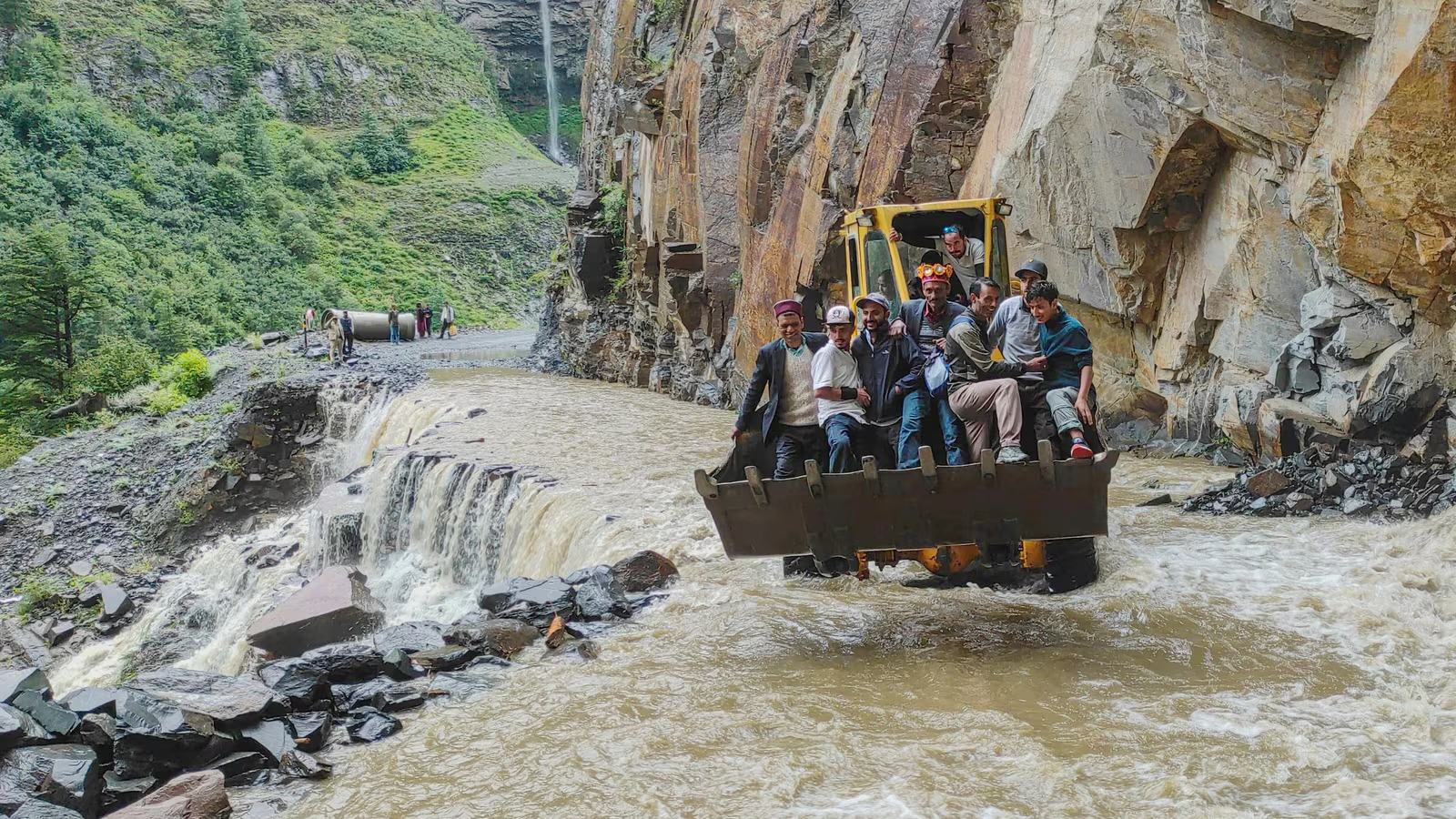
Severe monsoon rains have once again brought large parts of Himachal Pradesh to a halt, with flash floods in the Malana region washing away vehicles and prompting the closure of over 400 roads across the state. The breach in the cofferdam of the Malana-II Hydropower Project triggered fast-moving floods that swept away construction machinery and vehicles, including a dumper truck, a rock breaker, and a car, into the Malana river.
In Mandi district alone, more than 170 roads remain closed, while over 100 roadways have been disrupted in Chamba, according to the State Emergency Operation Centre. The Beas River and its tributaries have risen to alarming levels, compromising the structural safety of a bridge near Sujanpur Tira in Hamirpur district, where significant cracks have appeared. Una district, which shares its border with Punjab, witnessed the heaviest rainfall, with the meteorological department recording an extraordinary 260.8 mm in a 24-hour span. Flooded roads and submerged markets have forced local authorities to shut down educational institutions until further notice. The Chandigarh-Dharamshala highway also witnessed waterlogging and was briefly closed to traffic.
State officials have confirmed a partial collapse of the Malana dam’s temporary structure, contributing to the downstream flood surge. Videos widely circulated on social media showed heavy vehicles being swept away, highlighting the scale of devastation in the remote hilly region. The deputy chief minister confirmed that the administration remains on high alert. District authorities have been instructed to focus on the safety of residents while launching evacuation and relief measures in the most affected zones. Since the monsoon’s arrival on June 20, Himachal Pradesh has suffered damages amounting to ₹1,692 crore, with at least 101 deaths recorded in weather-related incidents. An additional 36 people remain missing. The monsoon has also destroyed or damaged more than 1,600 homes across the state and triggered 51 flash floods, 28 cloudbursts, and 45 major landslides.
Officials from the disaster management department say ongoing assessments are being conducted, while relief materials are being airlifted to cut-off areas. The Governor visited flood-affected areas in Mandi to review relief operations and extend support to impacted communities. As unpredictable rainfall patterns become increasingly frequent in the Himalayas, experts suggest that such extreme events are a wake-up call for long-term climate adaptation, sustainable hydropower planning, and reinforced disaster preparedness—especially in ecologically sensitive zones like Malana.
Also Read : Mumbai Eight Lane Expressway Nears Completion From Marine Drive To Worli
