


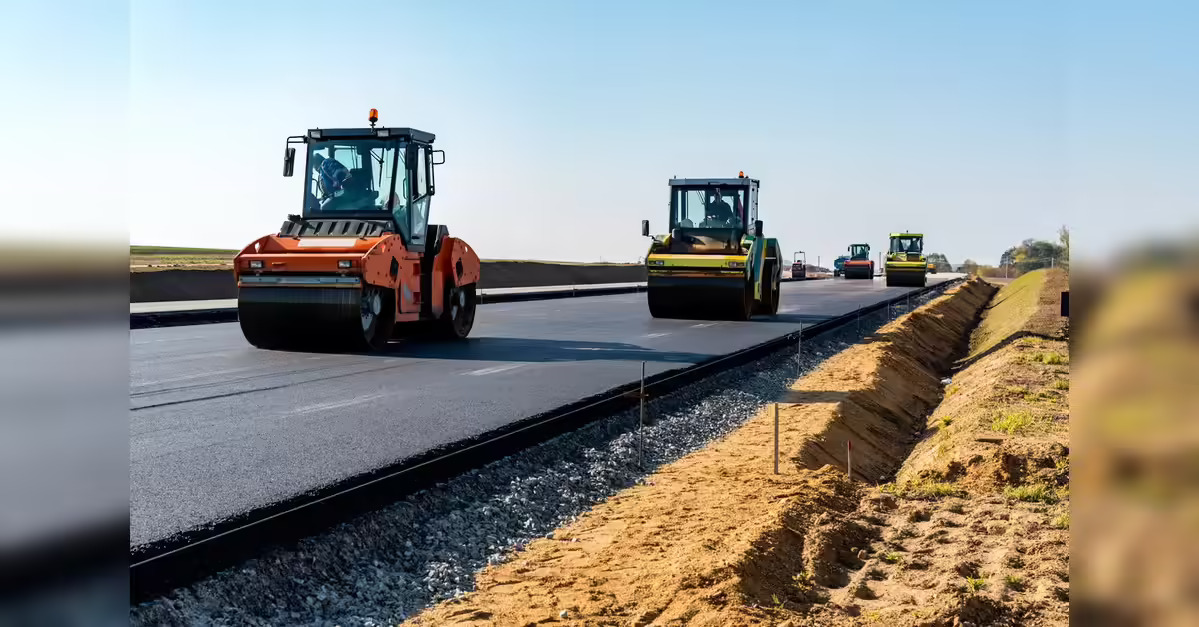
India’s highway development programme, once hailed as the backbone of economic expansion and mobility, is expected to lose steam in the coming fiscal year. Industry estimates suggest that the pace of construction could fall to 27 kilometres per day in FY26, the lowest in nearly half a decade. Sectoral experts attribute this slowdown to delays in clearances for Hybrid Annuity Model (HAM) projects and a fall in project awards, both of which have dragged momentum despite the government’s continued push for infrastructure.
The highway sector has historically witnessed fluctuating performance. After a robust recovery in FY21, when daily construction touched a record 37 kilometres, the momentum began tapering. By FY23, the average slipped to 29–30 km a day. FY24 brought a temporary revival, with execution improving to 34 km per day, but the pace could not be sustained into FY25. The declining trajectory, according to analysts, is symptomatic of larger challenges in infrastructure development — procedural bottlenecks, environmental approvals, and land acquisition hurdles. These delays often inflate project timelines and cost structures, eroding efficiency in the long run.
Despite execution woes, road usage trends tell a different story. Toll road traffic is expected to grow at a stable 7 per cent in FY26, driven by domestic coal movement, expansion of multi-modal logistics, and continued industrial corridor development. Analysts note that freight demand, which forms the backbone of toll collections, remains resilient, offering a steady revenue stream to concessionaires. Experts also highlight that sustainable infrastructure is becoming increasingly central to India’s highway planning. With global commitments to reduce carbon emissions, the adoption of greener materials, digital monitoring, and integrated logistics corridors is expected to redefine the way road infrastructure evolves over the next decade.
For the government, the challenge lies in balancing execution speed with sustainability imperatives. Faster road building has undeniable benefits — reduced travel time, lower logistics costs, and improved connectivity to underdeveloped regions. However, the slowdown in FY26 is a reminder that robust infrastructure requires not just speed, but also resilience against procedural and environmental bottlenecks. The highway sector remains a critical pillar of India’s economic growth story. While near-term challenges may weigh on execution, analysts believe that long-term demand fundamentals, coupled with policy recalibration, can restore momentum in the coming years.
Also Read : Jammu Rail Division Runs Two Special Trains Assisting Three Thousand Stranded Passengers
