


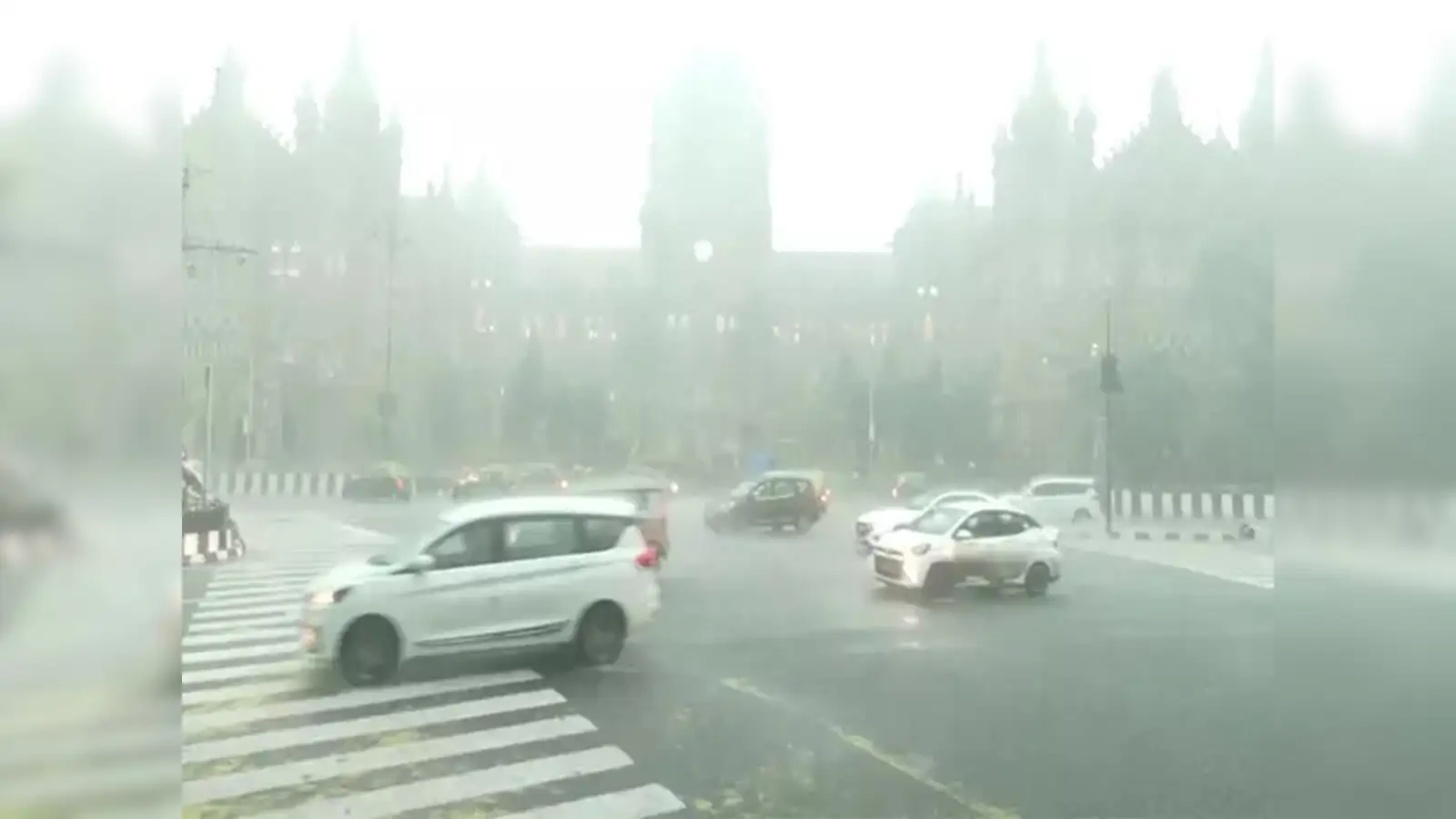
India Meteorological Department (IMD) has forecast moderate to heavy rainfall in the days ahead, raising concerns about renewed waterlogging and transport delays across the city.
While the early hours of Tuesday brought temporary relief with reduced showers and partly operational public transport, officials have warned that more rain is likely to lash the city and its adjoining districts. The IMD has predicted cloudy skies accompanied by thunderstorms, gusty winds, and intense rainfall, particularly during peak tide hours. Monday’s deluge left a visible impact on the metropolis. Several areas in South Mumbai, including high-end neighbourhoods such as Peddar Road and Nepean Sea Road, faced unexpected flooding, an indicator of the growing vulnerability of even the city’s most developed zones to extreme weather events. The IMD recorded 106 mm of rainfall in a 24-hour period in the city, with Nariman Point receiving the highest at 252 mm between Sunday night and late Monday morning. Other heavily affected areas included the BMC headquarters zone, which saw 216 mm, and the Colaba pumping station area, which logged 207 mm.
The consequences of the rainfall rippled across Mumbai’s core transport systems. Suburban train services, which carry nearly 7.5 million commuters daily, were suspended on some routes due to waterlogged tracks. Although services resumed by Tuesday morning with only minor delays, officials stated that preparedness remained high for possible fresh disruptions. Buses operated by the Brihanmumbai Electric Supply and Transport (BEST) Undertaking and metro services were also partially affected. A key infrastructure point that came under strain was the recently inaugurated Acharya Atre Chowk metro station at Worli Naka, which was forced to shut temporarily after rainwater entered the premises. This raised fresh questions about the flood-readiness of newly commissioned transport infrastructure, especially in a city frequently exposed to high-intensity rainfall.
Meanwhile, visuals from Khar’s Swami Vivekananda Road near National College went viral on social media, showing knee-deep water with vehicles and pedestrians navigating submerged stretches. Several residents voiced concerns about recurring civic apathy in dealing with drainage management and urban flood control. According to municipal officials, the waterlogging occurred despite pre-monsoon desilting operations carried out over the past month. Experts warn that Mumbai’s dense urban landscape, ageing drainage systems, and ongoing real estate construction continue to compound the city’s flood risk. Climate analysts argue that unplanned construction in low-lying coastal belts, alongside the reclamation of wetlands and natural buffers, has reduced the city’s capacity to absorb intense rainfall.
With more showers expected, authorities are keeping a close watch on high tide timings. The civic body has issued an alert for two high tides expected on Tuesday — one at 12:13 pm with a height of 4.88 metres, and another at 11:56 pm reaching 4.18 metres. These tidal surges, combined with continued rainfall, increase the likelihood of flooding, especially in low-lying pockets where drainage is already overwhelmed. Environmental advocates and urban planners have reiterated calls for long-term resilience strategies that focus on sustainable urban design and improved stormwater infrastructure. They also emphasise the need to protect natural drainage ecosystems, such as mangroves and floodplains, which serve as vital buffers during monsoon surges.
While Mumbai may have temporarily regained some normalcy, the threat of fresh rainfall looms large, underscoring the urgency for adaptive climate infrastructure. The coming days will be a test of both preparedness and policy — a reminder that climate-resilient cities are not just about rapid urban development, but about systems that can withstand the pressures of a changing climate.
Also Read : Mumbai Faces Earliest Monsoon in 75 Years Severe Flooding Disrupts City
