


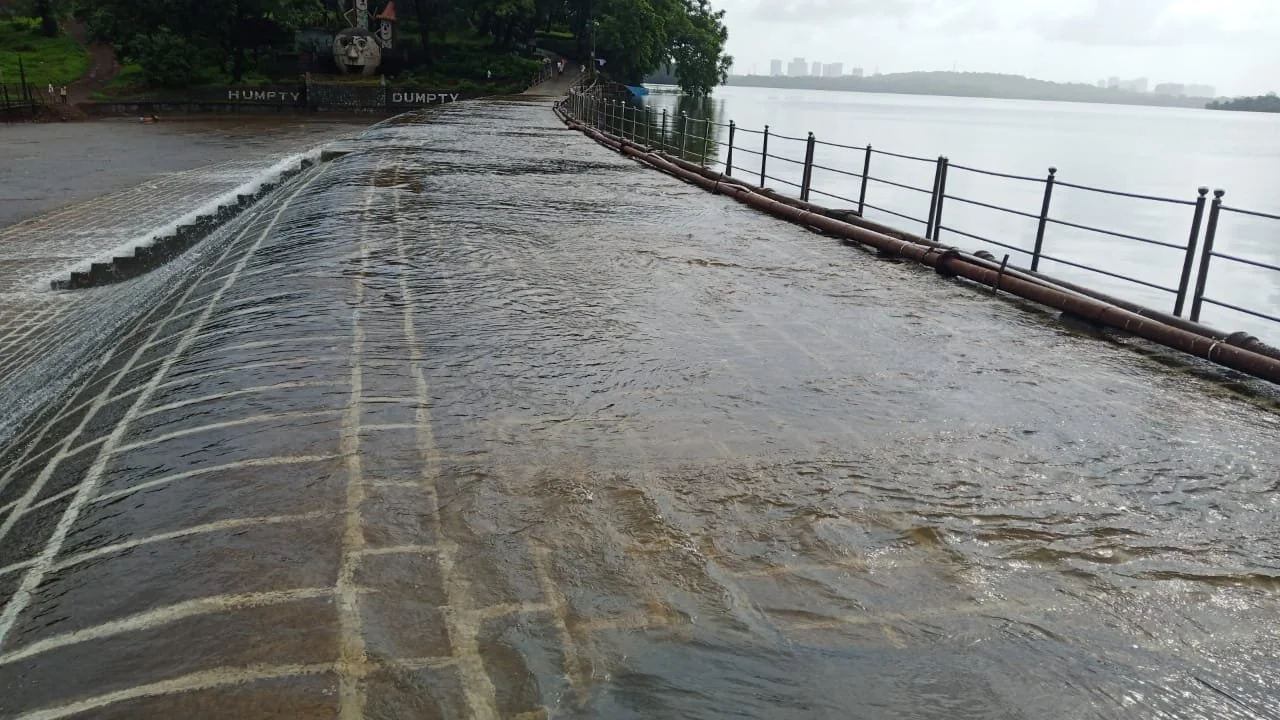
Mumbai’s seven lakes have augmented their live storage capacity to 74.47% as of July 12, 2025, which is an improvement from last year’s figure of 27.65%. This improvement can be seen from Bhatsa, Upper Vaitarna, and Modak Sagar reservoirs, which are all showing improved water levels. Currently, the combined storage of all seven lakes stands at 10.77 lakh million litres, which is still short of the target of 14.47 lakh million litres.
The Vaitrana group, Vaitaranang Mod, Ak Sagar, Upper Vaitarana, Tansa, and Middle Vaitarana display the highest water levels among all groups. They are currently at 85.56% which is over 9% higher than the last data recorded. More positively, tributary reservoirs like Tulsi are showing a consistent increase in water level, with Tulsi currently at 93.63% filled. Out of all the reservoirs, Bhatsa remains the largest as it provides around 4.66 lakh ML of water to maintain 65.01% of its capacity, which is 7.19 lakh ML. The monsoon rains have caused significant increases in the water reservoirs, particularly with the rain received on July 11. Modak Sagar is receiving 34 mm, Tansa with 22 mm, while Bhatsa and Vihar are recording 23 and 6 mm, respectively. Upper Vaitarna did not receive any rain on that day. So far, for this year, the cumulative monsoon rainfall for the city, as recorded in Bhandup Complex, stands at 712 mm.
While the water levels are rising, the BMC has been very careful with the management of water discharges to avoid any possible floods further downstream. Modak Sagar overflowed on July 9, and both Upper and Middle Vaitarna have been discharging water since the beginning of the month. Through these actions, coupled with proper city administration, there is increased certainty regarding the balance in the water systems of the city so that the need for water rationing will be minimal in the future. With proper planning and structured weather resource management, Mumbai can go on to gain a more positive overall environmental climate while proving how such planned resource allocation greatly benefits urban settings. Furthermore, the city serves as a model for how the rest of the country can safeguard water resources for generations to come while remaining adaptable to sudden shifts in climate.
Also Read : Mulund Swimming Pool Faces Two Year Closure Amid Ongoing Civic Renovation Works
