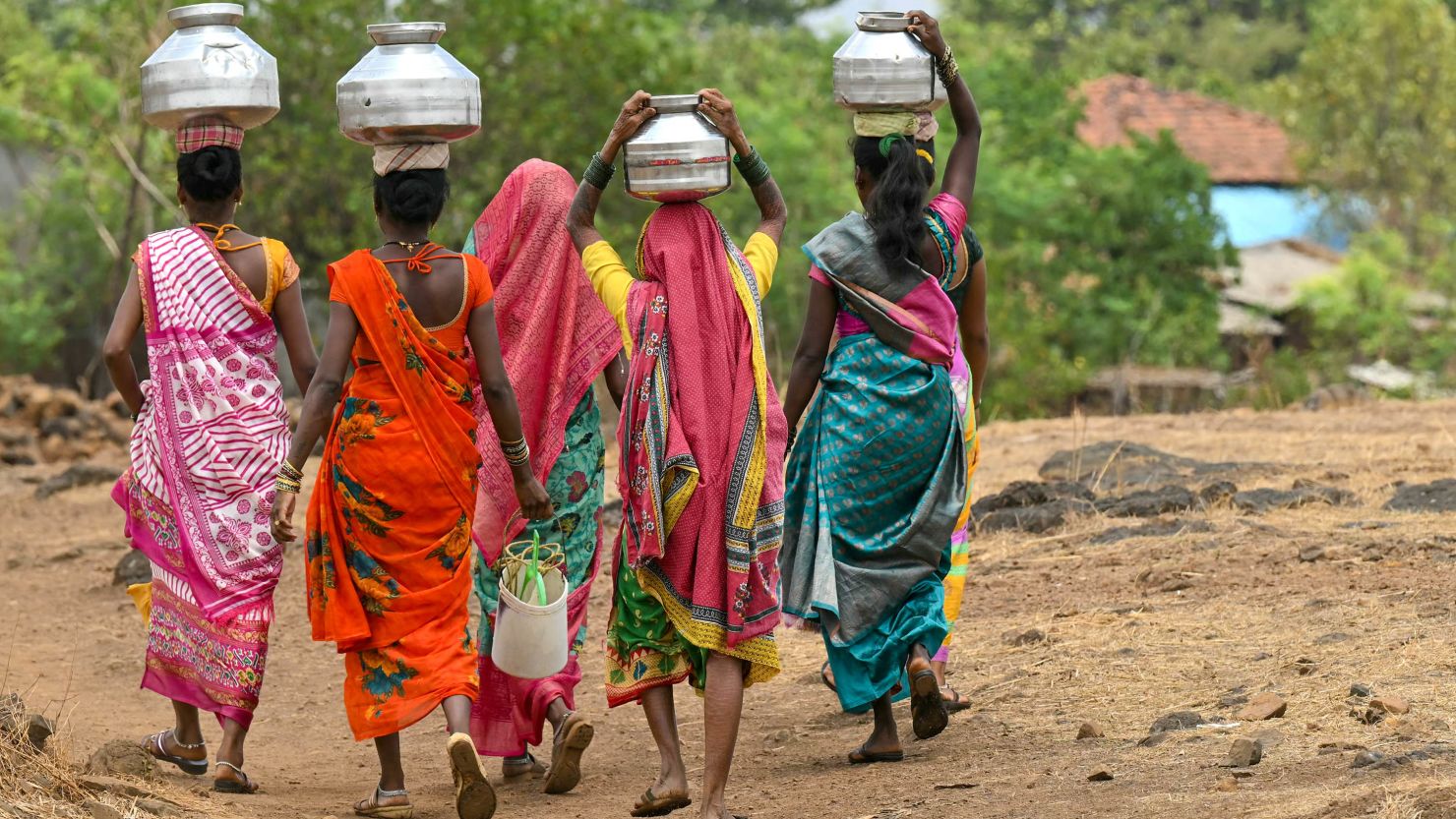
In Maharashtra’s Solapur district, the Dombari community — part of India’s nomadic and denotified tribes (NT-DNTs) — is grappling with life-threatening consequences of rising heatwaves amid extreme poverty and social exclusion.
With no land rights or access to village water sources, they must travel up to six kilometres daily under scorching sun just to fetch a few pots of water. Denied access to taps and wells by upper-caste residents of Manewadi village, the Dombaris rely on the charity of nearby farmers who cap their water access at eight pots. Beyond that, they must labour in fields or homes for hours, collecting cow dung or chopping firewood. Efforts to install public water tanks failed when the tanks stopped functioning after two months, leaving the community no choice but to ration every drop. “We drink less, skip baths, and our children shower only once a week,” said Ramesh Shinde, a resident of the Dombari basti. Community members, including children, haul heavy water pots in 45°C heat, with some reporting frequent blackouts and headaches. “We count every drop,” added Sangeeta Shinde. As India experiences more intense summers due to climate change, the risks to NT-DNTs have intensified. These communities, who largely survive on outdoor labour — from performing acrobatics and stone work to hawking goods on the street — are particularly vulnerable. With over 95% of them working outdoors, the heat directly threatens their health and earnings.
Inadequate housing compounds the crisis. Makeshift huts fashioned from plastic, sarees, or tin sheets offer little relief from the heat. Most NT-DNT families lack toilets, electricity, or even fans. “After 10 am, we can’t stay indoors because the tin gets too hot. We sit under trees till evening,” said Ganesh Shinde. In cities like Mumbai, women from the Pardhi community live on footpaths. They sleep outside to escape the stifling heat but remain vulnerable to harassment. “Police tell us not to sleep on roads, but where else can we go?” asked Balibai, a migrant from Nanded. Food security is also precarious. Without refrigerators, families are forced to consume stale food, risking health issues. “I had to skip my own treatment after we fell ill from spoiled curry,” said Suman Pawar, a farm worker in Pune. Nutritious, cooling foods like fruits and curd are unaffordable luxuries. Despite their vulnerability, NT-DNTs remain absent from heat action plans and climate adaptation policies. Researchers and activists say the lack of data and political will has made these communities invisible in the public health discourse. “Their daily struggle leaves no room to prioritise heat stress,” said PhD scholar Sagar Naik.
The Mariwala Health Initiative found that marginalised groups like Dalits and tribals in Rajasthan suffer disproportionately in the heat — with impacts ranging from physical illnesses to deteriorating mental health. Yet NT-DNT groups in Maharashtra face similar risks with little to no institutional recognition or relief. As heatwaves intensify and policy gaps persist, the survival of nomadic communities hangs by a thread — left to endure a climate crisis they did not create but are paying the highest price for.