


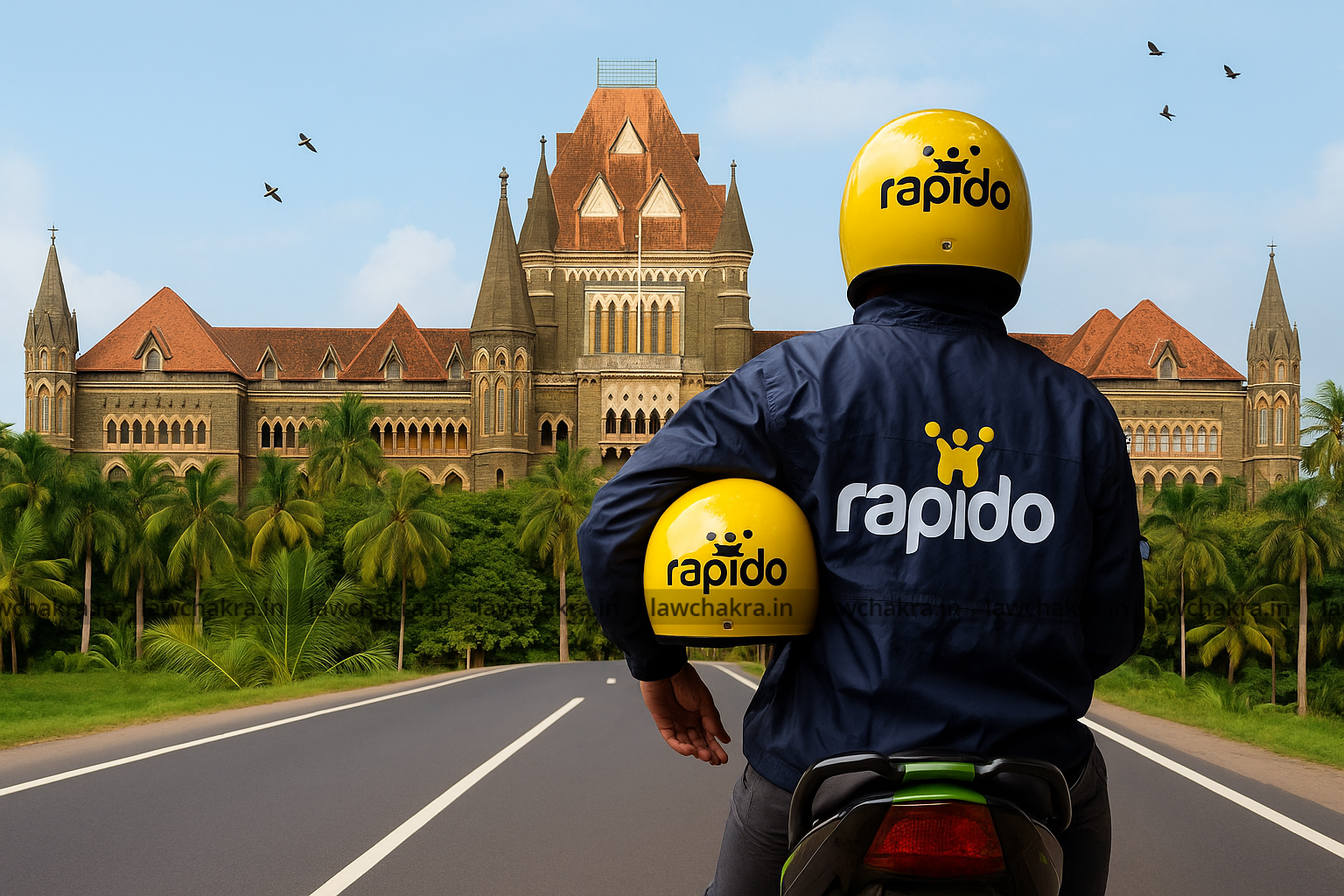
Bombay High Court has declined to entertain a petition filed by a group of auto-rickshaw drivers seeking restrictions on the operation of bike taxis in Mumbai. The court’s refusal came with pointed remarks criticising the traditional public transport operators for fostering monopolistic behaviour and failing to adapt to commuter needs.
A bench of Justices Revati Mohite Dere and Neela Gokhale observed that the petition appeared to be a veiled attempt at protecting entrenched interests, rather than a genuine concern for regulatory compliance. The plea, filed by four rickshaw drivers, alleged that bike taxis, particularly those operated by aggregator platforms, were using private registration vehicles (white number plates) instead of commercial ones (yellow plates), thereby violating the law and affecting their livelihoods. However, the court was unconvinced by the arguments, and went further to challenge the public perception of conventional transport services. The judges remarked that it was not uncommon for commuters to face harassment from auto and taxi drivers, citing issues like passenger refusals, overcharging, and cartelisation. “Try catching a rickshaw during the monsoon,” the bench observed, underscoring the routine inconvenience faced by citizens.
The bench also questioned the petitioners’ underlying motive, stating that their objective seemed more about discouraging competition than promoting lawful conduct. “There cannot be a monopoly. If a single person has to travel, it is better to take a bike than an auto or taxi,” the court noted, asserting the right of commuters to choose efficient and affordable options. The hearing came shortly after the Maharashtra government formally notified the Bike Taxi Rules 2025 on July 4, paving the way for the legal operation of bike taxis across the state. The rules introduce a licensing and compliance framework for app-based two-wheeler taxis, ensuring they meet safety, operational, and environmental standards.
Despite this regulatory progress, the petitioners argued that bike taxis continued to operate without proper commercial permits. However, the court dismissed these claims as a selective interpretation of the law, emphasising that the emergence of alternative modes of transport was a response to long-standing inefficiencies in the auto-rickshaw and taxi sectors. The bench added that citizens had turned to services like Rapido and Uber Moto because of the unreliability of kaali-peeli taxis and autos. “This will stop only when you stop refusing passengers,” the judges said, urging introspection within the traditional transport community.
Ultimately, the court’s clear stance reaffirmed support for diversified and tech-driven transport solutions that align with the broader goals of decongestion, last-mile connectivity, and sustainable city planning.
Also Read : BMC Demolishes Illegal Kamala Mills Restaurants And Cancels Both Operating Licences
