



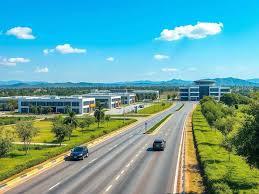
A new industrial ecosystem in Haryana’s Jhirka Valley is drawing significant private-sector commitments, signalling renewed confidence in India’s manufacturing and logistics corridors. LML Realty, the industrial and urban development arm of the LML Group, announced that its upcoming LML Industrial Park is expected to attract cumulative investments of over Rs 1,000 crore from more than 50 companies across sectors including manufacturing, logistics, chemicals and engineering.
The planned industrial park is being framed as a holistic ecosystem rather than a cluster of standalone facilities. According to developers, effort has been made to embed core infrastructure such as utilities, internal mobility networks, compliance-ready frameworks and scalable layouts at the outset. This “infrastructure-before-density” approach aims to reduce lifecycle operating costs and avoid retrofitting inefficiencies that frequently afflict ad hoc industrial parks. (Construction World) Among the early corporate commitments are firms such as Hindustan Rasayan Pvt Ltd, VAAN Global Energy, ASA Infra Logistics Pvt Ltd and Shree Krishna Chemicals, alongside 35+ other companies from allied sectors. This diverse participation reflects both broad-based demand and growing investor confidence in Jhirka’s locational advantages within the National Capital Region (NCR) industrial belt. Industrial planners view such parks as catalysts for regional job creation and manufacturing competitiveness. By clustering units with shared logistics and connective infrastructure, these developments can drive supply chain efficiencies particularly in sectors where proximity to roads, rail links and metropolises reduces lead times and transport costs. Market analysts note that demand clusters in and around NCR continue to attract industry owing to strong domestic consumption, export potential and the presence of tertiary business services.
While the headline investment figure highlights aggregated capital inflow, the broader narrative is about ecosystem formation. Specialists argue that predictable expansion pathways and robust services including reliable power, water and regulatory compliance are essential in sustaining industrial growth without overburdening civic systems. If well executed, the development could bolster local economies while aligning with state and national manufacturing strategies, including “Make in India” and infrastructure-led growth objectives. However, industrial expansion in peri-urban areas such as Jhirka also brings challenges. Urban planners emphasise the importance of managing environmental impacts like wastewater discharge, emissions and land use conflict with agricultural zones. Ensuring that growth adheres to sustainability benchmarks and does not compromise habitat quality will be important as the park takes shape.
For now, the scale of initial commitments suggests that companies see value in a planned park model that balances cost, connectivity and operational resilience. As construction progresses, the focus will shift from land acquisition to execution of utilities, cluster services and workforce readiness.
Also Read: Chennai sustainability and infrastructure lead dialogue
Haryana Jhirka industrial park attracts investment
