


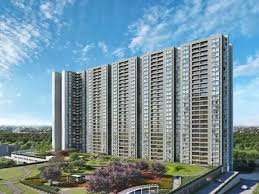
Affordable housing delivery in Haryana’s key NCR cities has slowed to a near standstill, exposing a widening gap between policy intent and market economics. In Gurugram and Faridabad two of the region’s largest employment-driven urban centres no significant new affordable housing projects have moved forward in recent quarters, raising concerns about the future supply of entry-level homes for the middle-income workforce.
Officials familiar with planning approvals confirm that fresh licences for affordable housing have been absent in Gurugram for well over a year. Even within the wider Gurugram-Manesar planning zone, once positioned as a growth corridor for mass housing, project launches under the state’s affordable housing framework have virtually disappeared. Urban planners see this as a warning signal for a policy designed to address housing inclusion in one of India’s fastest-growing metropolitan regions. At the centre of the slowdown lies a sharp escalation in land and construction costs. While sale prices under the Haryana affordable housing framework remain capped at Rs 5,000 per square foot in both Gurugram and Faridabad, land values across multiple sectors have risen steeply over the past five years. Construction inputs ranging from cement and steel to skilled labour have also seen sustained inflation, eroding margins for projects designed around tightly controlled price ceilings. Under current norms, affordable housing units typically range between 500 and 800 square feet, translating into ticket sizes that broadly align with middle-income budgets. However, industry analysts note that cost structures have shifted faster than policy revisions, making new projects financially unviable without adjustments. As a result, developers have increasingly diverted capital toward mid-income and premium housing, where pricing flexibility offers greater resilience against cost volatility.
The impact of stalled supply is beginning to show on the ground. Residents and housing advocates point out that the lack of new launches has narrowed choices for first-time buyers and salaried households who depend on affordable housing to remain within city limits. For many working families, the absence of fresh inventory risks pushing them toward longer commutes, informal housing, or peripheral locations with weaker infrastructure. Urban economists argue that the issue extends beyond developer viability. Affordable housing plays a critical role in reducing transport emissions, supporting workforce proximity, and preventing unplanned urban sprawl. When supply stagnates in core employment centres, cities face higher congestion, longer travel times, and greater pressure on peripheral infrastructure undermining climate and sustainability goals. Industry associations have urged the state government to revisit pricing assumptions and introduce periodic revisions linked to land and construction cost indices. There are also calls to keep the policy framework open-ended rather than time-bound, allowing developers to plan long-term investments without regulatory uncertainty.
Policy experts note that Haryana’s affordable housing programme has delivered homes to thousands of families in earlier phases. The challenge now is to recalibrate the framework to current market realities without diluting its social objective. How quickly the state responds may determine whether affordable housing remains a viable urban solution or becomes an increasingly symbolic promise in NCR’s evolving cityscape.
Also Read: India GCC expansion reshapes office markets
Haryana housing policy faces market reality test
