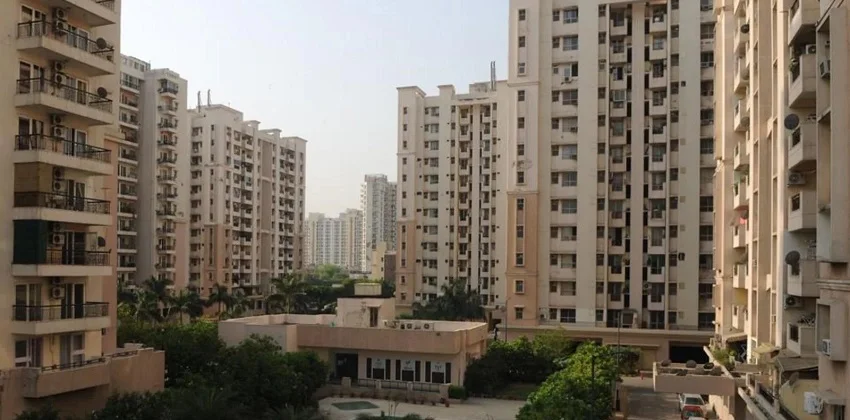
Haryana has revised pricing benchmarks under its affordable housing framework, raising rates across major urban centres and potentially altering both supply pipelines and buyer affordability. The move, cleared by the state cabinet earlier this week, is intended to revive delayed projects and stimulate new launches, but is expected to increase acquisition costs for entry-level homebuyers.
Under the updated structure, per square foot rates for affordable units have been increased by roughly 10–12 percent across cities such as Gurugram, Faridabad and Sohna. This recalibration of Haryana affordable housing rates comes at a time when developers have struggled to align regulated pricing with sharply rising land and construction costs. Urban development officials indicate that the revision is designed to restore financial viability to projects that have remained stalled due to compressed margins. Over the past few years, escalating input costs including steel, cement and labour have significantly widened the gap between regulated sale prices and actual development expenses. Industry observers suggest that without such adjustments, supply in the affordable segment risked stagnation.
However, the revised Haryana affordable housing rates are likely to translate into a higher ticket size for buyers, particularly those in the lower- and middle-income brackets. Market estimates indicate that the increase could add several lakh rupees to the overall cost of a standard unit. For households already balancing loan eligibility and rising living expenses, this may narrow the accessibility of formally developed housing. Urban planners note that while higher prices may seem counterintuitive to affordability goals, sustained supply is equally critical. A constrained pipeline often pushes buyers towards informal or substandard housing options, undermining long-term urban resilience. By enabling projects to move forward, the policy could stabilise supply over time, potentially moderating price pressures in the medium term. The revision applies to projects where allotments are yet to be completed, while ongoing developments with finalised allocations remain unaffected. In cases where application processes are already underway, authorities have allowed continuation but with provisions to recover the revised differential from successful applicants. This transitional approach attempts to balance regulatory certainty with fiscal adjustments.
From a broader urban perspective, the policy underscores the complex trade-off between affordability and viability. As cities expand and land values escalate, maintaining low-cost housing within rigid price caps becomes increasingly difficult. Experts argue that future policy interventions may need to integrate cost-indexation mechanisms, improved land supply strategies, and incentives for sustainable construction practices. The effectiveness of the revised framework will depend on whether it succeeds in unlocking stalled inventory without disproportionately excluding first-time buyers. As Haryana’s urban centres continue to grow, ensuring that affordable housing remains both financially feasible and socially inclusive will be central to shaping equitable and climate-resilient city development.