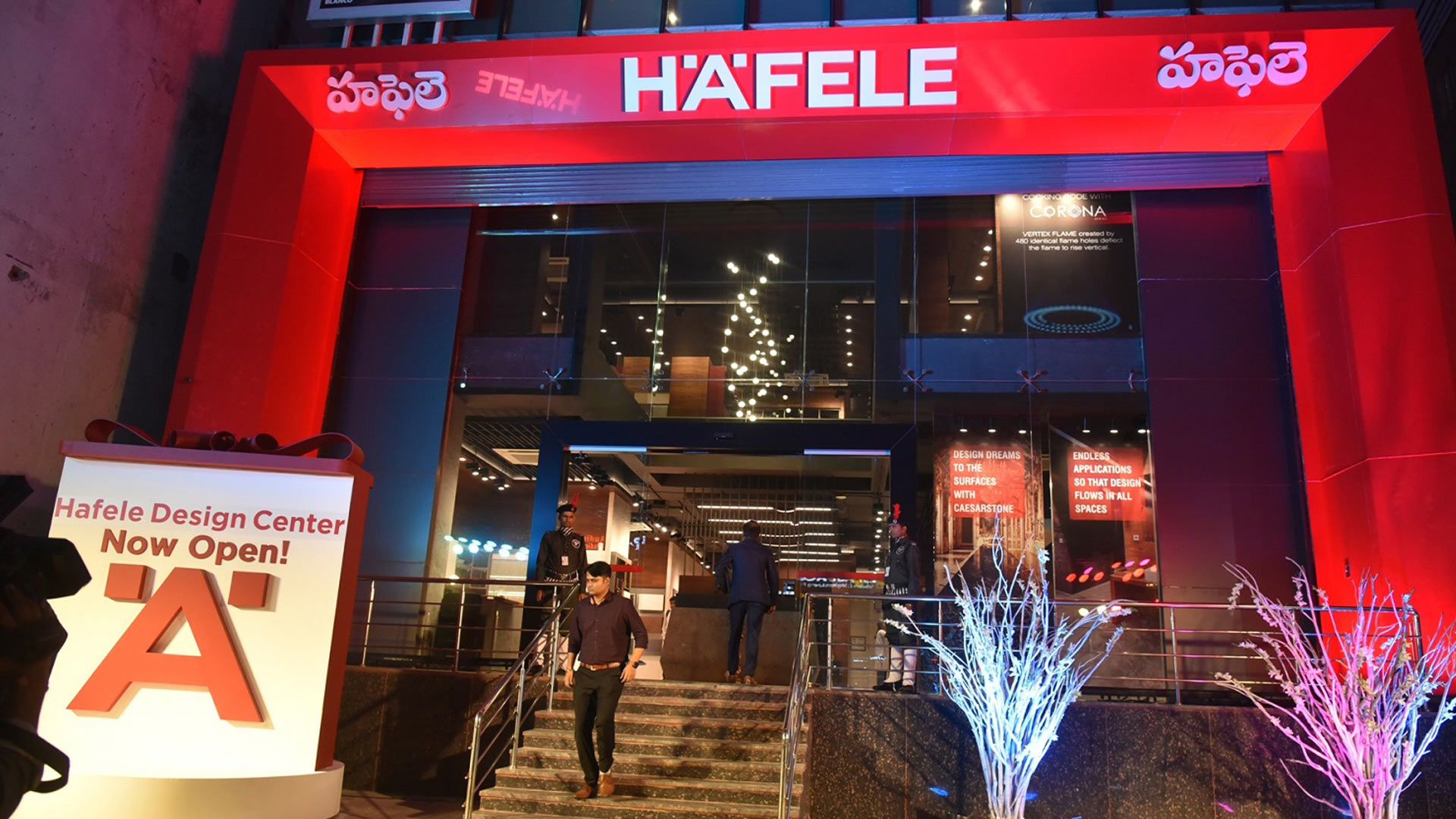
Häfele Opens New Appliances Experience Centre in Kochi
Global interior solutions provider Häfele India has inaugurated its largest-ever flagship Design Centre in Gurugram’s Golf Course Extension Road, a strategic addition to the city’s burgeoning interior design ecosystem and a marker of shifting expectations in how built spaces are imagined and realised. The experience-centric 10,000-plus square foot facility showcases complete, application-ready environments aimed at architects, designers, developers and homeowners across the Delhi–NCR region, underlining the city’s role as a hub for modern residential and commercial interiors.
Situated within M3M 65th Avenue, the new centre consolidates Häfele’s diverse portfolio — from architectural hardware and furniture fittings to modular kitchen systems, lighting, appliances and surface solutions — under one roof for immersive, real-life exploration. Industry observers say this approach reflects a larger industry pivot: clients and professionals increasingly demand holistic interior frameworks rather than standalone products, driven by evolving lifestyle preferences, tighter urban footprints and a premium placed on design coherence.For Gurugram — where rapid residential development has triggered a proliferation of premium projects and amenity-rich lifestyles — the flagship centre bolsters the city’s reputation as a design and build innovation hub. Urban designers note that integrated display spaces such as this not only serve commercial objectives but also reinforce knowledge exchange among stakeholders on materials, sustainability, and spatial optimisation. Such facilities can accelerate the transition from traditional commodity-focused interiors to systems-based design thinking, benefiting sectors from multi-family residential development to boutique hospitality.
The centre’s launch complements a broader pattern of design-led retail and experience spaces taking shape in Gurugram. Recent flagship openings by brands such as OMA — whose 10,615 square foot home décor store debuted in Ambience Mall — illustrate how the city’s affluent and design-aware demographic is shaping premium built-environment offerings. Meanwhile, expansion of appliances-focused formats and specialist studios in cities like Bengaluru points to a nationwide trend where interactive, showroom-led formats are becoming central to urban interiors markets.A deeper implication lies in the evolving role of design centres as informal educational spaces for sustainable and functional living. As material innovation and energy performance gain prominence in architectural practice, environments that demonstrate integrated solutions — such as ergonomic kitchens anchored in efficiency, lighting that balances ambience with energy use, or storage that optimises spatial constraints — become valuable tools for both professionals and consumers. This aligns with wider goals in urban planning that prioritise resource-efficient buildings and occupant well-being.
However, experts caution that access to such high-end experiential spaces must be broadened to ensure inclusivity across income segments and design aspirations. Without mechanisms to engage smaller developers, emerging designers and middle-income homeowners, there is a risk that innovation hubs consolidate value only in premium corridors rather than uplifting the broader urban milieu.As Häfele India positions its flagship design centre in Gurugram, it highlights the city’s pivotal role in shaping next-generation interiors — anchoring design excellence with sustainable practice and participatory experience.