


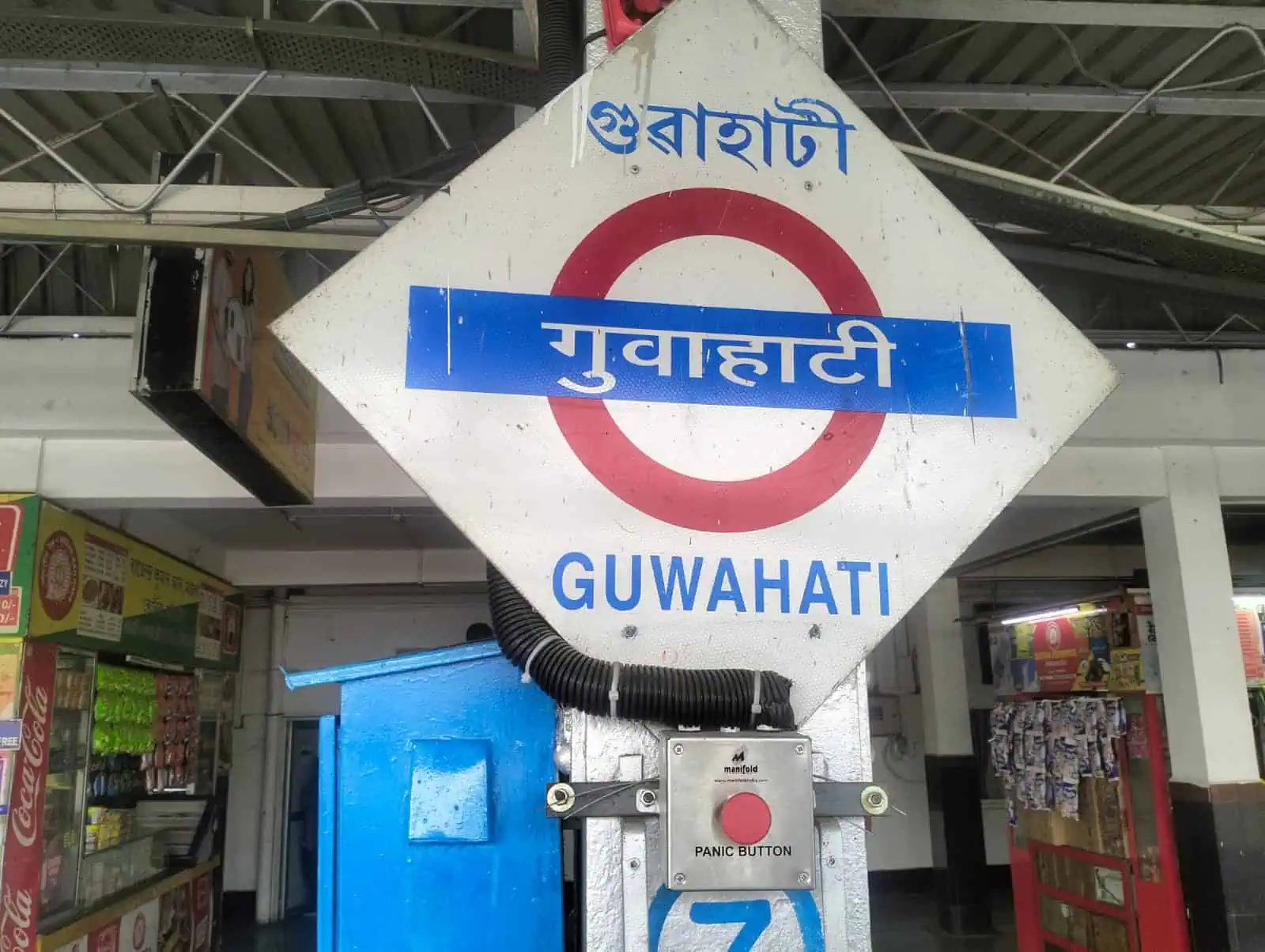
Guwahati Railway Station has become the first in the Northeast to implement an advanced AI-based surveillance system.
The Northeast Frontier Railway (NFR) has installed 135 state-of-the-art CCTV cameras equipped with facial recognition and intrusion detection capabilities, alongside strategically placed panic buttons across the station premises. This initiative marks a pivotal step in transforming Guwahati Station into a model of modern railway security, aligning with national objectives to create safer, more efficient, and technologically advanced public transport hubs.
The newly installed CCTV cameras are not just ordinary surveillance tools; they are integrated with Artificial Intelligence to enhance their functionality. These cameras are capable of facial recognition, enabling the identification of known offenders whose details are pre-stored in the system’s database. Additionally, the intrusion detection system ensures that any tampering or obstruction of the cameras is immediately flagged, triggering automatic alerts to the control room. Chief Public Relations Officer of NFR, emphasized the significance of this technological upgrade, stating, “The AI-based surveillance system at Guwahati Railway Station is a testament to our commitment to passenger safety. With features like facial recognition and intrusion detection, we are setting new standards in railway security.”
Understanding the importance of quick response in emergencies, the NFR has installed panic buttons at 20 critical locations within the station. These buttons are designed to provide immediate assistance to passengers, especially women and children, during distressing situations. Upon activation, the panic button sends an instant alert to the Railway Protection Force (RPF) control room, ensuring a swift response to any emergency. This proactive approach aims to create a safer environment for all passengers, reinforcing the station’s commitment to their well-being.
To manage the vast network of surveillance equipment effectively, a centralized coordination hub has been established. The Escort Mobilisation Hall serves as the nerve center for monitoring the AI-based CCTV feeds and coordinating the deployment of RPF personnel. This facility ensures that any suspicious activity or emergency situation is promptly addressed, enhancing the overall security infrastructure of the station. Building on the success of the Guwahati installation, the NFR plans to extend this AI surveillance system to other major stations under its jurisdiction. Currently, over 1,000 CCTV cameras are operational across 50 key railway stations, with plans for further upgrades to incorporate the latest technologies. The NFR is also collaborating with IIT Guwahati to develop AI-based alert systems and face recognition technologies to further enhance security measures.
This initiative aligns with broader goals of creating zero-net carbon, eco-friendly, and equitable urban spaces. By integrating advanced technology with sustainable practices, the NFR is not only enhancing security but also contributing to the development of smart, inclusive, and sustainable cities. The installation of AI-based CCTV cameras and panic buttons at Guwahati Railway Station represents a significant advancement in railway security. This initiative not only enhances passenger safety but also sets a benchmark for other stations to follow. As the NFR continues to innovate and upgrade its infrastructure, passengers can look forward to a safer and more efficient travel experience.
Also Read: Vande Bharat Train Launch Delayed Due to Heightened Security Measures
