


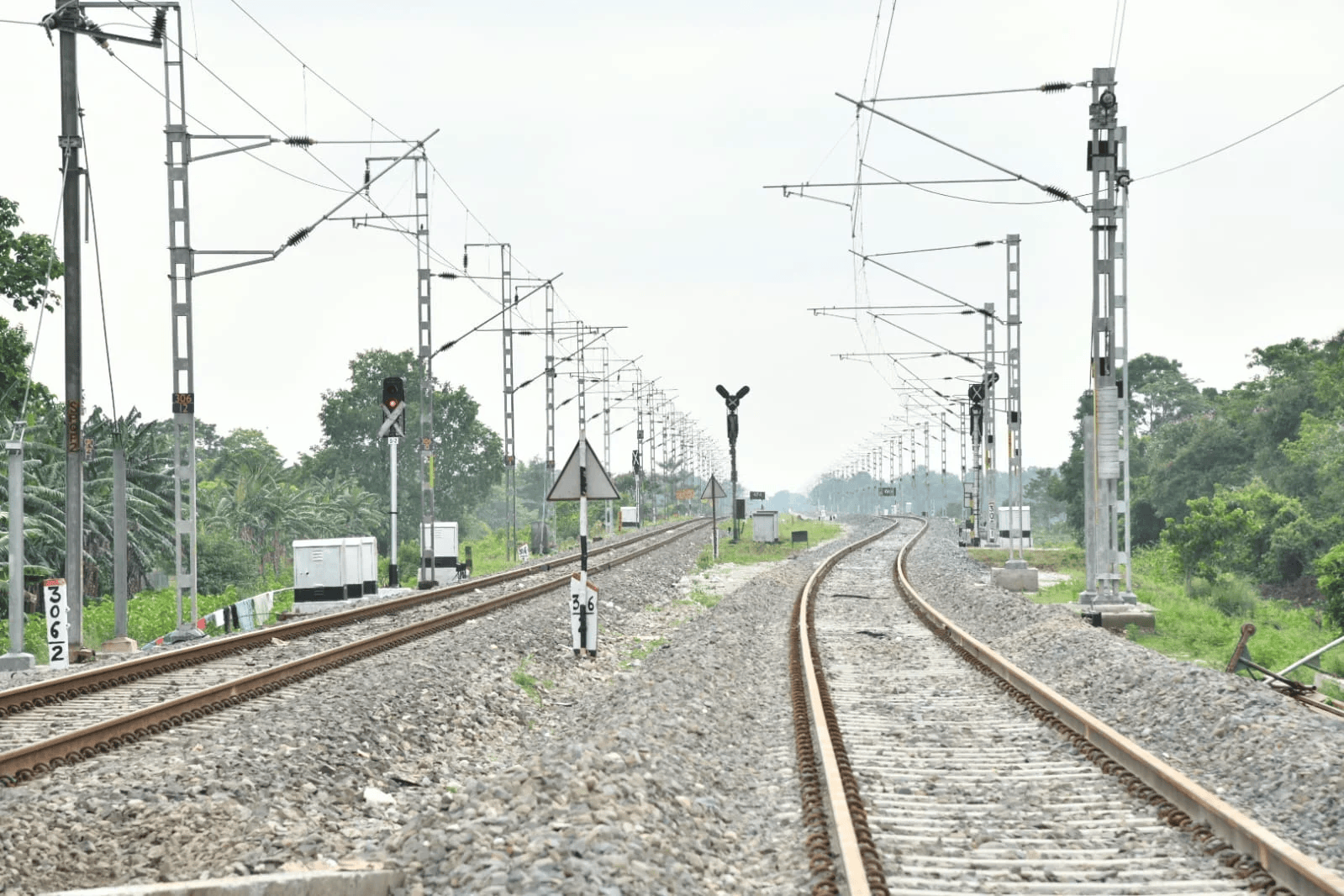
Northeast Frontier Railway (NFR), headquartered in Guwahati, has advanced significantly toward full 25 kV AC electrification; recent inspections pave the way for commercial electric train services on vital routes. Principal Chief Electrical Engineer of NFR has carried out final statutory inspections across three newly electrified corridors: Chaparmukh–Hojai (46 track km), Azara–Dudhnoi (99.32 track km, 20.44 route km) and Duliajan–Tinsukia–Dibrugarh sections—underlining a commitment to sustainable, efficient railway operations.
These approvals are essential for initiating full-fledged commercial electric services. Chaparmukh–Hojai forms part of the broader Lumding Division network, where earlier full-speed trials validated the shift from diesel to electric traction, promising reduced journey times for both freight and passenger services 5. Azara–Dudhnoi under the Rangiya Division and the Upper Assam Duliajan–Tinsukia–Dibrugarh corridor are strategic lifelines connecting resource-rich zones. Electrification here promotes faster turnarounds and better capacity utilisation, a boon for heavy freight movement and regional mobility.
This phase aligns with Indian Railways’ nationwide goal of “Mission Electrification” and net-zero emissions by 2030. NFR has already electrified over 2,828 RKM—more than 66 percent of its total 4,260 RKM network—with full clearance projected by March 2026. Electrification delivers compelling advantages: it averts diesel fuel reliance, curbs carbon emissions, cuts operational costs and increases train speeds. Real-world impact in Assam—where diesel locos have dominated—is expected to manifest quickly in reduced journey times, lower freight tariffs, and cleaner air quality. Local benefits are already noticeable. Commuters on Guwahati–Lumding routes report improved punctuality, while shippers see economies from streamlined electric haulage. Electrified tracks also open possibilities for new suburban EMU services, boosting gender‑neutral and equitable urban mobility.
Infrastructure investments complement these technological upgrades. NFR has established electric locomotive sheds in Malda, Siliguri and New Guwahati and is deploying WAG‑9 freight locos, multi-source traction substations, and grid access initiatives. But obstacles remain. Challenging terrain in Meghalaya, Mizoram and Nagaland has slowed progress, and last-mile electrification between Maibong and Chandranathpur continues amid monsoon delays. Once complete, NFR will offer one of the most efficient, low-carbon rail networks in India’s northeast. Industry analysts suggest full electric operations could raise freight volume by 20% and shave 15–20% off travel time across major corridors.
Looking ahead, NFR must synchronise electrification with signalling upgrades, staff training, and energy costs. Integration of solar or wind power can further green the grid, reinforcing climate targets. In essence, these inspections signify more than technical milestones—they encapsulate a transition to sustainable, inclusive rail mobility across Assam and beyond. As NFR edges closer to full electrification, the true test will lie in service delivery: faster trains, cleaner air, and equitable access—hallmarks of green regional development.
Also Read :Indian Railways Launches Two Special Tour Packages
