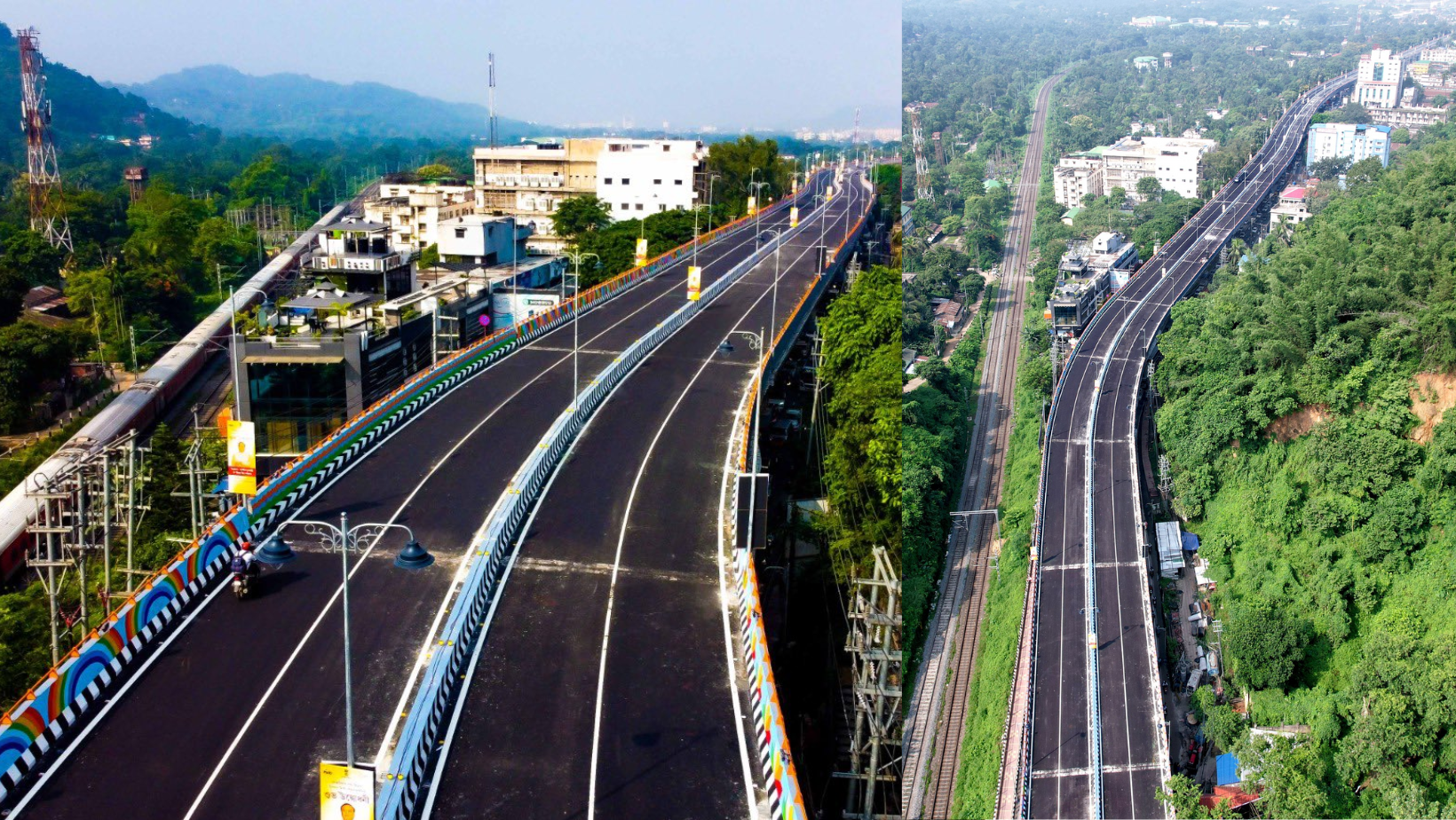
Guwahati Flyover Delay Raises Traffic, Environmental Concerns Amid Ongoing Work
Construction of the Noonmati–Ambari flyover in Guwahati, a major ₹800 crore urban mobility project, has reached nearly halfway completion but continues to face challenges due to environmental disputes and redesigns. While work on pillars in Bamunimaidam and Chandmari has progressed, the Ambari-end of the corridor remains delayed over tree-transplant concerns and structural plan modifications. With piling work scheduled soon, officials now aim to fast-track the remaining phases to meet next year’s festival deadline.
The Noonmati–Ambari flyover is a crucial infrastructural link intended to ease growing congestion in central Guwahati. According to authorities, approximately 48% of the construction is completed, with significant progress seen in pillar erection across key sections like Chandmari and Bamunimaidam. However, the Ambari segment saw prolonged delays due to two primary issues: the redesign of the stretch between Guwahati Rotary and Dighalipukhuri, and public opposition to the felling and transplanting of old-growth trees. The flyover corridor passes through sensitive heritage zones near the Assam State Museum, where civil society raised concerns over unscientific methods of tree relocation. A legal petition sought strict environmental oversight, prompting a temporary hold on further ecological disruption. In response, authorities pledged to safeguard 23 mature trees and committed to more transparent transplant protocols. Despite these challenges, drainage construction and structural piling are ongoing, with traffic realignments expected once foundational works conclude.
Environmental preservation has become central to the conversation around this delayed infrastructure project. Initial efforts to relocate trees near heritage zones in Ambari triggered widespread backlash after consultants allegedly used questionable methods, leading to a legal plea and judicial intervention. While drainage works and flyover substructure preparation continue, civic pressure has forced officials to adopt a more cautious and ecologically sensitive approach. Urban mobility planners also confirmed that traffic diversions from Burha Jame Masjid-end will soon be operational to facilitate smooth construction and reduce surface congestion. Officials have reassured that piling — a vital phase for ensuring structural integrity — will begin by August-end, allowing vertical expansion to resume in the Ambari zone. Experts warn, however, that any further setbacks, either ecological or technical, could jeopardise the anticipated timeline for completion before the upcoming Bohag Bihu festivities. The project now balances between civic infrastructure needs and the city’s environmental sensibilities.
The Noonmati–Ambari flyover project in Guwahati reflects the growing tension between rapid urban development and ecological accountability. While significant progress has been made in sections like Chandmari and Bamunimaidam, delays on the Ambari side underscore the need for community-inclusive planning and stricter environmental protocols. With critical piling work expected soon, authorities aim to meet their projected timeline. Yet, future success will depend not just on technical execution but also on maintaining transparency, securing clearances responsibly, and minimising ecological damage. For Guwahati’s commuters, the flyover promises future relief — but only if present challenges are addressed with foresight.