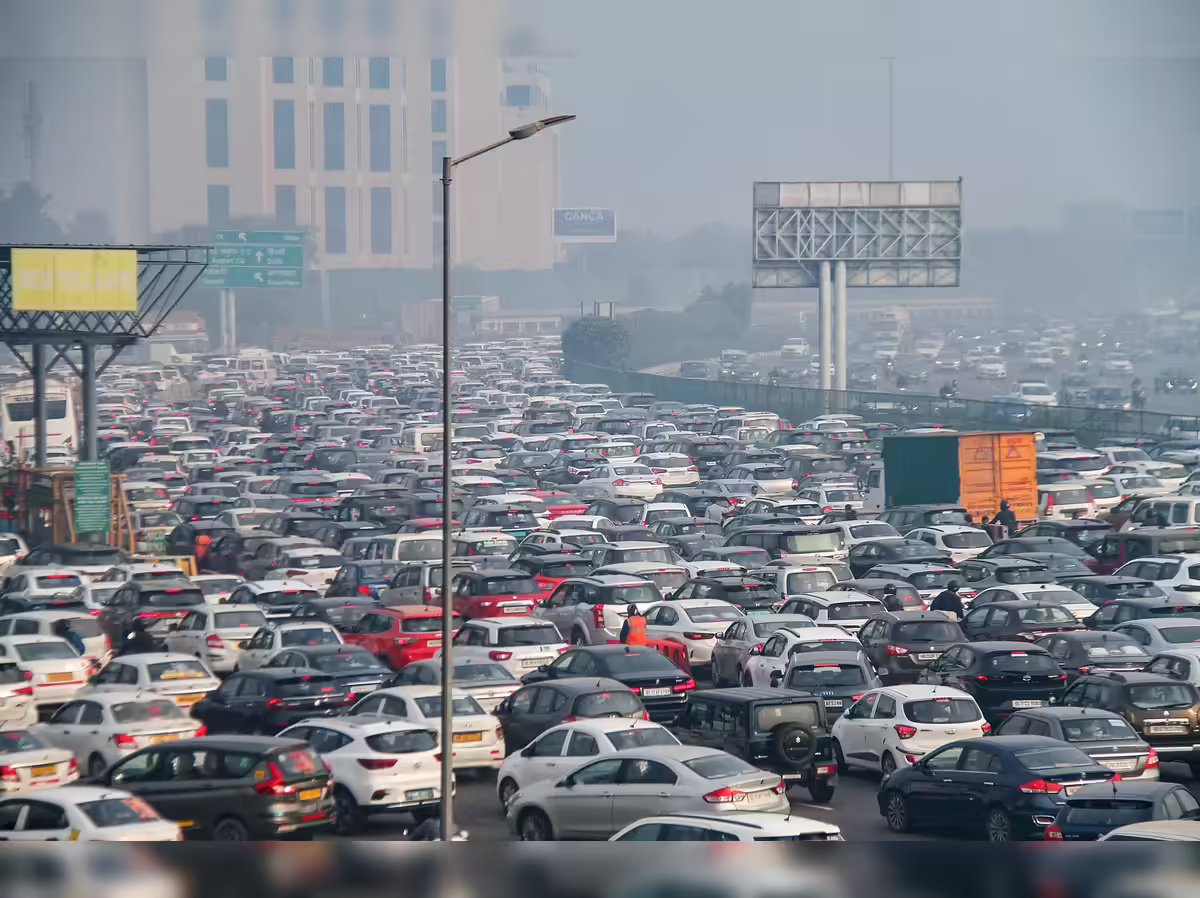
Gurugram Traffic Restrictions Near Metro Hub Today
Authorities in Gurugram have imposed temporary traffic diversions along one of the city’s busiest commuter corridors as civic agencies undertake urgent road repairs and infrastructure works. The Gurugram traffic restrictions will affect vehicular movement across multiple sections connecting the Millennium City Centre Metro area with Bakhtawar Chowk, a critical route linking residential sectors, commercial zones and healthcare facilities. Traffic police issued an advisory indicating that several segments along the corridor will remain closed to vehicles for extended hours during the day while repair activities are carried out. The affected route forms a major connection between the city’s primary metro terminal and surrounding neighbourhoods, meaning the restrictions could impact thousands of daily commuters travelling between workplaces, residential sectors and transit stations.
Officials involved in the operation said the temporary closures are necessary to facilitate resurfacing work and civic infrastructure upgrades initiated by the municipal administration. Such interventions are typically undertaken to improve road durability and manage increasing vehicular load on Gurugram’s expanding road network. The Gurugram traffic restrictions apply to multiple connecting roads branching from the metro station area towards the city’s internal sectors. These include sections near administrative offices, commercial complexes and hospital access roads that form part of the broader urban mobility network. Authorities have also indicated that several connecting cuts along the corridor will remain temporarily blocked to allow uninterrupted construction work. Urban planners note that the affected route functions as a vital artery feeding traffic from the metro system into Gurugram’s inner road network. The corridor carries a large volume of office commuters, public transport users and local residents every day. Because the metro terminal in this zone is among the busiest transit points in the city, any disruption along the adjoining road network tends to ripple through surrounding sectors.
Traffic officials have advised commuters to use alternative corridors connecting nearby residential districts and arterial roads to reach destinations across the city. Motorists travelling towards key commercial areas and residential clusters have been asked to reroute through parallel roads connecting major neighbourhoods and institutional zones. In addition, authorities have recommended that frequent commuters working in the vicinity temporarily rely on designated parking areas near the metro station or other organised parking facilities to minimise congestion during the repair period. Traffic personnel are expected to monitor the corridor throughout the day to prevent illegal parking and ensure compliance with diversion plans. Urban mobility experts say periodic maintenance of high-density road corridors is essential for sustaining the functioning of rapidly expanding metropolitan regions like Gurugram. However, they also emphasise the need for long-term solutions such as junction redesign, improved public transport connectivity and pedestrian-friendly infrastructure to ease chronic congestion.
As the Gurugram traffic restrictions remain in place for the scheduled repair window, city authorities are expected to review traffic flow patterns and restore normal movement once construction activities conclude. Observers say such maintenance works highlight the broader challenge of upgrading infrastructure in fast-growing urban centres while keeping daily mobility disruptions to a minimum.