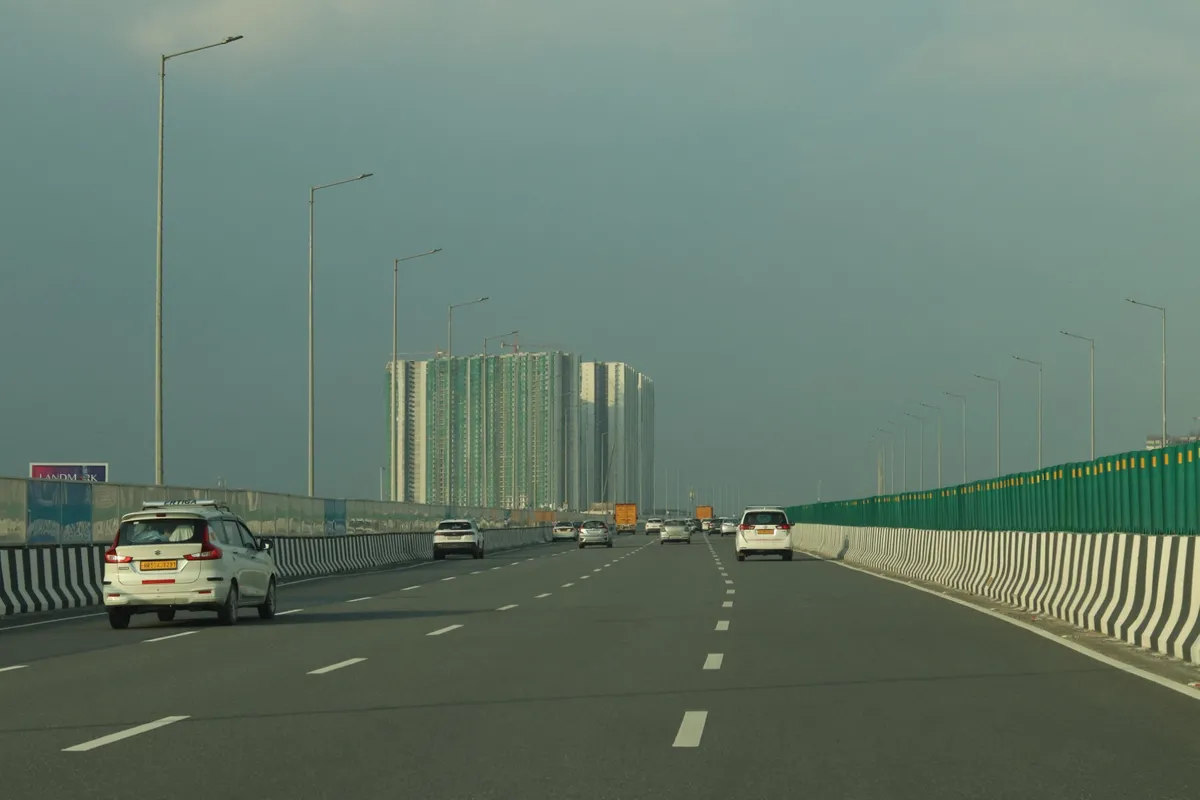
Gurugram’s urban mobility network is set for further expansion as planning authorities move ahead with a proposal to develop a parallel service road along a key stretch of the Central Peripheral Road (CPR), part of the Dwarka Expressway corridor. The initiative is aimed at improving local accessibility and easing traffic pressures in one of the region’s fastest-developing residential and commercial zones. The Gurugram Metropolitan Development Authority (GMDA) has completed preliminary groundwork and submitted a land acquisition proposal to the national highways authority for approval. The proposed corridor will run along the Sector 36A side of the CPR, connecting emerging residential clusters and mixed-use developments to the main arterial network.
According to officials involved in the process, the project requires the acquisition of a modest parcel of land from adjoining village areas. Once approvals are secured, authorities expect the acquisition process to be completed within a defined timeframe, following which construction planning and tendering will begin. Urban planners highlight that service roads play a critical role in decongesting high-speed corridors such as the Dwarka Expressway. By segregating local traffic from through-traffic, these parallel routes can reduce bottlenecks, improve safety, and enhance last-mile connectivity for residents and businesses. In rapidly urbanising areas like Sector 36A, where multiple residential projects are nearing completion, such infrastructure becomes essential to manage increasing traffic volumes. The Gurugram service road plan is also expected to complement ongoing development along the CPR corridor, which has emerged as a major growth axis for the city’s real estate market. Improved connectivity typically translates into higher land values and accelerated project absorption, particularly in peripheral sectors that are transitioning into dense urban neighbourhoods.
Officials noted that part of the service road infrastructure has already been constructed by a private developer along a short stretch, reducing the need for additional land in that segment. The remaining sections will be developed as part of the broader public infrastructure plan, ensuring continuity along the corridor. From a planning perspective, the project aligns with efforts to create more structured and hierarchical road networks in Gurugram. Experts argue that the absence of well-defined service lanes in earlier phases of development has contributed to congestion, unsafe access points, and inefficient traffic movement. Integrating service roads into new corridors can help address these legacy challenges while supporting more sustainable urban growth patterns. The proposal also reflects increasing coordination between state-level urban agencies and national infrastructure authorities, a trend that is becoming critical as cities expand across administrative and jurisdictional boundaries.
As Gurugram continues to evolve as a major economic and residential hub within the NCR, the timely execution of projects like the Gurugram service road plan will be key to maintaining mobility efficiency and ensuring that infrastructure keeps pace with rapid urbanisation. The next phase—covering approvals, land acquisition, and execution—will determine how quickly these benefits translate on the ground.