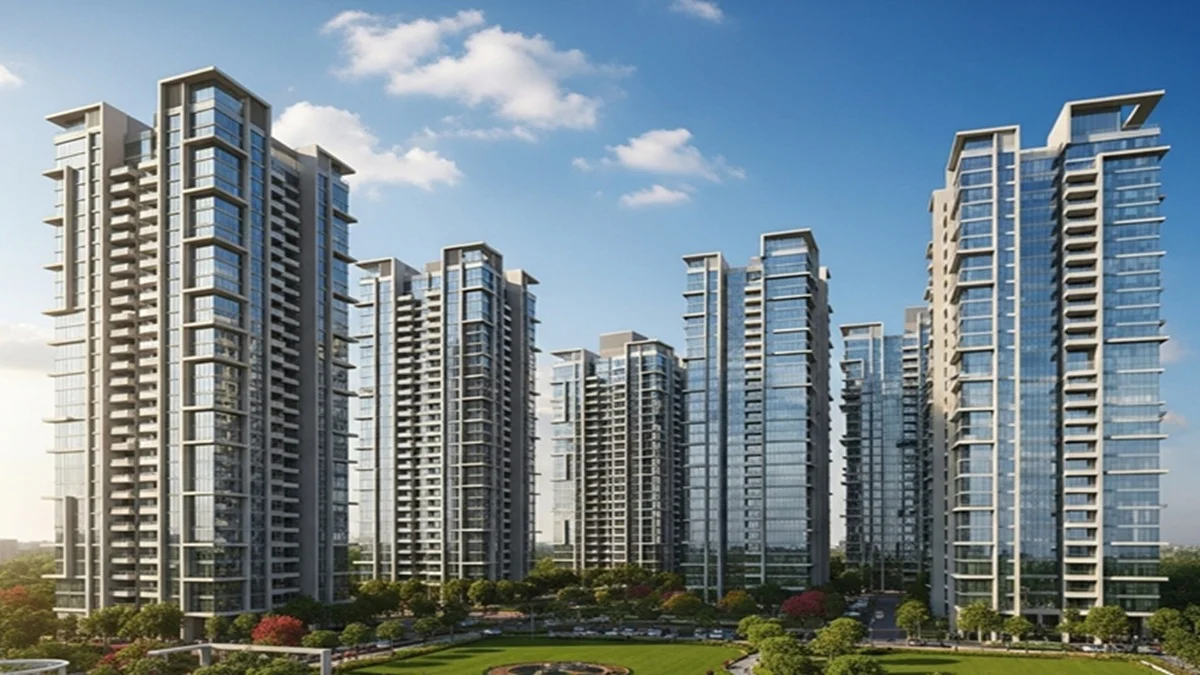
A new residential housing project planned along the Southern Peripheral Road in Gurugram is set to bring fresh investment into the city’s fast-expanding urban corridor, with KREEVA outlining a ₹350–400 crore commitment. The development signals a continued shift towards specialised housing formats in high-growth NCR micro-markets, where infrastructure upgrades and demographic changes are reshaping demand.
The proposed project, structured through a joint development arrangement with a landholding partner, will occupy a relatively compact three-acre parcel but deliver a built-up footprint of roughly 5.5 lakh square feet. With around 200 residential units planned, the configuration points towards a low-density approach compared to typical high-rise clusters in the region an emerging trend as developers recalibrate offerings to attract end-users rather than speculative buyers.Industry observers note that Southern Peripheral Road has evolved into one of Gurugram’s most closely watched residential belts, supported by improved connectivity to employment hubs, arterial highways, and upcoming transit infrastructure. This has encouraged developers to explore differentiated formats, including the multi-generational housing project concept, which is gaining traction among urban families seeking flexible living arrangements.
Unlike conventional apartment layouts, multi-generational housing integrates design features that accommodate extended families, ageing populations, and hybrid work patterns. Urban planners suggest that such projects could help address shifting household structures in Indian cities, where nuclear and joint family models increasingly coexist. By enabling shared yet independent living spaces, these developments may also reduce pressure on urban land use by optimising occupancy within existing footprints.The timing of the investment is significant. Gurugram’s residential market has seen sustained price appreciation over recent years, driven by limited land availability and rising construction costs. At the same time, demand has become more discerning, with buyers prioritising quality of life factors such as ventilation, green cover, and access to social infrastructure. Projects positioned around these parameters are expected to perform better, particularly in premium and upper mid-income segments.
From an urban development perspective, projects of this scale also raise questions around infrastructure readiness. Experts highlight that while micro-markets like Southern Peripheral Road have improved road connectivity, long-term sustainability will depend on integrated planning covering water management, waste systems, and public transport access. Without these, incremental residential additions risk straining local ecosystems. The upcoming multi-generational housing project is expected to commence in the early part of the next financial cycle, aligning with broader developer strategies to phase launches in response to demand visibility. Analysts believe such calibrated expansion reflects a more disciplined approach within India’s real estate sector, where capital deployment is increasingly tied to end-user demand and long-term viability rather than short-term sales cycles.As Gurugram continues to densify, the success of such housing formats may influence how future residential communities are designed potentially shaping a more inclusive and adaptable urban living environment.