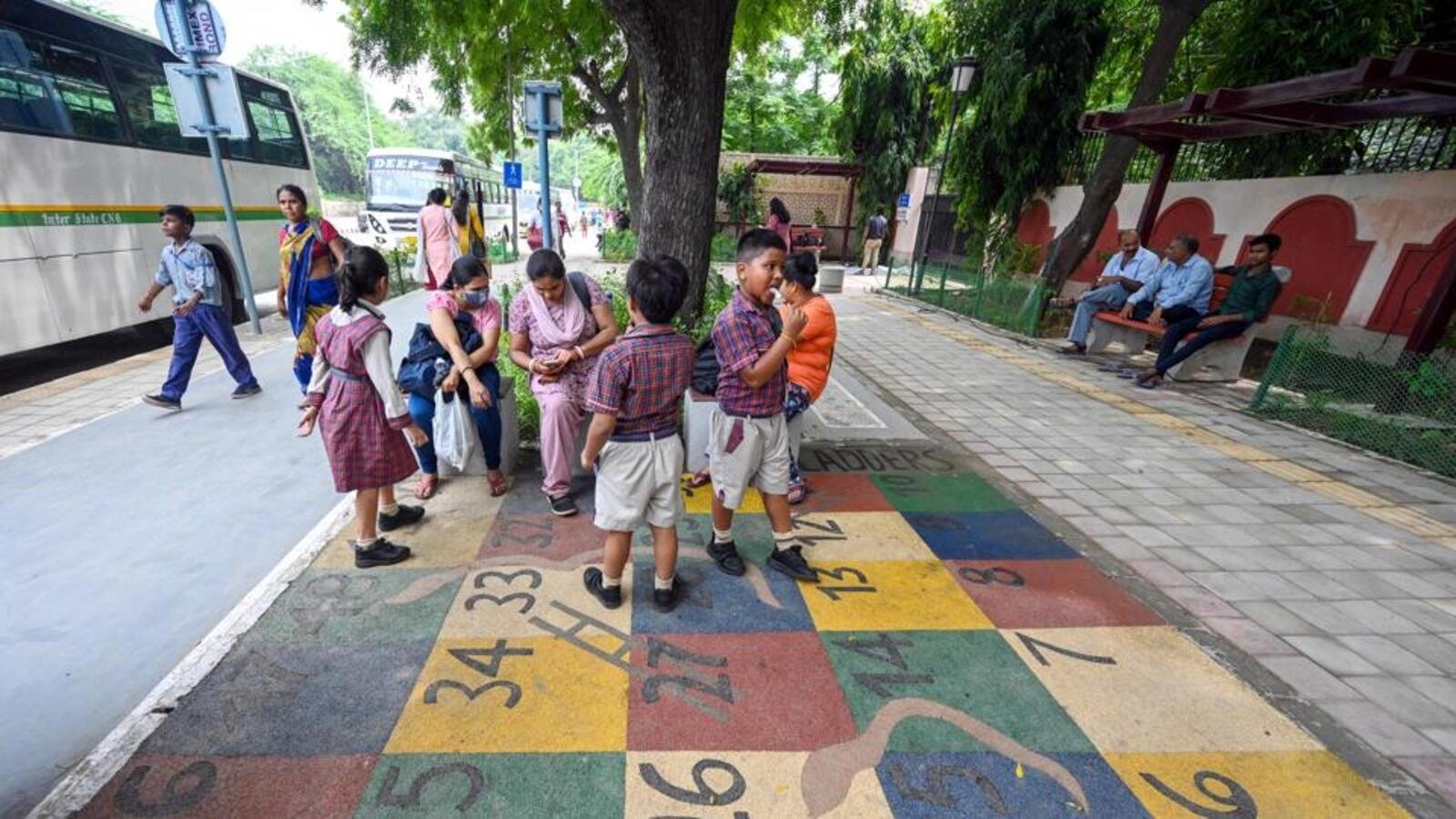
Gurugram Safe School Zone Boosts Child Road Safety
Gurugram has introduced its first Safe School Zone, marking a shift towards people-centric street design aimed at improving child safety and walkability in urban neighbourhoods. The pilot, implemented in a government school area in Kadipur, is part of the city’s broader Vision Zero strategy, which seeks to eliminate road fatalities through safer infrastructure and behaviour change. Urban mobility experts say such interventions represent a critical step in rethinking Indian streets, which have traditionally prioritized vehicular movement over pedestrian safety.
The Gurugram Safe School Zone has been designed to address long-standing risks faced by students, particularly in areas where a majority walk to school. Surveys conducted prior to the intervention indicated that children were navigating high-traffic roads without basic safety features such as footpaths or marked crossings. This gap is common across rapidly urbanizing regions, where infrastructure development has not kept pace with population growth. To counter these challenges, the redesigned zone incorporates traffic-calming measures and pedestrian-first infrastructure. Features include widened and continuous footpaths, raised zebra crossings, designated waiting areas, and reduced speed limits. Visual cues such as signage and street art have also been introduced to improve awareness among motorists and encourage safer driving behaviour. Urban planners highlight that the Gurugram Safe School Zone model aligns with global best practices, where school areas are treated as high-priority safety zones. By lowering vehicle speeds and improving visibility, such designs significantly reduce the likelihood and severity of road accidents. The approach also supports broader sustainability goals by encouraging walking and reducing reliance on motorized transport for short distances. The initiative has been developed through a collaboration between civic authorities and non-profit organizations, with support from private sector partners.
Officials indicate that this multi-stakeholder model could serve as a template for scaling similar interventions across other parts of the city. From a governance perspective, the project reflects an increasing focus on inclusive urban development. Safe access to schools is not only a transport issue but also a social equity concern, particularly for children from low-income households who depend on walking as their primary mode of travel. Ensuring safe routes can improve school attendance and reduce barriers to education. Road safety remains a pressing challenge in India, with a significant proportion of fatalities involving pedestrians and vulnerable road users. Experts note that targeted interventions like the Gurugram Safe School Zone can deliver measurable impact if implemented consistently and supported by enforcement. Looking ahead, city authorities plan to replicate the model in additional locations, indicating a shift towards neighbourhood-level planning that prioritizes safety and accessibility. However, sustained success will depend on maintenance, monitoring, and community participation to ensure that infrastructure improvements translate into lasting behavioural change.
As Gurugram expands its urban footprint, initiatives such as the Gurugram Safe School Zone highlight the importance of designing streets that are safe for children and, by extension, for all users—an essential step towards building more liveable and resilient cities.