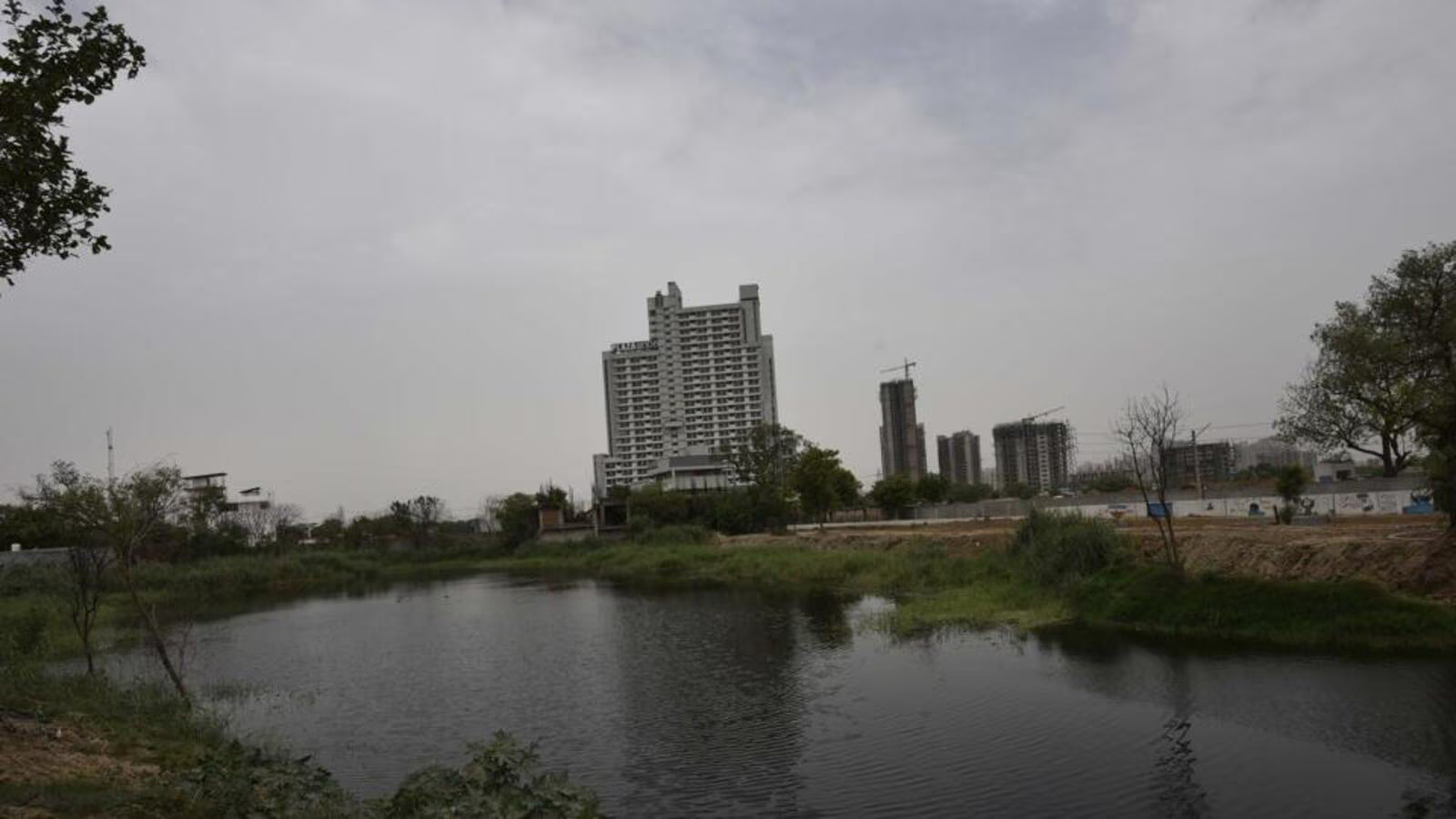
Gurugram’s civic authorities have initiated a citywide push to restore and expand rainwater harvesting infrastructure as groundwater depletion reaches critical levels, raising concerns over long-term water security in one of India’s fastest-growing urban centres. The move comes amid mounting evidence that conventional water supply systems are struggling to meet peak summer demand. Official groundwater assessments indicate a steep decline over the past five decades, with water tables now plunging beyond 30 metres in several parts of the city. This shift has placed Gurugram in the “dark zone” category, signalling unsustainable extraction and limited natural recharge. Urban planners warn that without immediate intervention, the gap between demand and supply could widen further as population density and built-up areas continue to increase.
The renewed focus on rainwater harvesting systems is being positioned as a critical intervention to restore groundwater balance. Municipal officials have begun repairing hundreds of existing structures that had become ineffective due to falling water levels and poor maintenance. Many of these systems, originally designed to capture and recharge rainwater, had ceased functioning as bore depths became insufficient to connect with the declining aquifers. As part of the initiative, engineers are upgrading these systems with deeper recharge points to improve their efficiency. In parallel, new modular rainwater harvesting systems are being planned across multiple locations, particularly in areas facing acute water stress. These decentralised units are expected to capture monsoon runoff and channel it into the ground, reducing dependence on tanker supply and groundwater extraction. The city’s water supply currently relies heavily on treatment plants operated by regional authorities, which draw from surface water sources. However, seasonal shortages remain a recurring issue, especially during peak summer months when demand surges and supply constraints become evident. Experts note that reliance on distant water sources alone may not be sufficient to sustain long-term urban growth.
Unregulated groundwater extraction has emerged as a key driver of the crisis. Residential borewells, commercial establishments and informal water operations have collectively intensified pressure on aquifers. In addition, inefficient water use practices—from excessive consumption in households to wastage in service sectors—have compounded the challenge. Urban sustainability experts argue that reviving rainwater harvesting systems is not just a technical fix but a necessary shift towards decentralised water management. By capturing rainfall at the source, cities can reduce runoff losses, recharge aquifers and build resilience against climate variability. This approach is increasingly seen as essential for climate-adaptive urban planning, particularly in regions facing erratic rainfall patterns and rising temperatures. The current initiative also highlights the need for stronger regulatory enforcement and public participation. Without behavioural change and stricter oversight on groundwater use, infrastructure upgrades alone may not deliver lasting results.
Looking ahead, Gurugram’s water strategy is likely to depend on how effectively it integrates recharge systems with broader urban planning frameworks. If implemented at scale, the expansion of rainwater harvesting could not only ease immediate supply pressures but also support a more sustainable and equitable water future for the city.