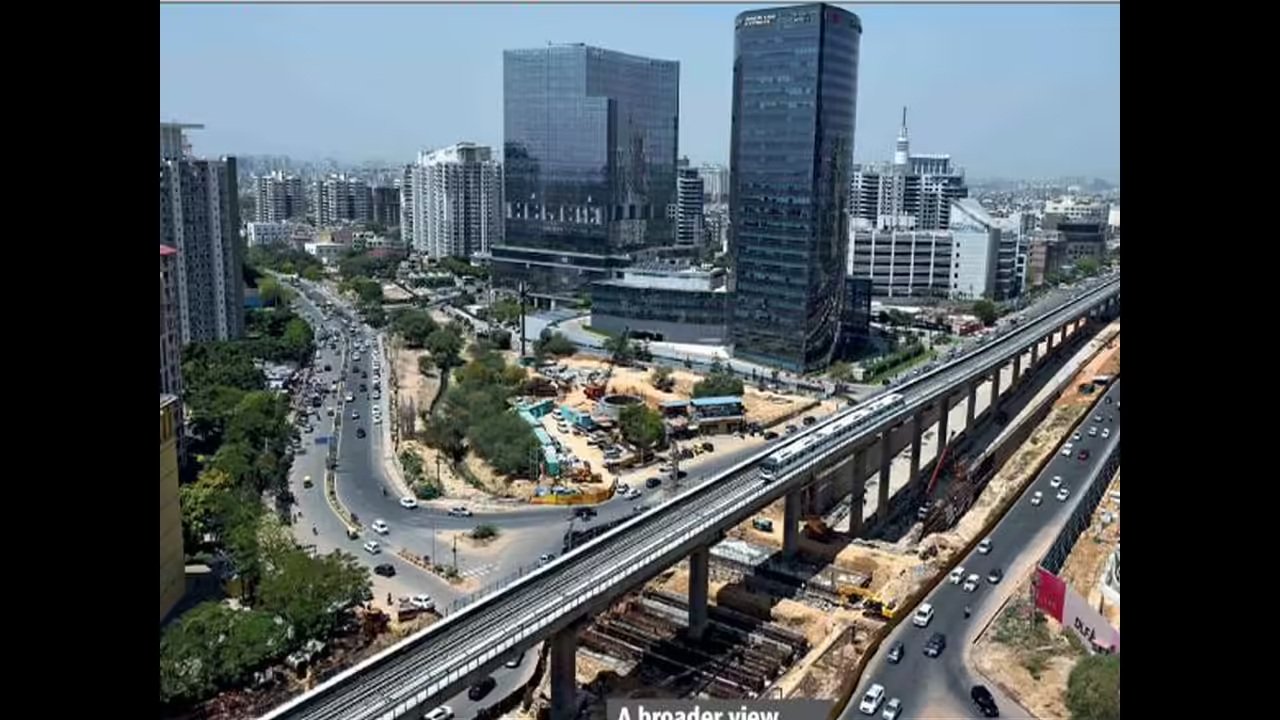
Gurugram Public Safety Survey Targets Infrastructure Gaps
Gurugram’s municipal administration has initiated a citywide infrastructure assessment aimed at improving safety, mobility and accessibility in public spaces. The initiative, structured as a detailed Gurugram public safety survey, will analyse the physical condition of urban infrastructure across multiple neighbourhoods, generating data intended to guide future planning decisions in one of India’s fastest-growing urban centres. City officials say the assessment will collect information on the quality of public infrastructure, including street lighting, pedestrian accessibility, public amenities and overall safety conditions in various localities. The findings are expected to help identify urban design gaps and guide targeted improvements to public spaces that are frequently used by residents.
The Gurugram public safety survey will be conducted with support from a non-profit organisation specialising in data-driven urban safety assessments. Municipal authorities will provide administrative coordination for the field research, including facilitating access to city data such as ward boundaries and helping identify areas for detailed infrastructure evaluation. Urban planners note that the initiative reflects a growing shift toward evidence-based city governance. As Gurugram continues to expand as a major residential and commercial hub within the National Capital Region, policymakers are increasingly relying on structured data to assess how public spaces function for pedestrians, commuters and vulnerable groups. One of the key objectives of the Gurugram public safety survey is to evaluate the usability of urban environments beyond conventional infrastructure metrics. The study will examine how design elements such as lighting coverage, street connectivity, availability of public facilities and pedestrian pathways influence safety perceptions in public areas.
Urban safety specialists emphasise that well-designed public spaces can significantly influence social inclusion and mobility in cities. Adequate lighting, accessible walkways and clearly maintained civic infrastructure help create environments where residents feel safer using streets, parks and transport corridors throughout the day. The survey is also expected to contribute to a broader understanding of how urban infrastructure affects daily mobility patterns. Walkability, public transport access and the presence of well-maintained public amenities are increasingly recognised as key indicators of liveable cities. Municipal officials say insights generated through the Gurugram public safety survey could support the prioritisation of infrastructure investments in areas where improvements are most urgently needed. Such data-led planning approaches allow city authorities to allocate resources more efficiently while addressing long-standing civic issues. Urban development analysts believe that systematic safety assessments are becoming an important tool for metropolitan regions seeking to balance rapid economic growth with people-centred planning. Gurugram’s rapid transformation into a major corporate and residential destination has placed pressure on public infrastructure, making safety-focused urban design increasingly important.
In the longer term, experts say initiatives like the Gurugram public safety survey can contribute to building more inclusive and climate-resilient urban environments. By identifying infrastructure gaps and improving accessibility in public spaces, city planners can help ensure that urban growth remains equitable and responsive to the needs of diverse communities.
Gurugram Public Safety Survey Targets Infrastructure Gaps