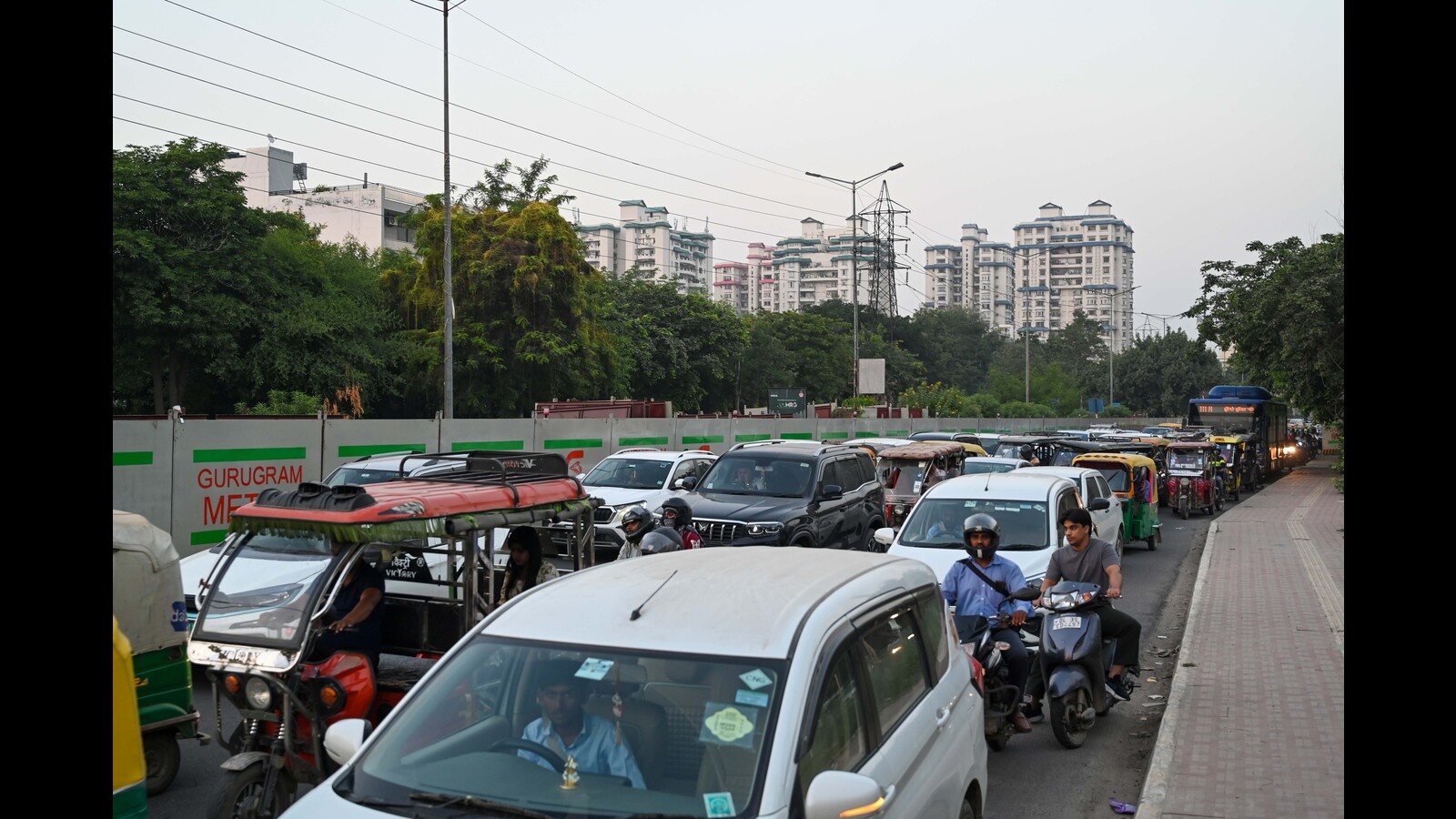
Gurugram Plans Multilevel Metro Parking To Ease Congestion
Urban mobility infrastructure in Gurugram may soon receive a capacity upgrade as plans move forward to develop multilevel parking complexes at two key metro stations along the city’s busy transit corridor. The proposal, currently awaiting approval from state planning authorities, aims to address growing parking demand around major commuter hubs while supporting more organised last-mile connectivity to the metro network. The initiative focuses on the development of structured parking facilities at two heavily used stations on the Delhi Metro’s Yellow Line. Officials involved in the project say existing surface parking areas at these locations are struggling to accommodate the rising number of commuters who drive to metro stations before continuing their journey by rail.
Transport planners say the proposed Gurugram multilevel metro parking facilities are being designed under a public-private partnership framework. Under this model, private concessionaires would construct and operate the parking infrastructure while ensuring efficient space utilisation and improved commuter amenities. Urban transport experts note that Gurugram has witnessed significant growth in office districts, residential developments, and commercial zones over the past decade. This expansion has intensified pressure on transport infrastructure, particularly around metro stations that function as key access points for daily commuters travelling to and from Delhi. Officials say land for parking infrastructure near the two stations was originally allocated during earlier phases of metro expansion, when the Yellow Line was extended into Gurugram. However, as commuter volumes increased over time, the scale of parking demand has surpassed the capacity of the existing open lots. If approved, the Gurugram multilevel metro parking facilities would replace or augment surface parking areas with multi-storey structures capable of accommodating significantly larger vehicle volumes.
Authorities believe such facilities can help reduce roadside congestion and improve pedestrian movement around station entrances. Transport planners point out that similar projects implemented at metro stations in Delhi have demonstrated how structured parking can optimise limited urban land while improving commuter convenience. In several cases, developers have also incorporated retail or commercial spaces within parking complexes to support project viability and reduce financial burden on public agencies. A senior official involved in the planning process said that detailed discussions between metro authorities and urban development agencies have been ongoing for several months. Preliminary clearances have already addressed land availability and site preparation requirements. Beyond improving parking availability, planners say the project could strengthen the integration between private vehicles and mass transit systems. By creating organised parking hubs, authorities aim to encourage commuters to shift a larger portion of their journeys to public transport.
Urban mobility experts also highlight that well-designed transit infrastructure plays a key role in building climate-resilient cities by reducing dependence on long car commutes. If implemented effectively, the Gurugram multilevel metro parking initiative could contribute to a more structured and efficient urban transport ecosystem. The proposal is currently under review by the relevant state development authority, with further administrative clearances expected before project execution moves ahead.