


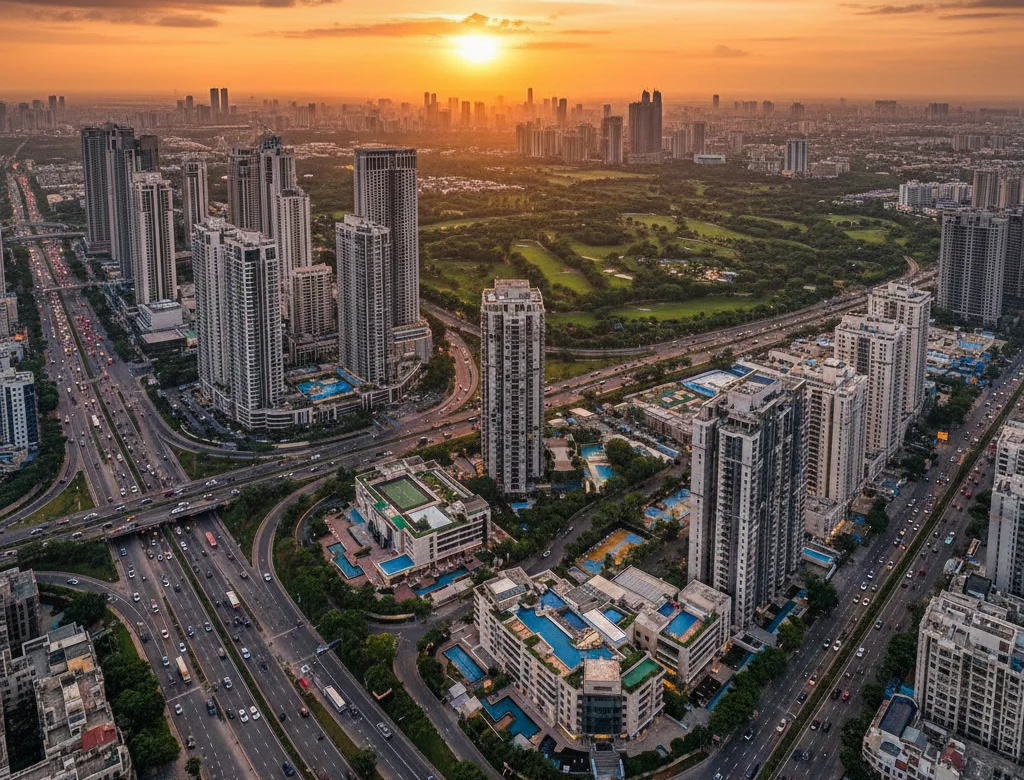
Delhi-NCR’s premium housing market is entering a new phase as large domestic developers increasingly collaborate with global design and lifestyle brands to differentiate high-value residential supply. Two upcoming ultra-luxury housing developments planned across Gurugram and Noida reflect this shift, combining substantial private investment with branded design-led positioning aimed at affluent urban buyers.
Together, the two residential projects represent an estimated capital outlay of about Rs 3,500 crore and signal the entry of an international fashion and lifestyle label into India’s housing sector. Urban market analysts say such partnerships indicate how real estate in mature metros is moving beyond scale alone, with design identity, curated interiors and global branding becoming tools to command premium pricing in saturated markets. In Gurugram, one of the developments is planned within the Smart City Delhi Airport zone, an emerging mixed-use corridor near major transport infrastructure. The project will feature a limited number of large-format apartments, primarily four-bedroom homes, designed for high-income households seeking privacy, space and proximity to employment hubs. Planners note that this micro-market has gained momentum due to airport-led connectivity and the clustering of commercial districts nearby, reshaping residential demand along the city’s periphery. The second project is proposed in central Noida, an area that has seen renewed interest following improvements in expressway access and metro connectivity.
Spread over a compact land parcel, the development is expected to include a mix of larger family homes alongside smaller units, reflecting a broader buyer base. Housing economists observe that Noida’s evolving skyline now supports both luxury and aspirational housing, driven by its integration into the wider NCR job market. Both developments are being positioned as branded residences, with the international partner contributing to interior concepts and aesthetic direction rather than construction execution. Industry experts point out that this model allows developers to tap into global design recognition while retaining operational control. However, it also raises questions around long-term value, as buyers increasingly scrutinise not just branding but sustainability credentials, energy efficiency and maintenance transparency. From an urban policy perspective, such projects underline the growing concentration of capital in high-end housing even as affordability challenges persist across NCR. City planners caution that while premium developments enhance tax bases and employment during construction, balanced urban growth will require parallel investment in mid-income housing, public transport and social infrastructure.
Both projects are slated for completion by the end of the decade, aligning with NCR’s broader infrastructure pipeline, including airport expansion, expressway networks and metro extensions. As branded luxury housing gains ground, the next test for the region’s real estate market will be whether design-led development can coexist with climate-responsive construction and inclusive urban planning an equation that will shape how NCR’s cities evolve over the coming years.
ALso Read: Godrej Properties Drives Large Scale Residential Supply
