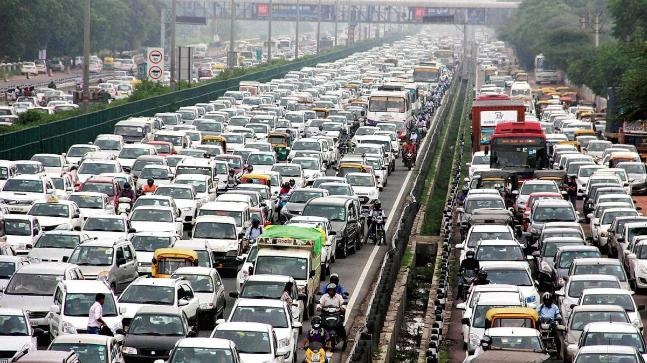
Gurugram MG Road Development Targets Traffic Relief
A key arterial stretch connecting Gurugram to Delhi is set for a major transformation, as the National Highways Authority prepares to assume control of MG Road between Iffco Chowk and the Haryana border. The move is expected to streamline corridor-level planning and unlock upgrades aimed at easing congestion along one of the region’s busiest urban links. The 5.5-kilometre stretch, currently managed by the state public works department, will be integrated into the national highway network, extending an already ongoing upgrade of the adjoining section towards south Delhi. Urban mobility experts say consolidating management under a single agency could enable more coherent infrastructure planning across state boundaries, particularly in high-traffic metropolitan corridors.
Once operational control is transferred, authorities plan to initiate a detailed project assessment to guide future interventions. Early priorities are expected to include resurfacing, drainage improvements, and pedestrian infrastructure repairs—critical for both vehicular efficiency and commuter safety. However, the longer-term vision for the Gurugram MG Road upgrade extends beyond maintenance to structural redesign. A key proposal under consideration is the development of a grade-separated interchange at Iffco Chowk, a major traffic node that currently experiences significant congestion during peak hours. The location is emerging as a multi-modal hub, with planned regional rapid transit connections, metro expansion, and road networks converging in the same zone. Transport planners note that without capacity augmentation, traffic volumes at such intersections could outpace existing infrastructure. The Gurugram MG Road upgrade also reflects broader shifts in urban infrastructure strategy, where road corridors are increasingly viewed as integrated mobility systems rather than standalone assets.
Experts emphasize the need to align highway upgrades with public transport networks, pedestrian pathways, and last-mile connectivity to ensure balanced and inclusive mobility outcomes. From an economic standpoint, improved connectivity along this corridor could influence real estate activity and commercial development in adjoining areas. Enhanced road conditions and reduced travel times often attract business investment, though analysts caution that infrastructure expansion must be matched with zoning and planning controls to prevent unplanned growth. Environmental considerations are also expected to play a role in the project’s design phase. With rising concerns around urban heat and flooding, infrastructure upgrades are increasingly incorporating climate-resilient features such as improved stormwater systems and heat-resistant materials. Experts suggest that integrating such elements into the Gurugram MG Road upgrade will be essential to ensure long-term sustainability.
The project is part of a wider effort to modernise critical urban corridors across the National Capital Region, where inter-city movement continues to intensify. As planning progresses, the effectiveness of execution and coordination between agencies will determine whether the corridor can transition into a more efficient and future-ready transport spine.