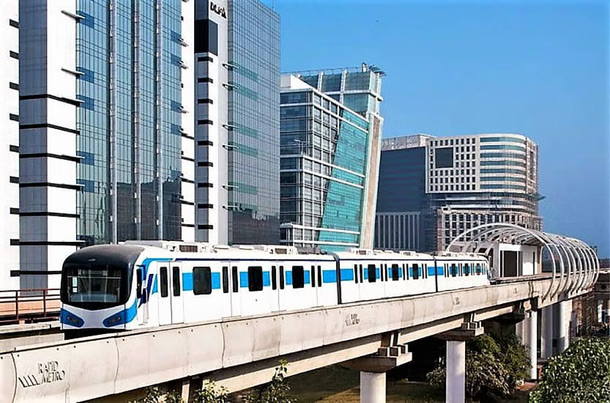
Gurugram’s planned metro expansion through its older urban districts has undergone a significant design revision, with the corridor now set to run along the Delhi–Jaipur highway instead of interior roads. The realignment, approved during project planning reviews, lengthens the route by nearly a kilometre and reshapes how the city’s metro system will integrate with regional rail and employment hubs.
The revised alignment follows changes made to the Regional Rapid Transit System (RRTS), which is now being developed along National Highway 48. Urban transport officials say synchronising the two systems was necessary to avoid fragmented infrastructure and to improve long-term passenger interchange between city and regional rail services. The decision also reflects evolving travel patterns in Gurugram, where highway corridors have become major centres of employment and daily commuting. Under the earlier plan, the metro line was to transition from Old Delhi Road towards the highway through a narrower arterial stretch. The updated route instead runs directly along wider road sections, extending northwards to the Delhi border near Dundahera before curving towards the Shankar Chowk interchange. This adjustment increases the project length but is expected to simplify construction, reduce land acquisition complexity, and allow for more flexible station design.
Planners involved in the project note that the wider right-of-way along the highway offers operational advantages, including safer construction staging and improved access for utilities and emergency services. More importantly, the new alignment enhances coverage for densely used commercial zones such as Udyog Vihar and adjoining industrial estates, where last-mile connectivity remains a persistent challenge. A key outcome of the redesign is the proposed co-location of the metro’s terminal station with an underground RRTS station at Shankar Chowk. This would create a multi-modal interchange linking the metro, rapid regional rail and the existing Rapid Metro network. Pedestrian infrastructure, including foot overbridges and subways, is being planned to ensure barrier-free transfers, with some access works already underway through private-sector participation.
From a financing perspective, the Haryana government is exploring multilateral funding options, including potential World Bank support, reflecting the project’s scale and its role in reducing road-based commuting emissions. Cost estimates and tender documentation are currently being prepared, while the final project outlay remains under assessment due to the alignment change. Urban mobility experts say the Gurugram metro alignment revision highlights a broader shift in Indian city planning away from isolated transit projects and towards integrated, climate-conscious transport networks. As Gurugram continues to grow as a regional employment hub, the success of this corridor will depend on timely execution, coordinated land-use planning, and strong last-mile connectivity that serves both workers and residents.
Gurugram Metro Route Revised Along NH Forty Eight