


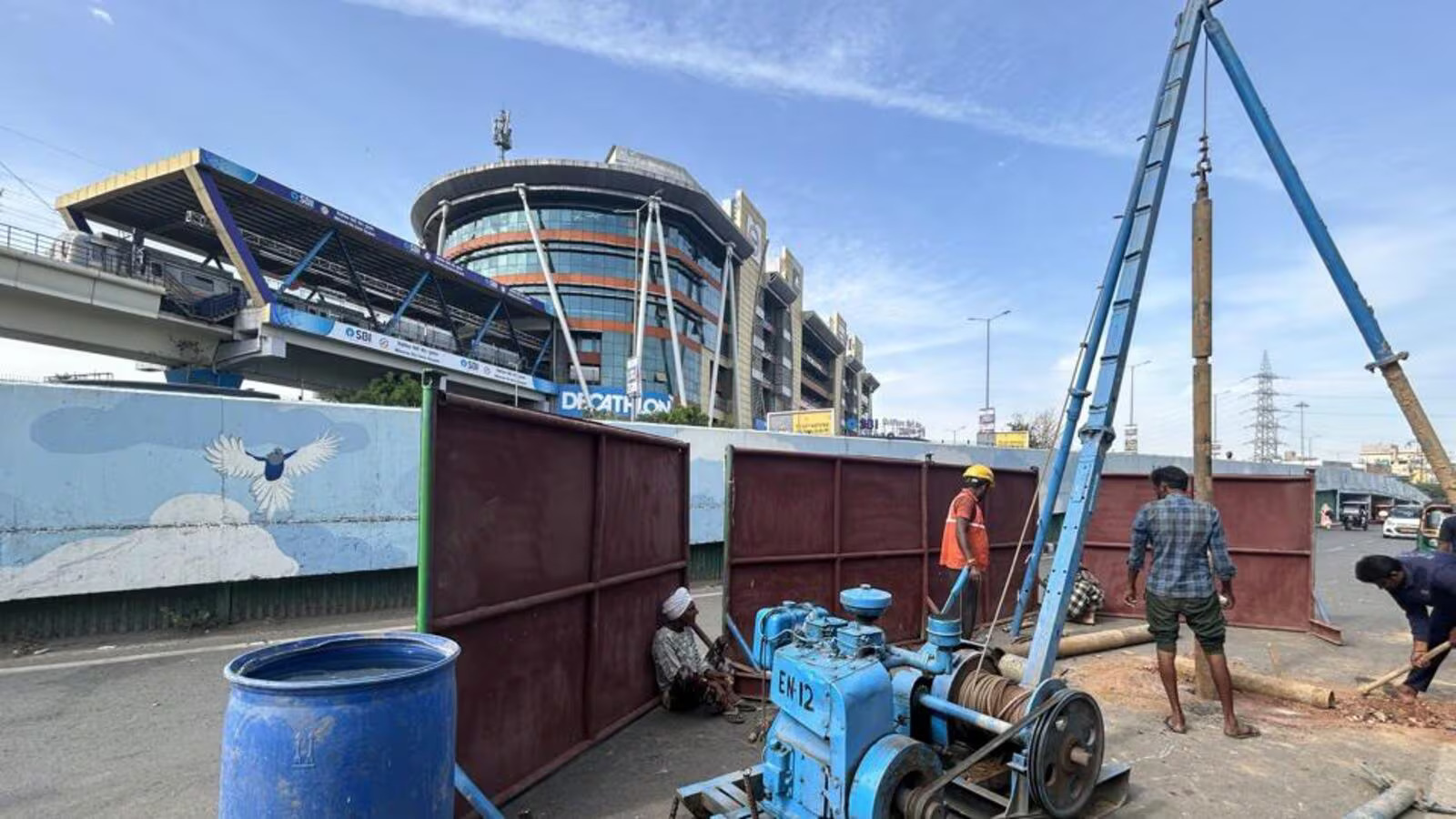
Gurugram is preparing for a major leap in its transport future, as construction work on the long-awaited metro network is set to begin on 5 September. The Bhoomi Pujan ceremony will mark the official launch of Phase One, laying the foundation for a mass rapid transit system expected to transform mobility across the fast-growing city.
According to district officials, the first phase of the project will include 15.22 kilometres of elevated viaduct, 15 stations, a 1.85-kilometre spur to the Dwarka Expressway, and a ramp connecting to the proposed depot in Sector 33. Authorities have emphasised that the project is not only a much-needed solution to traffic congestion but also an investment in creating eco-friendly and sustainable transport for the city’s expanding population. The project’s contract for Phase One has been awarded to a joint venture at a cost of around ₹1,277 crore plus GST. Officials said site mobilisation will begin shortly after the ceremony, with machinery including piling rigs already positioned near Sector 44, where the first stretch of the metro line will emerge from the existing Yellow Line of Delhi Metro.
Experts from Gurugram Metro Rail Limited (GMRL) have highlighted that this is only the beginning of a larger expansion plan. Surveys for the second phase are already under way to ensure the tendering process can be fast-tracked, keeping the project timeline on track and minimising delays that have historically hampered metro development in other cities. Urban planners have pointed out that Gurugram’s reliance on private vehicles has not only choked its arterial roads but also increased its carbon footprint. The metro system, when completed, is expected to reduce road congestion, cut vehicular emissions, and provide a cleaner alternative for thousands of daily commuters. For a city that has emerged as a hub of IT services, real estate, and finance, sustainable transport is seen as a critical step in ensuring equitable and efficient mobility.
City residents, too, are hopeful that the metro will bridge gaps in last-mile connectivity and bring them closer to the broader Delhi-NCR network. By linking key residential and commercial sectors with business hubs, the project promises to ease daily commute times and enhance overall quality of life. Authorities have described the Bhoomi Pujan as a historic milestone for Gurugram, one that represents not only progress in infrastructure but also a shift towards building an inclusive, climate-conscious urban ecosystem. The real test, however, will be in the execution—ensuring timelines are met and the city reaps the benefits of a modern, efficient, and sustainable metro network.
Also Read : Kolkata Metro Crosses Eight Lakh Daily Ridership Earning Rs 1.6 Crore Revenue
