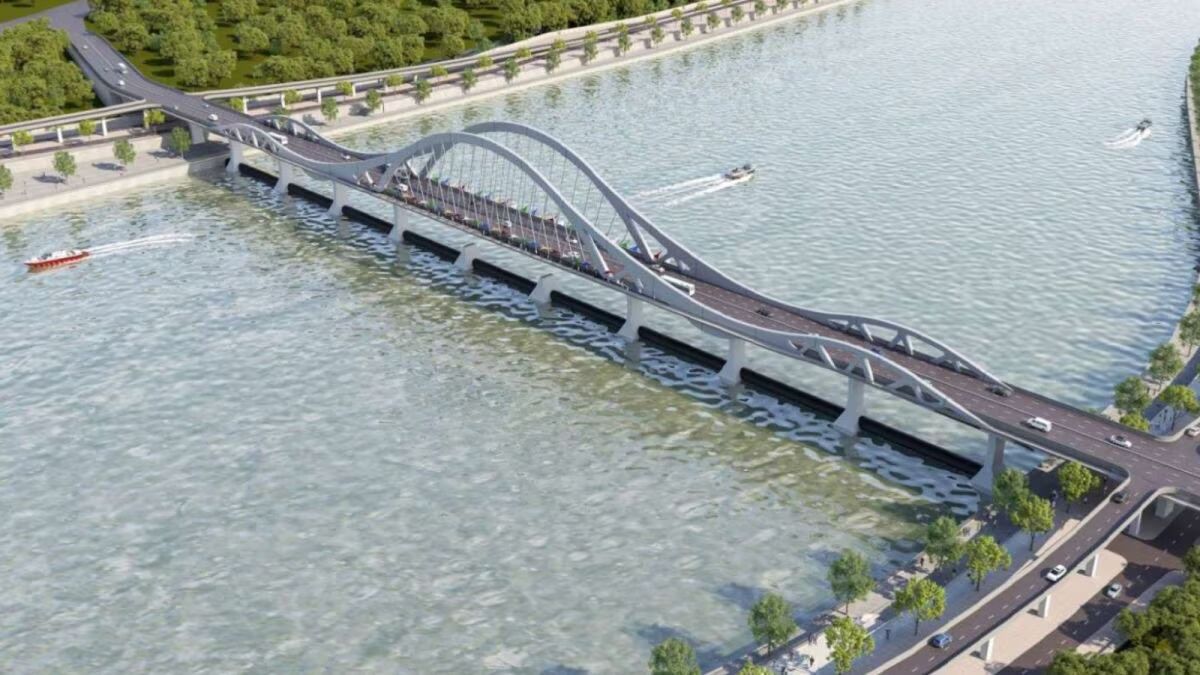
Authorities overseeing India’s national highway network are preparing a targeted infrastructure upgrade near the Masani Barrage corridor to address persistent congestion along one of the busiest inter-city routes linking Delhi and Jaipur.
The plan includes constructing a new bridge structure and developing an additional two-kilometre roadway to streamline traffic flow on the Delhi–Jaipur highway near Rewari, a key freight and commuter corridor in the National Capital Region. The proposed works will focus on the Masani Barrage crossing, a critical junction where traffic patterns shift between three-lane and two-lane sections, creating a bottleneck for vehicles travelling from Delhi and Gurugram towards Jaipur. Transport planners say the current configuration forces highway traffic into a narrower carriageway at the barrage bridge, slowing vehicle movement and increasing the risk of accidents during peak hours.
To address this constraint, highway engineers plan to construct a new three-lane structure across the barrage and develop an approximately two-kilometre stretch of additional road infrastructure on the Jaipur-bound side of the corridor. The upgrade is expected to provide a continuous three-lane passage through the segment, allowing smoother merging and dispersal of traffic. The Masani Barrage location lies close to a major convergence of regional highways connecting Gurugram, Rewari and industrial clusters along the Delhi–Mumbai economic corridor. The barrage itself sits on the Sahibi river system and functions as both a water control structure and a transport crossing linking different sections of the national highway network.
Traffic volumes along this corridor have increased sharply over the past decade due to expanding logistics operations, industrial growth in Haryana’s manufacturing belt, and rising inter-city commuter movement. Heavy freight vehicles travelling between Delhi, Rajasthan and western India share the same route with daily passenger traffic, making even small road capacity constraints capable of triggering significant congestion. Infrastructure analysts say resolving chokepoints on national highways is becoming increasingly important as India continues to strengthen long-distance economic corridors. Bottlenecks at bridges, interchanges and older road segments can slow logistics networks and increase fuel consumption, affecting both productivity and environmental performance.
From a regional planning perspective, projects such as the Masani Barrage road project highlight how targeted upgrades—rather than entirely new expressways—can deliver meaningful improvements in highway efficiency. By removing narrow bridge crossings or poorly aligned segments, authorities can improve travel reliability without requiring large-scale land acquisition across entire corridors. Urban mobility specialists also emphasise the importance of integrating highway upgrades with broader transport planning, including service roads, safety barriers and local access routes for nearby communities. When designed carefully, such improvements can reduce accident risks while supporting smoother freight movement between industrial regions.
Work on the Masani Barrage road project is expected to proceed after land availability and tender processes are finalised. Once completed, the corridor upgrade could significantly improve highway travel between Gurugram, Rewari and Jaipur, easing pressure on a route that forms a vital link in northern India’s inter-state transport network.