


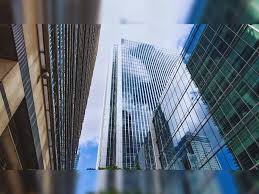
Gurugram has emerged as India’s most active market for ultra-premium residences, surpassing Mumbai in total transaction value of homes priced above Rs 10 crore during 2025. The shift signals a structural realignment in India’s luxury housing geography, with National Capital Region micro-markets attracting deeper pools of capital and high-net-worth buyers.
Industry data reviewed by Urban Acres shows that Gurugram’s luxury housing sales in the Rs 10 crore-plus bracket rose sharply over the past year, both in terms of volume and aggregate value. The total sales value crossed Rs 24,000 crore, exceeding comparable transactions in Mumbai within the same category. Unit absorption also expanded significantly, reflecting a widening base of affluent end-users and investors. The momentum in Gurugram luxury housing sales is closely tied to infrastructure delivery. Operational stretches of the Dwarka Expressway, stronger road connectivity to the Indira Gandhi International Airport corridor and NH-48, and proposed metro link extensions have altered travel times and land economics across emerging sectors. Urban planners note that such mobility-led value creation has historically triggered premium real estate cycles in global cities. Unlike earlier cycles concentrated around legacy addresses, current demand is spreading across Golf Course Road, Golf Course Extension Road and the Dwarka Expressway belt. Developers have introduced large-format residences with extensive shared amenities, signalling a shift from standalone luxury to integrated, community-oriented high-rise living. This reflects changing preferences among globally mobile professionals and business families seeking security, managed facilities and proximity to commercial hubs. Market observers attribute the growth to three converging factors: rising domestic wealth creation, formalisation of the real estate sector, and the relative price arbitrage compared to South Mumbai’s established luxury neighbourhoods.
While Mumbai continues to command high capital values, Gurugram’s larger land parcels allow for expansive designs and lifestyle infrastructure that appeal to new-age buyers. However, urban economists caution that rapid high-end expansion must be balanced with sustainable planning. High-density luxury towers increase pressure on water resources, power networks and transport systems unless supported by climate-resilient infrastructure. As Gurugram luxury housing sales accelerate, questions around groundwater recharge, green cover preservation, and transit-oriented development are likely to intensify. There is also a broader economic dimension. Premium housing transactions contribute significantly to stamp duty collections and local employment across construction, design and services. Yet inclusive urban growth requires parallel investment in affordable housing, public transport and social infrastructure to prevent spatial inequality.
The coming year will test whether Gurugram’s ascent represents a cyclical spike or a durable repositioning within India’s urban hierarchy. Much will depend on sustained infrastructure execution, regulatory stability and the city’s ability to evolve into a low-carbon, liveable metropolitan ecosystem rather than merely a high-value property destination.
Also Read: Ahmedabad sees major warehousing investment deal
Gurugram luxury housing sales outpace Mumbai
