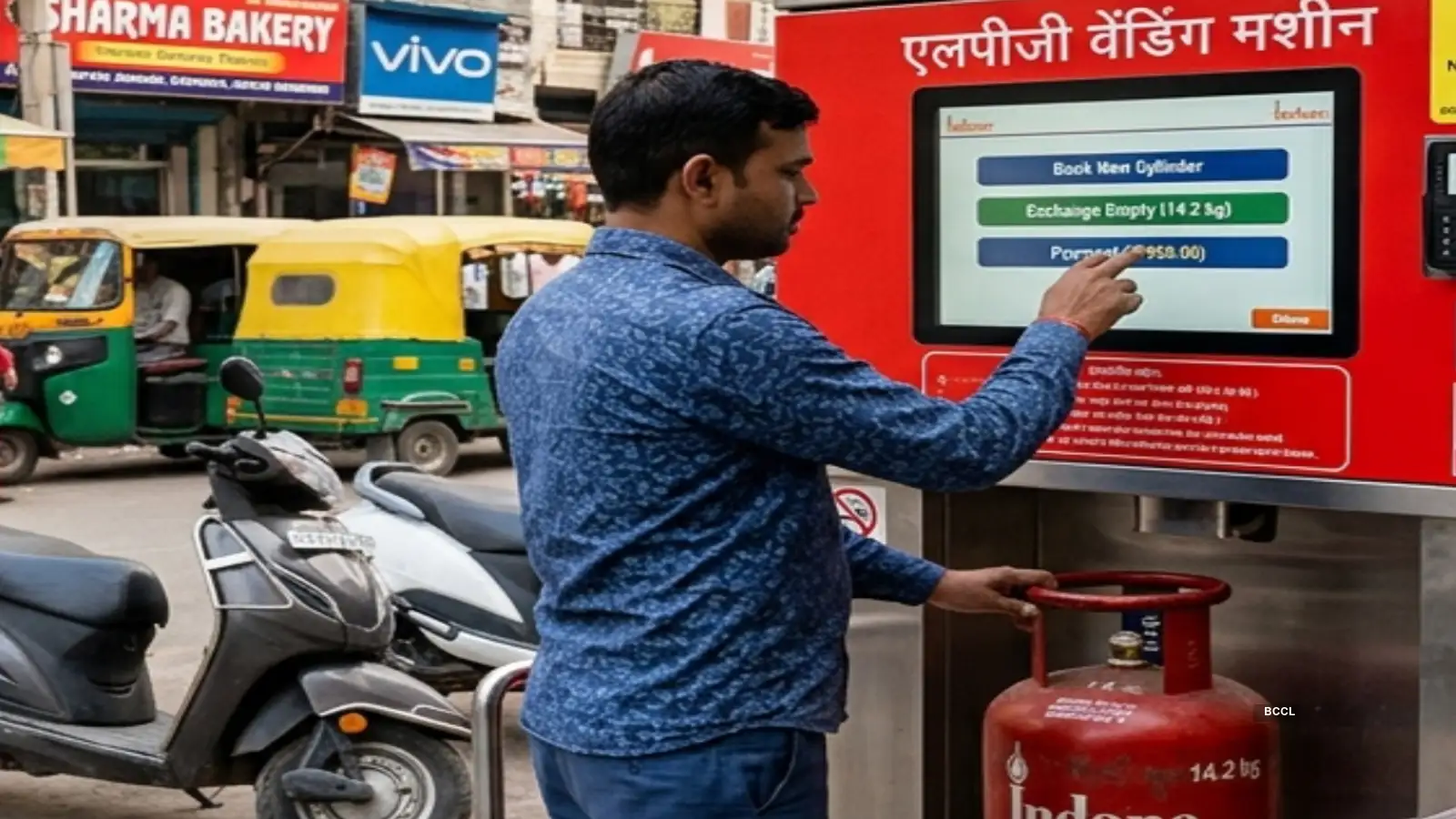
Gurugram has become the first city in northern India to pilot an automated LPG dispensing system, marking a shift towards decentralised and technology-driven fuel distribution. The Gurugram LPG ATM, introduced in a residential cluster along the Sohna corridor, enables consumers to exchange cylinders within minutes, offering an alternative to traditional delivery-based supply chains. The initiative comes at a time when supply disruptions and logistical delays have exposed vulnerabilities in conventional LPG distribution networks. By enabling round-the-clock access through a self-service model, the Gurugram LPG ATM aims to reduce dependence on scheduled deliveries while improving reliability for urban households.
The system functions as a compact, automated unit that facilitates cylinder exchange through digital authentication and payment. Users verify their identity via mobile-linked credentials, complete a digital transaction, and receive a filled cylinder while depositing an empty one. The process typically takes only a few minutes, significantly reducing wait times compared to standard booking and delivery cycles. Urban infrastructure experts suggest that such decentralised dispensing models could improve last-mile energy access in dense cities, particularly where delivery logistics face congestion or labour constraints. However, they also note that scalability will depend on network integration, safety compliance, and real-time inventory management. A notable feature of the Gurugram LPG ATM is the introduction of composite cylinders, which differ from conventional steel units. These cylinders are lighter, corrosion-resistant and designed with a semi-transparent body that allows users to monitor gas levels. Reduced weight can improve accessibility, especially for elderly users and smaller households, while also lowering handling risks.
From a sustainability perspective, experts highlight that while LPG remains a fossil fuel, improving distribution efficiency can reduce indirect emissions associated with transport and delivery operations. Automated systems could also support better tracking of consumption patterns, enabling more efficient resource planning. The pilot unit currently has limited storage capacity and relies on automated alerts for replenishment, indicating that backend logistics will remain critical to ensuring uninterrupted service. Industry observers note that the success of such systems will depend on maintaining supply consistency and addressing safety concerns, particularly in high-density residential areas. The Gurugram LPG ATM also reflects a broader trend towards digitisation in urban service delivery, where user convenience, speed and transparency are becoming central to infrastructure design. As Indian cities continue to expand, such models may complement traditional systems rather than replace them entirely.
If the pilot demonstrates operational viability, similar installations could be introduced in other urban centres, potentially reshaping how essential household energy is accessed. For now, the experiment offers a glimpse into how technology could streamline everyday services in rapidly growing cities.