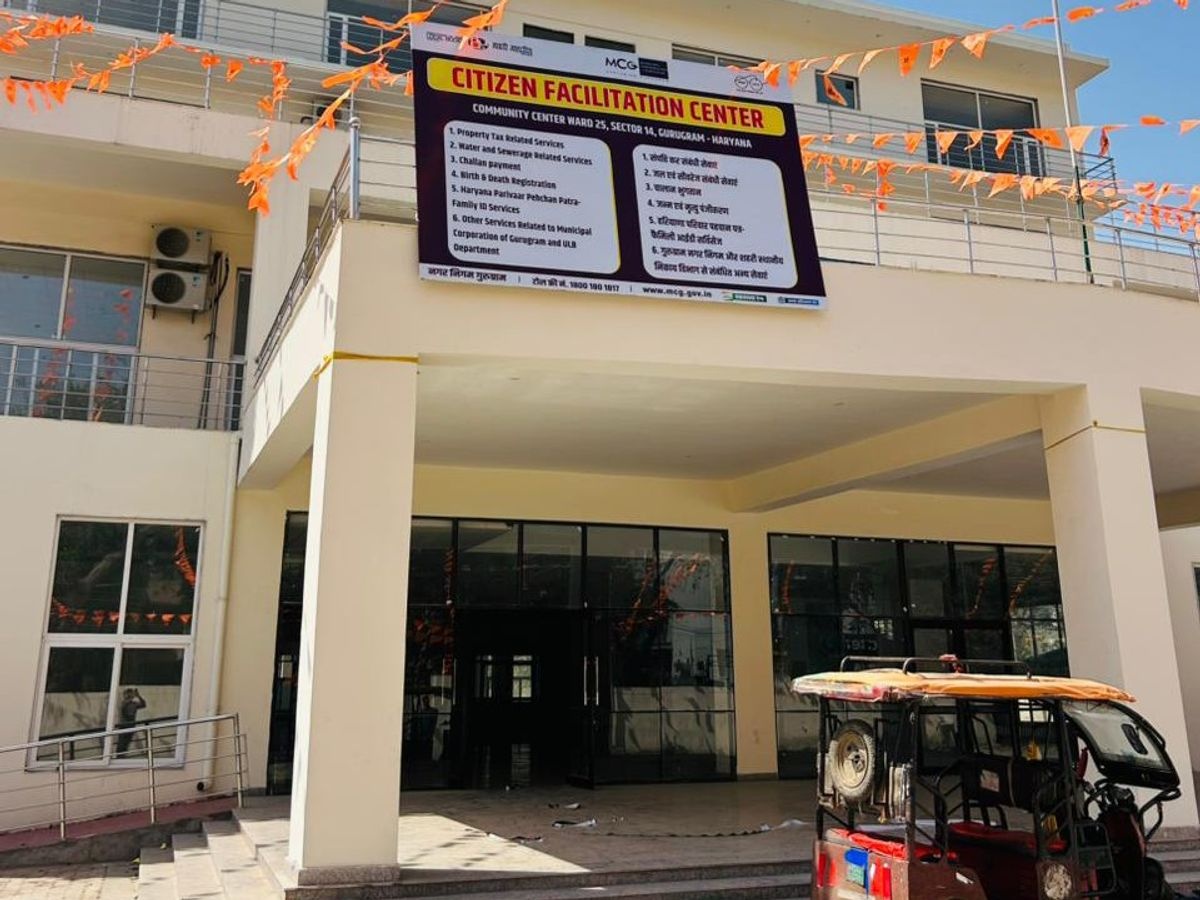
Gurugram Introduces Citizen Facilitation Centre For Civic Services
The municipal administration in Gurugram has launched a Citizen Facilitation Centre aimed at consolidating key civic services at a single location, an initiative designed to streamline public service delivery and reduce administrative hurdles for residents. The facility, set up within a community centre in Sector 14, enables citizens to complete various municipal procedures without navigating multiple government offices a step that reflects broader efforts to modernise urban governance in rapidly expanding cities. Municipal officials involved in the initiative said the Citizen Facilitation Centre will serve as a single-window platform for a wide range of services linked to the city administration and the state’s urban local bodies department.
Among the key functions available are property tax transactions, water supply and sewerage service requests, payment of municipal challans, and civil registration services such as birth and death certificates. The centre also supports services connected with the state’s family identification system, which is increasingly used to streamline welfare schemes and administrative processes. By integrating these services at a single location, authorities aim to reduce the time and complexity often associated with routine government documentation and payments. Urban governance specialists say the establishment of physical one-stop service centres remains relevant even as municipalities expand digital service platforms. While online portals can improve efficiency, many residents still rely on in-person assistance for documentation, grievance redressal and verification procedures. In densely populated cities such as Gurugram, where new residential and commercial developments continue to expand, accessible civic service points play an important role in maintaining administrative efficiency.
Officials overseeing the project indicated that the Citizen Facilitation Centre will also function as a help desk for addressing public grievances related to municipal services. Residents will be able to submit complaints, track service requests, and complete documentation processes in one place rather than moving between separate departmental offices. Urban planners note that strengthening citizen service systems can indirectly support more sustainable city management. Efficient tax collection, for instance, contributes to municipal revenue needed for infrastructure investments such as drainage systems, waste management, green spaces and transport networks. Transparent public service processes can also improve trust between residents and local authorities. Gurugram has witnessed rapid urbanisation over the past two decades, evolving into one of India’s major commercial hubs. With expanding residential clusters and increasing population density, local administrations face growing pressure to deliver responsive governance systems that match the pace of urban growth. Officials suggested that the current Citizen Facilitation Centre could serve as a model for similar facilities in other parts of the city if public response remains positive. Expanding such centres across multiple wards could reduce travel time for residents and improve accessibility to municipal services, particularly for senior citizens and households located far from administrative headquarters.
As cities across India explore smarter governance tools and digital platforms, integrated civic service centres are increasingly being seen as complementary infrastructure — ensuring that urban administration remains both technologically advanced and accessible to diverse communities.