


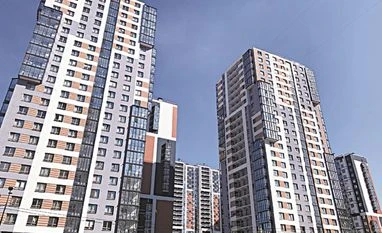
Gurugram’s housing market is facing renewed scrutiny after a widely discussed online account highlighted a growing disconnect between household incomes, home prices, and everyday urban livability. The episode has struck a chord with India’s salaried middle and upper-middle classes, raising broader questions about whether the city’s real estate trajectory remains aligned with the quality of life it offers.
Despite annual household earnings approaching Rs 1 crore, the individual described being unable to secure what they considered a “decent” home within a Rs 1.5–1.7 crore budget. While such figures place buyers firmly within the top income brackets nationally, urban economists argue that Gurugram operates under a different pricing logic one shaped by land scarcity in premium corridors, speculative capital, and fragmented planning. Unlike older metropolitan cores, Gurugram evolved rapidly through private-sector–led development, often without commensurate public infrastructure. As a result, housing prices in sought-after micro-markets have risen faster than improvements in roads, drainage, air quality, and civic services. For many buyers, the frustration is no longer just about affordability, but about perceived value for money. Real estate analysts note that much of Gurugram’s price inflation is concentrated in select belts such as Golf Course Road and its extensions, where premium branding and limited supply have pushed ticket sizes well beyond the reach of even high-income professionals. At the same time, more affordable housing options exist on the city’s peripheries, but often come with longer commutes, weaker social infrastructure, and delayed civic provisioning.
This spatial imbalance is reshaping buyer sentiment. Professionals migrating from cities like Bengaluru, Pune, or Hyderabad where municipal governance and developer accountability tend to be more predictable often struggle to reconcile Gurugram’s pricing with its infrastructure outcomes. The comparison has become sharper as remote and hybrid work models expand choice, allowing talent to prioritise liveability over proximity alone. From a city-planning perspective, the debate reflects a deeper structural issue. Gurugram’s housing supply has skewed heavily toward high-margin products, while investment in drainage, public transport, and environmental resilience has lagged. Seasonal flooding, traffic bottlenecks, and air pollution amplify the perception that housing costs are detached from urban performance. There are also implications for talent retention. Urban labour economists warn that if housing stress intensifies, cities risk losing skilled workers to better-balanced markets or nearby satellite towns offering lower entry prices and improving connectivity. This has knock-on effects for local economies, office markets, and long-term competitiveness.
Looking ahead, experts suggest that restoring confidence will require more than market corrections. Stronger development controls, infrastructure-first planning, and transparent quality benchmarks are essential to realign prices with outcomes. For Gurugram, the challenge is no longer whether homes can be sold but whether the city can deliver housing that justifies its cost in a climate-constrained, people-first urban future.
Also Read: India Residential Market Shows Global Outperformance
Gurugram Homebuyers Question Value Amid Price Surge
