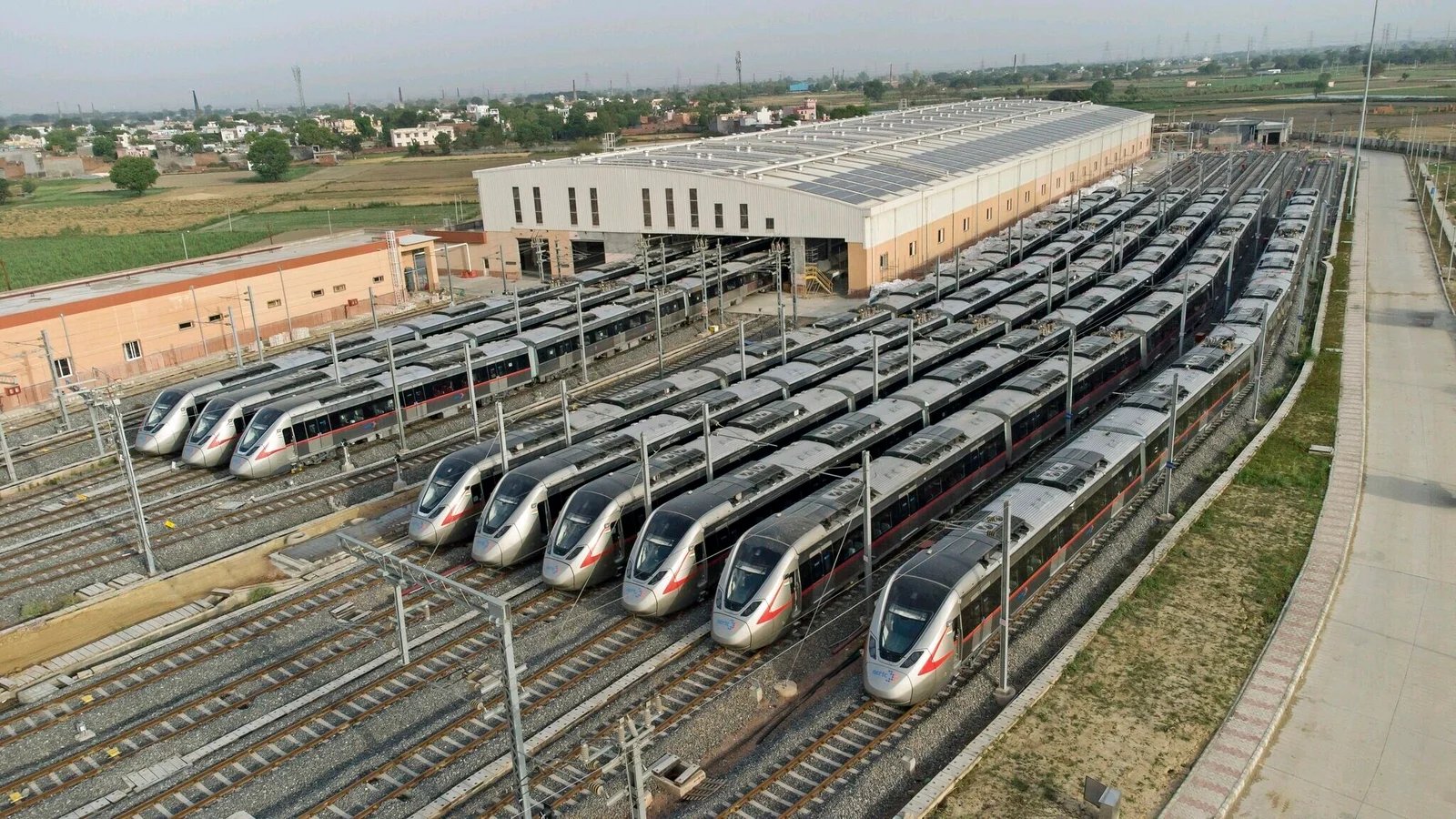
A proposed semi-high-speed transit corridor linking Gurugram, Faridabad and parts of Uttar Pradesh is set to significantly reshape regional mobility, with plans for 18 stations along its route. The initiative reflects a broader push to integrate fast transit systems with existing urban networks, aiming to ease congestion and improve intercity connectivity across the National Capital Region. The Gurugram–Faridabad alignment, spanning roughly 64 kilometers, is being designed under a hybrid model where metro and rapid rail services operate on shared infrastructure. Officials say this approach, already deployed on other regional corridors, allows for more efficient use of capital while expanding service coverage for both short- and long-distance commuters.
Under the current plan, the majority of stations will be located within Haryana, with a higher concentration in Faridabad compared to Gurugram. Urban planners note that station distribution often reflects anticipated demand clusters, including residential density, industrial zones, and emerging commercial hubs. The Gurugram Faridabad RRTS is expected to serve as a critical connector between these economic nodes, reducing travel times and supporting labour mobility. A key feature of the corridor is its integration with existing metro systems. One of the primary interchange points is planned at a major metro hub in Gurugram, enabling seamless transfers between local and regional services. Additional interchange nodes are expected to link with upcoming metro expansions, creating a layered transit ecosystem that can support both intra-city and inter-city travel. Transport experts suggest that such multimodal integration is essential for reducing reliance on private vehicles, particularly in fast-growing urban regions. By linking residential areas with employment centres through high-capacity transit, the Gurugram Faridabad RRTS could help lower traffic congestion and associated emissions, contributing to more sustainable urban growth.
The corridor is also expected to influence real estate development patterns. Improved connectivity typically drives demand in peripheral areas, encouraging transit-oriented development (TOD) around station zones. Industry observers anticipate that land values and commercial activity could rise in proximity to planned stations, particularly in underdeveloped stretches of the corridor. However, the success of the project will depend on execution timelines, last-mile connectivity, and fare integration with existing systems. Without efficient feeder services and pedestrian-friendly access, the benefits of high-speed transit may not fully reach end users. Experts emphasize the need for coordinated planning between transport agencies and local authorities to ensure inclusive access. From an infrastructure perspective, the shared-track model also presents operational challenges, including scheduling coordination and maintenance requirements. Yet, if managed effectively, it offers a cost-efficient pathway to expanding transit capacity in dense urban corridors.
As planning progresses, the Gurugram Faridabad RRTS is being positioned not just as a transport project but as a catalyst for regional economic integration. Its long-term impact will likely extend beyond mobility, shaping land use, investment flows, and the sustainability trajectory of the wider NCR region.