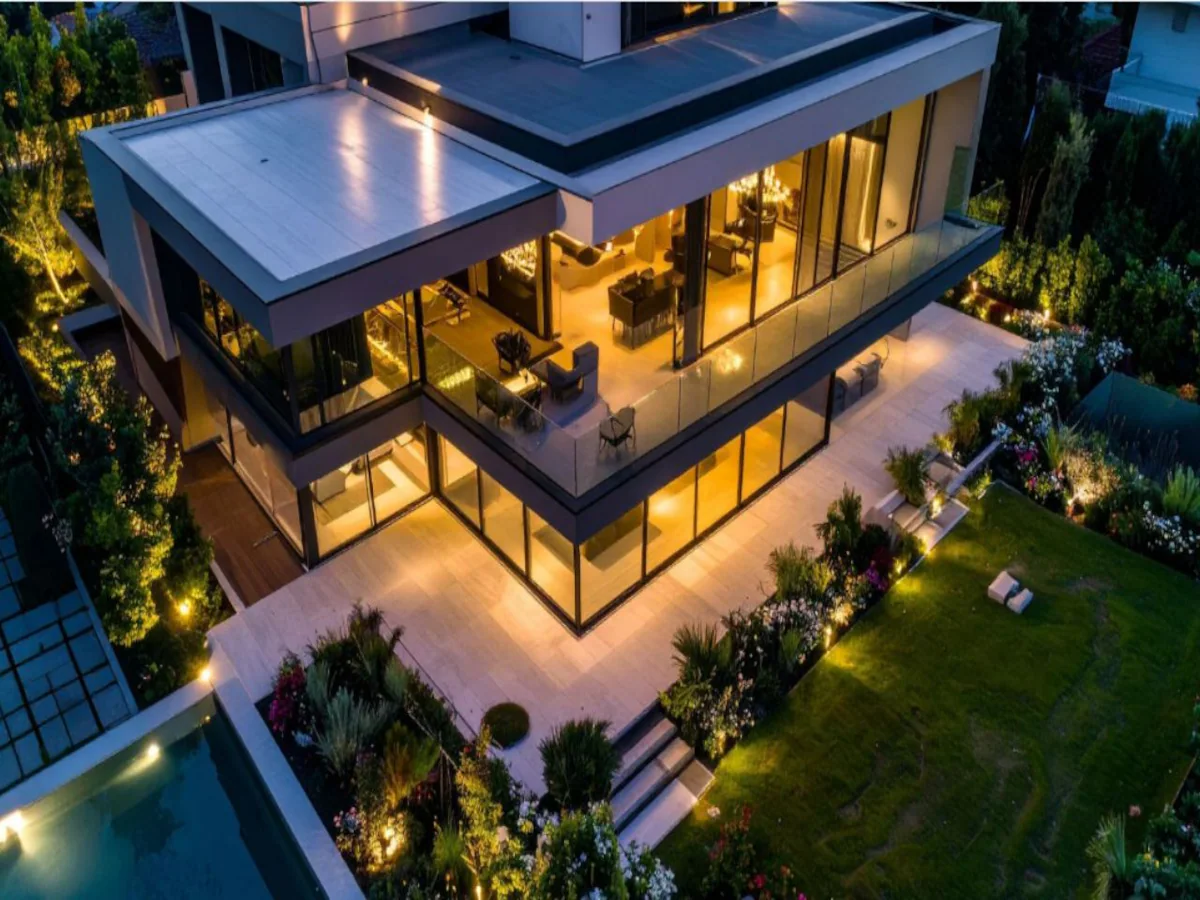
Gurugram has overtaken Mumbai to become India’s leading luxury housing market, with high-end property sales in 2025 reaching unprecedented levels in the ₹10 crore and above segment — a milestone that signals deeper shifts in urban property demand, wealth distribution and metropolitan appeal outside traditional coastal hubs. The change marks a new turning point in how India’s affluent buyers are reshaping urban residential hierarchies and investment flows.
According to the latest data from real estate analysts, Gurugram’s luxury residential market recorded roughly ₹24,120 crore of transactions for homes priced at ₹10 crore and above in calendar year 2025 — an 80 % year-on-year increase from 2024 and the highest such value for any Indian city. Mumbai, long regarded as the benchmark for premium housing due to its historical capital values and constrained land availability, saw sales of about ₹21,900 crore in the same segment, underscoring a shifting competitive landscape in top-end real estate.Urban planners and real estate strategists observe that Gurugram’s rise reflects a confluence of economic, infrastructural and socio-demographic factors. Improved connectivity through major corridors such as Dwarka Expressway, Golf Course Road and Golf Course Extension Road has catalysed new micro-markets, attracting high-net-worth individuals (HNWIs) seeking expansive living space, superior amenities and lifestyle-oriented neighbourhoods beyond legacy city centres.
The recorded figures also reveal a dramatic uplift in unit sales volume: nearly 1,500 homes in the ultra-luxury category were sold in Gurugram last year, almost triple the number in 2024 and nearly ten times that of 2023. Experts attribute this rapid uptake to a combination of robust entrepreneurial wealth creation, resilient capital flows and the maturing of newer residential nodes that align with climate-friendly, spacious and green planning principles increasingly prioritised by affluent buyers.This trend is not merely about high prices. Gurugram’s luxury housing segment accounted for roughly a quarter of the city’s total residential market value in 2025, with a growing preference for sizeable homes averaging between 4,000 and 6,000 sq ft — a stark contrast to the densifying cores of older metros like Mumbai, where scarcity often drives compact living.
The broader Delhi-National Capital Region also featured strongly in the ultra-luxury league table, with Noida and Greater Noida collectively emerging as the third-largest market by value. This suggests that premium residential demand is decentralising toward well-connected, infrastructure-rich suburban ecosystems that can support sustainable urban living.
For urban policymakers and real estate stakeholders, Gurugram’s ascent underscores the importance of forward-looking infrastructure investment, integrated mobility and planning frameworks that balance density pressures with quality of life. As Indian cities evolve, the luxury housing segment becomes a barometer not just of wealth but of how inclusive, resilient and diversified urban growth strategies are unfolding beyond traditional metropolitan cores.