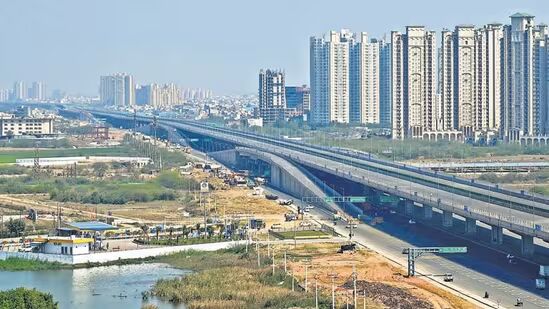
A stretch once considered peripheral to Gurugram’s main residential zones is rapidly emerging as one of the National Capital Region’s most dynamic property corridors. Developers are increasingly positioning projects along the Dwarka Expressway to capture rising demand for premium housing, signalling a shift in the region’s real estate growth strategy.
The 29-kilometre arterial road connecting Delhi’s Dwarka with Gurugram has significantly improved travel links between residential sectors, business districts and the international airport. As connectivity improves and infrastructure along the corridor becomes operational, developers are recalibrating their portfolios to focus on high-value residential projects in the area. Industry observers say the emerging Dwarka Expressway luxury housing segment reflects broader changes in buyer behaviour across metropolitan property markets. Affluent professionals, entrepreneurs and overseas investors are increasingly seeking larger homes, integrated communities and lifestyle-driven amenities rather than purely location-based real estate investments. Data from real estate research groups indicates that Gurugram has become one of India’s fastest-growing luxury housing markets.
Sales of high-value homes priced above ₹10 crore rose sharply in recent years, with transaction volumes reaching record levels as wealth creation and investor interest accelerate in the NCR region. The Dwarka Expressway corridor itself has seen dramatic growth in transaction value. Property deals along the stretch increased significantly within a year, driven by new project launches and improving infrastructure connectivity. Analysts say such rapid appreciation highlights the corridor’s transformation from a fringe area into a major residential growth axis for the metropolitan region. Urban infrastructure upgrades are also supporting the rise of Dwarka Expressway luxury housing. Road expansions, expressway connectivity and upcoming transit infrastructure are gradually integrating the corridor with key employment centres across Delhi and Gurugram.
These improvements are expected to strengthen daily commuting links and make the area more viable for long-term residential development. Urban planners note that infrastructure corridors often act as catalysts for new housing markets. As transportation access improves, previously underdeveloped areas can quickly evolve into organised residential clusters supported by retail, education and healthcare facilities. Developers are responding by introducing projects focused on lower-density planning, curated amenities and community-oriented design. These projects typically emphasise landscaped open spaces, wellness facilities and integrated social infrastructure aimed at long-term residents rather than speculative buyers.
However, market analysts caution that sustained growth in the corridor will depend on the timely completion of supporting urban infrastructure. Adequate public transport, civic utilities and commercial development will be necessary to ensure that new residential communities function as complete urban ecosystems rather than isolated enclaves. The rising focus on Dwarka Expressway luxury housing also reflects a broader trend within India’s residential market, where developers are gradually moving away from mass-volume housing toward premium developments with higher margins and stronger demand from affluent buyers.
For Gurugram, the transformation of the expressway corridor could reshape the geography of the city’s housing market over the coming decade. As infrastructure networks expand and new urban amenities take shape, the corridor is expected to evolve into one of NCR’s most influential residential and investment zones.