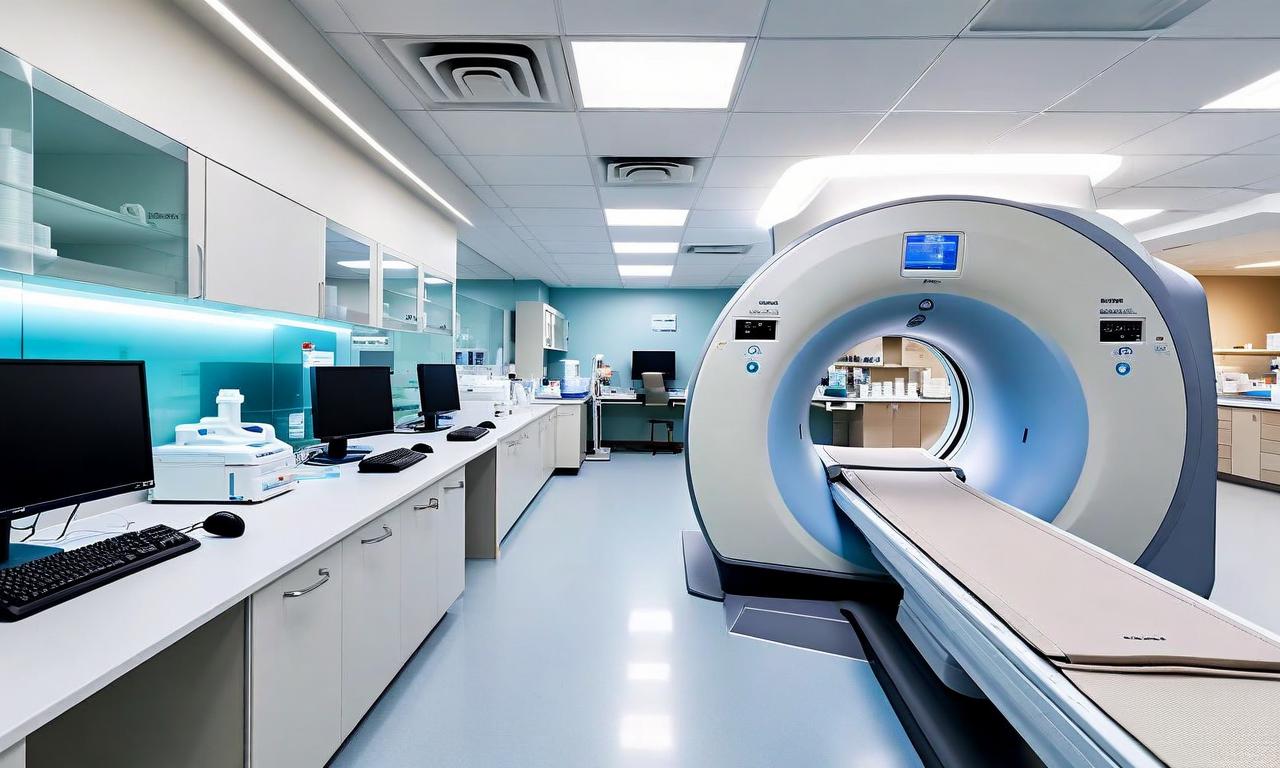
Gurugram Diagnostic Centre Upgrades Imaging Technology Infrastructure
A healthcare diagnostics company has approved a set of infrastructure and operational upgrades aimed at strengthening imaging capabilities and expanding laboratory operations across its network, signalling continued investment in private diagnostic infrastructure in India’s urban healthcare ecosystem.
The company’s board recently cleared a proposal to upgrade imaging equipment at its Gurugram diagnostic facility, replacing an existing SPECT system with a more advanced SPECT-CT imaging platform. The upgrade is expected to significantly enhance the facility’s diagnostic capabilities by combining nuclear imaging with computed tomography, allowing doctors to obtain more precise clinical data for disease detection and treatment planning. SPECT-CT technology integrates two diagnostic techniques—single photon emission computed tomography and CT scanning—within a single imaging system. This approach allows clinicians to combine functional imaging with anatomical detail, improving the accuracy of diagnosing conditions such as cancer, cardiac disorders and neurological diseases.
Industry analysts say such investments reflect a broader shift within India’s diagnostics sector toward high-precision imaging and advanced diagnostic infrastructure. As urban populations grow and healthcare demand increases, private diagnostic providers are expanding their technology capabilities to meet rising expectations for faster and more accurate medical testing. Alongside the equipment upgrade, the board approved operational changes related to construction and infrastructure works supporting the diagnostic network. These include revised arrangements for building, electrical and air-conditioning systems required for laboratory facilities operating beyond the National Capital Region.
The company also approved a location change for one of its laboratory facilities within Delhi, a move that could support improved operational efficiency and accessibility for patients. Such decisions typically reflect efforts by healthcare service providers to optimise laboratory placement in densely populated urban areas where accessibility and patient volumes strongly influence diagnostic service demand.
In addition to infrastructure decisions, the board authorised adjustments to the company’s financial and banking arrangements. These include opening new banking accounts and transferring certain loan facilities to a Gurugram branch of a private sector bank as part of financial restructuring aimed at supporting expansion plans. India’s diagnostic services sector has been expanding rapidly in recent years, driven by rising healthcare awareness, growing demand for preventive screening and increased access to private healthcare services in major cities. Private diagnostic providers now play a crucial role in supporting hospitals and clinics by offering specialised imaging and laboratory services.
The company operates a network of laboratories and diagnostic centres across multiple states, providing pathology and radiology services ranging from ultrasound and MRI scans to laboratory testing and specialised imaging procedures. Healthcare infrastructure specialists say technology upgrades such as SPECT-CT imaging are becoming increasingly important for diagnostic providers seeking to maintain competitiveness in a rapidly evolving healthcare market. Advanced imaging systems allow centres to offer more specialised services while reducing the need for patients to travel to large tertiary hospitals for certain diagnostic procedures.
As urban healthcare demand continues to grow, investments in modern diagnostic infrastructure are expected to play a critical role in strengthening India’s medical ecosystem. Expanding high-precision diagnostic capabilities can improve early disease detection, support clinical decision-making and ultimately enhance patient outcomes in rapidly growing metropolitan regions.