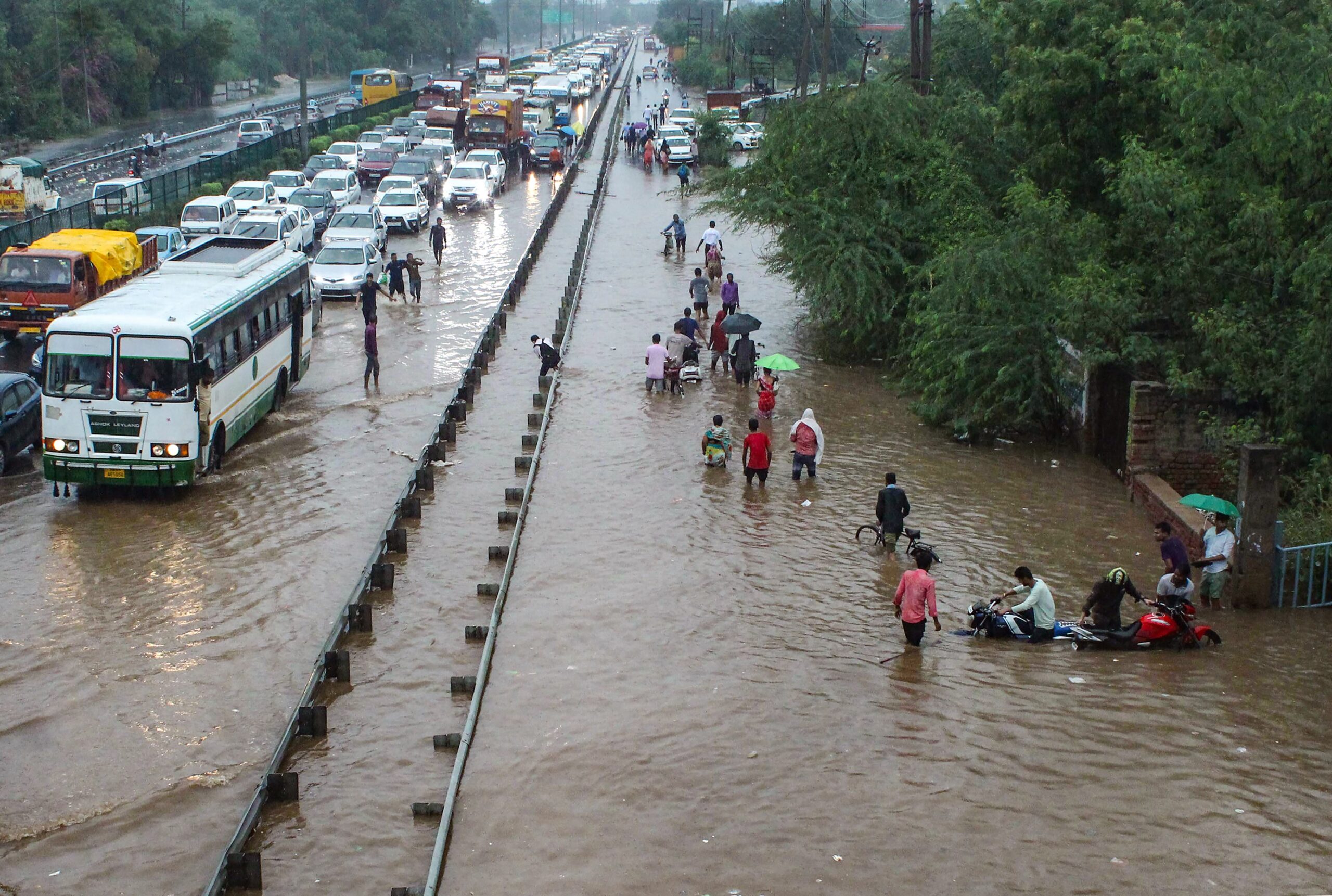
Gurugram Civic Infrastructure Struggles Before Monsoon
Persistent potholes, sewage overflow and recurring waterlogging across key neighbourhoods are raising questions about the resilience of Gurugram civic infrastructure, even before the monsoon season arrives. In several areas of the city, short spells of rainfall have already exposed gaps in drainage systems and road maintenance, highlighting the disconnect between rapid urban growth and the reliability of basic public services. Despite its reputation as a major corporate and real estate hub in the National Capital Region, the city’s everyday infrastructure continues to struggle under pressure from expanding population and traffic volumes. Several residential sectors near major arterial corridors have witnessed deteriorating road conditions, with deep potholes and damaged surfaces posing safety risks to commuters.
Areas surrounding the Southern Peripheral Road provide a clear example of the challenge. Road segments connecting residential sectors in this zone carry heavy daily traffic yet remain uneven and poorly maintained. During rainfall, damaged sections quickly fill with muddy water, making it difficult for motorists to judge the depth of potholes and increasing the risk of accidents. Urban planners often note that such conditions highlight deeper structural problems in city management. While periodic repair work is carried out, inconsistent drainage planning and fragmented maintenance responsibilities can result in recurring damage to road surfaces. Officials involved in infrastructure monitoring acknowledge that routine pre-monsoon preparedness measures are conducted, including drain cleaning and inspections of vulnerable locations. However, on-ground conditions suggest these efforts are often insufficient to prevent flooding or road degradation during even light rainfall. The situation is particularly concerning along several connecting roads on the city’s outskirts, where sewage overflow and clogged drains have created prolonged stretches of stagnant water.
In some locations, road shoulders remain broken while debris and plastic waste block drainage channels, worsening water accumulation during rain. Local traders operating along these corridors say recurring flooding affects both safety and economic activity. During rainy days, water accumulation near shops discourages customers and disrupts daily business operations. In commercial stretches dependent on neighbourhood footfall, even temporary waterlogging can result in reduced earnings. Dust pollution is another issue linked to deteriorating road conditions. Several internal roads remain either partially paved or damaged, causing heavy dust emissions whenever vehicles pass through. On dry days, the resulting dust clouds contribute to poor local air quality and create health concerns for residents and workers in nearby markets. Experts argue that improving Gurugram civic infrastructure requires long-term planning rather than seasonal repairs. Integrating stormwater drainage systems with road design, enforcing stricter construction waste management, and improving coordination among municipal and development agencies are often cited as key measures.
As Gurugram continues to expand as a major business destination and residential hub, addressing these infrastructure gaps will remain essential. Without sustained investment in resilient urban systems, the city risks facing recurring disruptions that undermine both mobility and quality of life for its growing population.