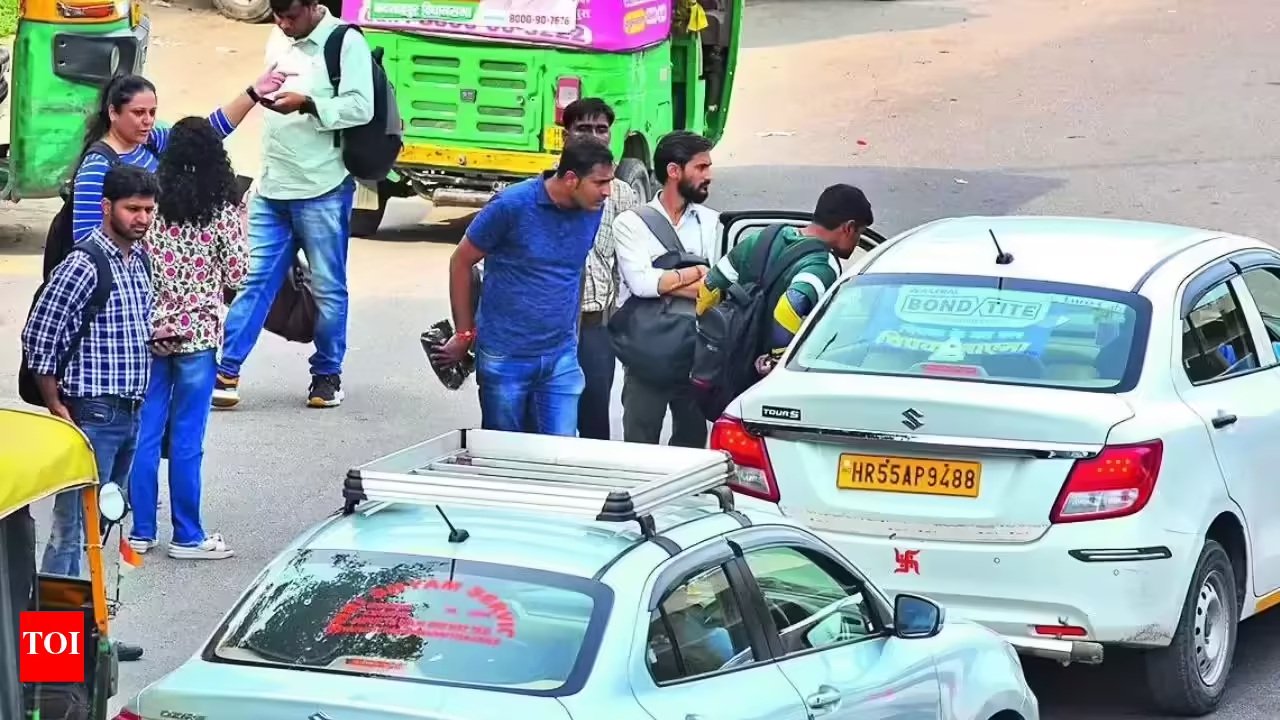
Gurugram Cab Drivers Strike Over Passenger Verification
App-based taxi services in Gurugram have witnessed partial disruption as a section of drivers has suspended operations through March 23, pressing for mandatory customer verification protocols to address rising safety concerns. The strike underscores a growing imbalance in platform-based mobility systems, where driver protection mechanisms are perceived to lag behind passenger safeguards. Drivers participating in the protest have called for the introduction of robust customer KYC processes, arguing that identity verification is essential to reduce risks from untraceable or fraudulent bookings. While drivers themselves undergo strict onboarding checks, including identity and background verification, they say similar standards are not consistently applied to passengers, creating asymmetry in accountability.
The issue has broader implications for the gig economy and urban mobility ecosystems. Ride-hailing services form a critical component of last-mile connectivity in rapidly expanding cities like Gurugram, where public transport gaps often push residents towards app-based travel. Any disruption—even temporary—can ripple through daily commuting patterns, particularly affecting office workers, service sector employees and late-night travellers. Drivers have also highlighted structural gaps in grievance redressal systems. In situations involving misconduct, threats or non-payment, they report limited access to real-time support. While most ride-hailing platforms provide emergency features such as SOS alerts, drivers contend that response times and enforcement mechanisms remain inconsistent, particularly during off-peak hours or inter-city trips. Urban mobility experts note that the demand for customer KYC reflects a deeper shift in platform governance debates. As cities rely more heavily on digital mobility services, questions around safety, accountability and data transparency are becoming central to policy frameworks. Balanced verification systems—covering both drivers and riders—are increasingly being viewed as essential for building trust within shared mobility networks.
The recent escalation of safety concerns has also been shaped by isolated but serious incidents involving drivers, prompting calls for systemic reform. Industry observers suggest that integrating verified identity layers, trip tracking enhancements and faster response protocols could mitigate risks without compromising user convenience. From an economic standpoint, prolonged service interruptions could affect both driver incomes and commuter costs. Early indications from affected areas suggest longer wait times and occasional ride cancellations, although fare volatility has remained limited so far. For a city positioning itself as a corporate and residential hub, the reliability of mobility services is closely tied to productivity and quality of life. The situation also intersects with broader urban sustainability goals. Safe and reliable shared mobility is critical to reducing private vehicle dependence and lowering emissions. However, without adequate safeguards for all stakeholders, adoption rates could be impacted, potentially reversing gains in sustainable transport adoption.
As discussions between driver groups and platform operators continue, the focus is likely to remain on creating a more equitable system. Whether customer KYC becomes a standard feature across ride-hailing platforms could shape the future of urban mobility governance, not just in Gurugram but across other fast-growing Indian cities.