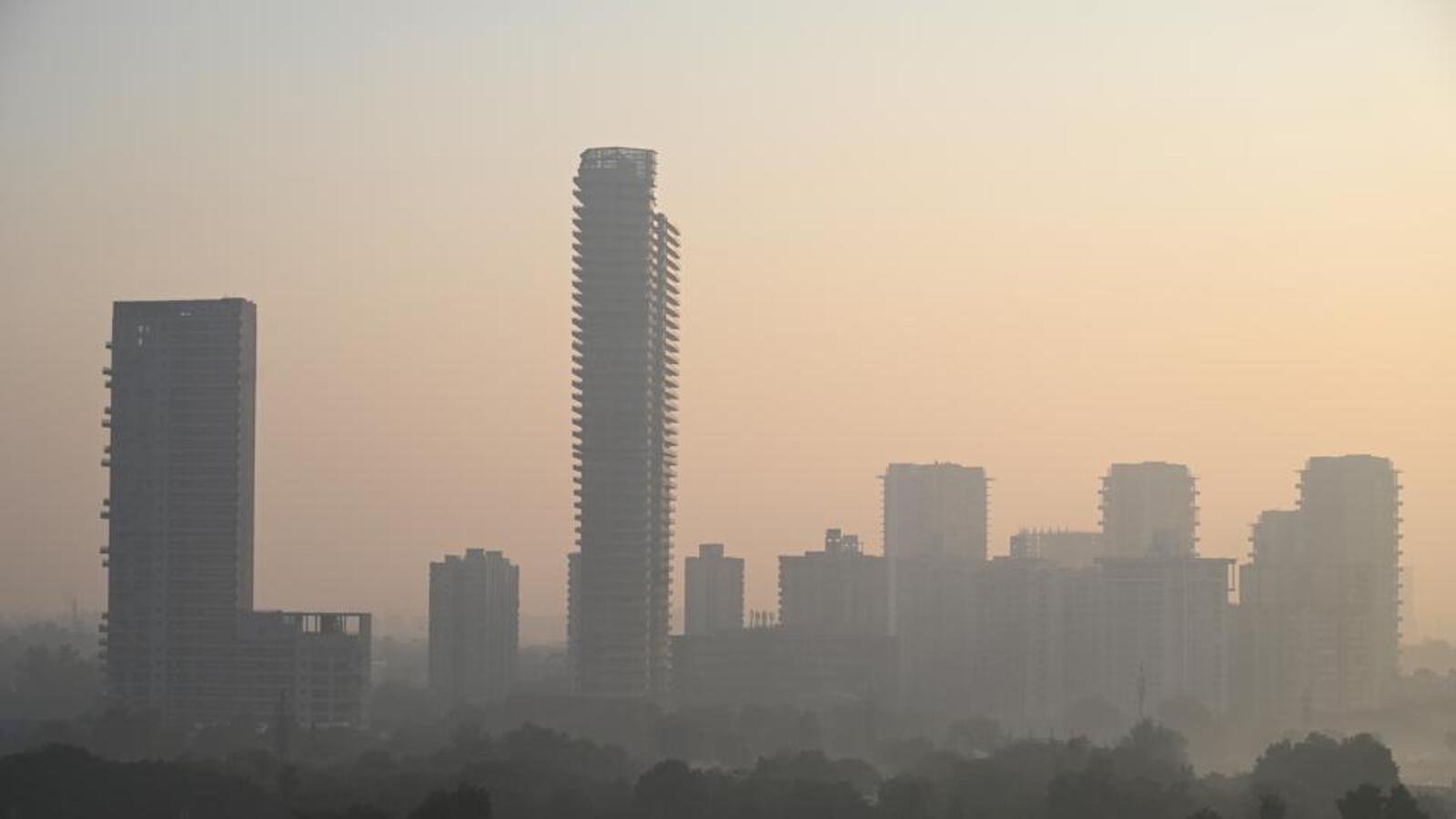
Gurugram Air Quality Worsens Raising Public Health Risks
A sharp deterioration in Gurugram air quality has pushed several parts of the city into the severe pollution category, raising fresh concerns over public health, urban planning gaps, and the effectiveness of ongoing mitigation measures. Real-time monitoring data on Sunday indicated that particulate pollution levels have surged well beyond safe limits, with some residential sectors emerging as high-risk zones. Data from city monitoring stations show that fine particulate matter (PM2.5), which penetrates deep into the lungs, has crossed 300 micrograms per cubic metre in certain areas—placing air quality firmly in the “severe” category. Coarser particles (PM10) have also remained significantly elevated. Urban planners note that such levels are not episodic anomalies but reflect a recurring pattern tied to construction dust, vehicular emissions, and regional atmospheric conditions.
The uneven spatial distribution of pollution within Gurugram is also becoming more pronounced. While certain pockets continue to experience hazardous air, relatively greener or less congested areas report moderately lower levels. This variation highlights disparities in urban density, road infrastructure, and proximity to emission sources such as highways and construction corridors. Experts tracking Gurugram air quality trends say the current spike is linked to a combination of local emissions and meteorological conditions. Low wind speeds, temperature inversions, and dry surface conditions can trap pollutants close to the ground, preventing dispersion. Additionally, ongoing infrastructure development and road dust resuspension contribute significantly to particulate pollution, especially in rapidly expanding urban clusters. From an economic perspective, worsening air quality carries measurable costs.
Health-related productivity losses, rising healthcare expenditure, and declining outdoor economic activity—particularly in retail and informal sectors—are increasingly tied to prolonged pollution episodes. For a city positioning itself as a corporate and residential hub, sustained environmental stress could also influence real estate demand and liveability rankings. Civic authorities have introduced dust-control measures, including mechanised road sweeping and stricter enforcement at construction sites. However, urban policy analysts argue that these interventions often remain reactive. Long-term improvements in Gurugram air quality would require systemic changes such as better public transport integration, decentralised work hubs to reduce commuting, and stricter compliance monitoring using digital tools. The situation also underscores the importance of integrating environmental resilience into city planning. Green buffers, urban forests, and permeable surfaces can help reduce dust and improve microclimates, but their implementation remains uneven across the region.
As pollution levels fluctuate, public health advisories continue to urge reduced outdoor exposure, especially for vulnerable groups. Going forward, the city’s ability to balance rapid infrastructure growth with environmental safeguards will be critical in determining whether such pollution spikes remain seasonal disruptions or become a more persistent urban challenge.