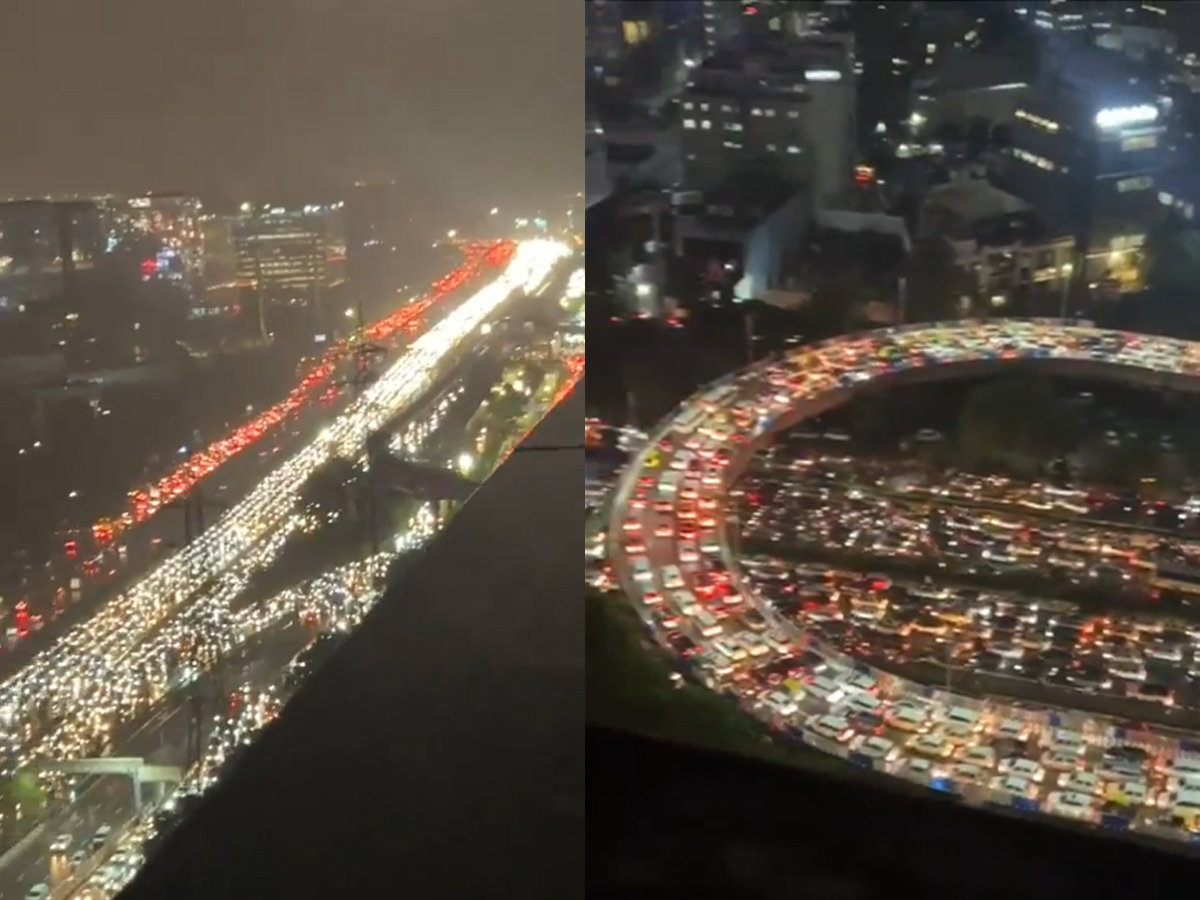
Gurgaon witnessed unprecedented disruption on Monday evening as over 100 mm of rainfall within four hours left the city paralysed. Major junctions, including the Delhi–Jaipur Expressway, were submerged, stranding thousands of commuters in gridlocked traffic and reigniting debate over the city’s fragile urban planning and drainage infrastructure.
Transport came to a standstill with vehicles stuck in kilometre-long queues, while videos of waterlogged underpasses and stalled buses went viral on social media. Officials confirmed that rainfall levels crossed the threshold that typically overwhelms the stormwater system, a reminder of how vulnerable India’s urban centres remain to extreme weather events.The District Disaster Management Authority issued an advisory urging schools and companies to switch to online operations for Tuesday. The Indian Meteorological Department followed with an orange alert for heavy to very heavy rain, warning of more downpours across Delhi NCR. Water levels in the Yamuna also remained high, raising concerns of spillover effects on adjoining neighbourhoods.
The impact was not limited to road congestion. Passengers reported prolonged delays across public transport systems, including the metro network. A combination of waterlogging, power interruptions and technical glitches aggravated the crisis, leaving thousands stranded well into the night.Urban planning experts argue that the recurring episodes of “Gurujam” underline a systemic failure to integrate sustainable drainage, green buffers and resilient mobility systems into the city’s expansion. Gurgaon, a hub for finance and technology, has grown rapidly over the past two decades, but its civic systems have not kept pace with demand. According to environmental planners, the encroachment of natural water channels and overreliance on impervious surfaces have severely reduced the city’s ability to absorb and channel excess rainwater.
The incident also revives questions on climate preparedness. With rainfall patterns becoming increasingly erratic due to climate change, cities like Gurgaon and Delhi cannot continue to treat flooding as an occasional inconvenience. Officials have often announced corrective measures, from desilting drains to expanding stormwater pipelines, but execution remains patchy. Businesses located in the city’s corporate clusters have highlighted the economic costs of such paralysis, warning that productivity losses are magnified when basic commuting collapses.
The Gurgaon episode is part of a larger pattern across Indian metros where extreme rainfall exposes infrastructural deficits. For citizens, it is not merely about delays but about safety, health risks from waterborne diseases, and the question of whether urban centres can deliver a dignified standard of living. Unless governments commit to equitable and eco-friendly urban planning, resilient infrastructure and carbon-neutral city models, the cycle of disruption may continue.