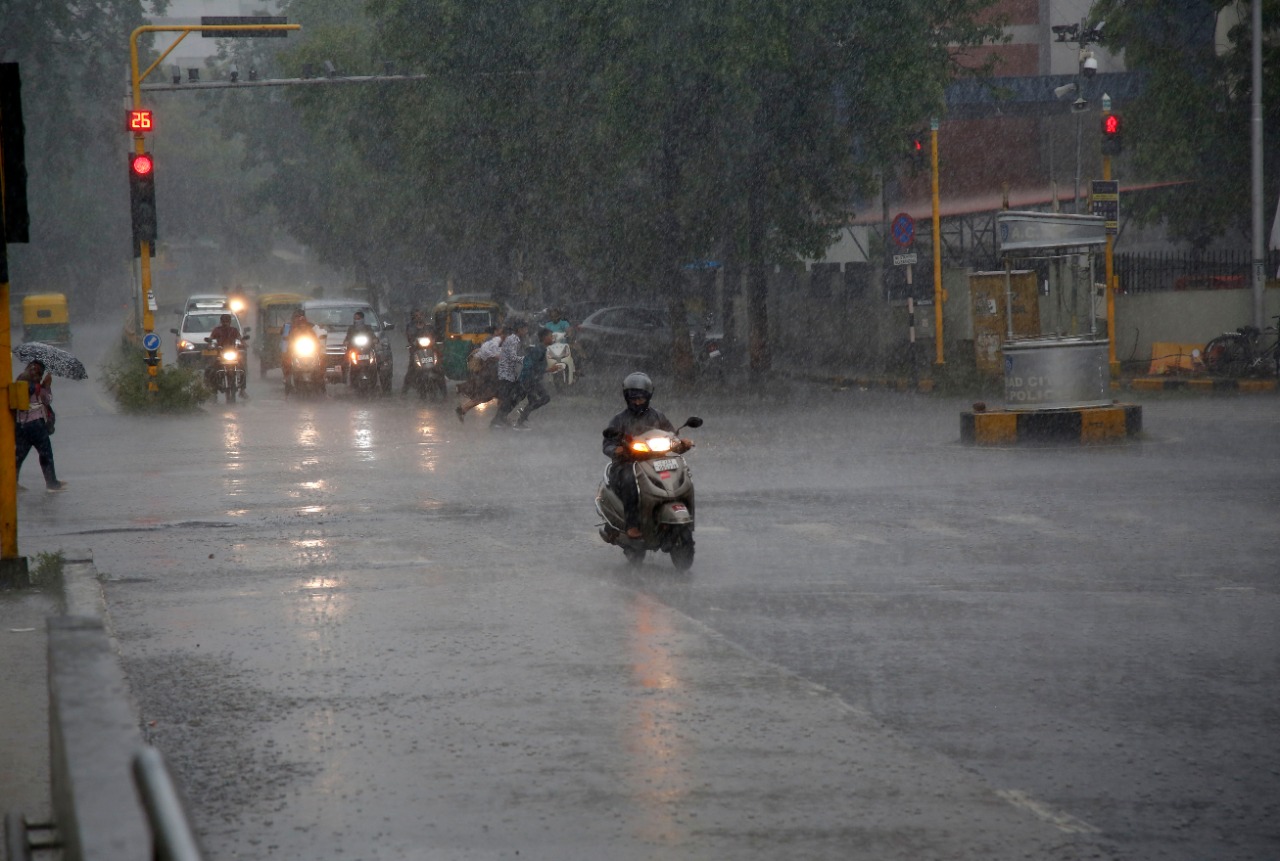
Unseasonal heavy rains have once again unsettled Gujarat’s agrarian economy this week, with 13 districts placed under a yellow weather alert as flooding and crop damage mount. The persistent rainfall, reminiscent of the monsoon season, has left large stretches of farmland waterlogged, threatening the state’s already strained rural income and food production.
According to the Meteorological Department, the rain-bearing system hovering over Gujarat is expected to bring intermittent downpours over the next four days, particularly in Kutch, Banaskantha, Patan, Devbhumi Dwarka, Porbandar, Junagadh, Gir Somnath, Amreli, Bhavnagar, Bharuch, Surat, Navsari, and Valsad. Despite the official end of the monsoon, the state has already recorded over 120% of its seasonal rainfall far exceeding typical averages for this time of year.
Agricultural experts warn that this excessive moisture could severely affect standing crops such as cotton, groundnut, and pulses, which were in their final harvesting stages. Farmers in Saurashtra and South Gujarat, many of whom depend on dry spells for post-monsoon cultivation, now face potential yield losses running into crores.
“Such extreme rain events, especially during the Kartik month, reflect the growing instability in weather cycles linked to climate change,” noted a senior agricultural economist from the state’s agriculture department.In response, the state government has directed five senior officials to assess ground conditions and coordinate relief operations in the hardest-hit regions. The Chief Minister is closely monitoring the evolving situation through the State Emergency Operation Centre, maintaining continuous communication with district collectors to ensure quick response and damage assessment.
The assigned officials have been instructed to personally visit affected villages, interact with farmers, and supervise the process of documenting losses for compensation. They will also review the functioning of drainage systems and the immediate restoration of damaged rural infrastructure.Urban centres have also been impacted, with Ahmedabad and surrounding regions witnessing late-night showers that submerged low-lying neighbourhoods and disrupted traffic. Waterlogging and inadequate stormwater infrastructure once again exposed the city’s vulnerability to unseasonal weather patterns a recurring challenge for urban planners in achieving climate-resilient cities.
The recurring intensity of off-season rainfall across Gujarat raises deeper questions about the state’s preparedness for climate variability. Experts emphasise the urgent need for sustainable water management, climate-adaptive farming, and early-warning systems that safeguard both urban and rural livelihoods.As Gujarat continues to experience unpredictable weather, the focus must shift from short-term relief to long-term resilience ensuring that the state’s economic backbone, agriculture, is protected against future climatic disruptions.
Gujarat reels under unseasonal rain, yellow alert in 13 districts