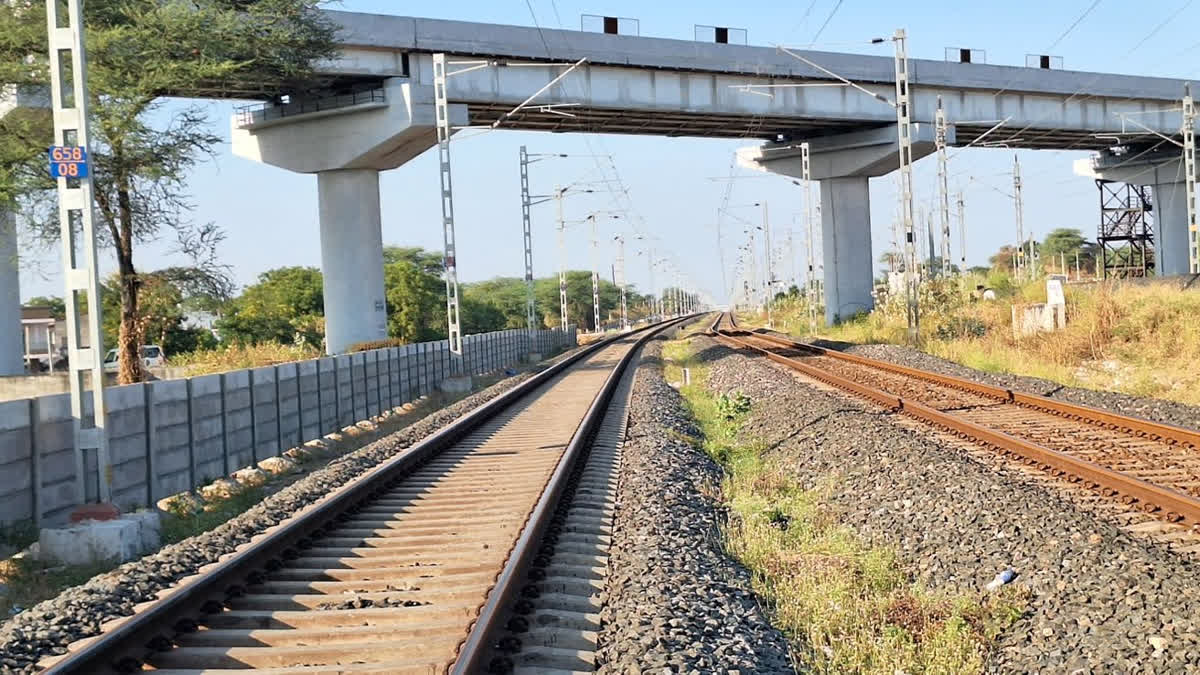
Gujarat is poised for a significant upgrade in its railway infrastructure with the announcement of new projects worth over Rs 1,400 crore, slated for dedication on August 25. Officials said these initiatives are expected to strengthen connectivity across North Gujarat, particularly benefiting Mahesana, Patan, Banaskantha, Gandhinagar, and Ahmedabad districts. The developments are anticipated to spur industrial growth, enhance logistics efficiency, and generate employment opportunities across the region.
The projects include the doubling of the 65-km Mahesana–Palanpur rail line at a cost of Rs 537 crore, gauge conversion of the 37-km Kalol–Kadi–Katosan line at Rs 347 crore, and gauge conversion of the 40-km Bechraji–Ranuj line at Rs 520 crore. According to railway officials, the addition of broad-gauge capacity will allow smoother and safer movement of passengers and freight, supporting regional economic integration.
Experts emphasise that track doubling will notably increase line capacity, paving the way for higher-speed trains along the Ahmedabad–Delhi corridor. This improvement will facilitate the introduction of more passenger services and improve the efficiency of freight operations, thereby providing fresh impetus to trade and commerce across Gujarat. The enhanced rail connectivity is also expected to ease daily commuting for residents and offer more seamless travel for tourists, while supporting the state’s broader sustainable transport and urban planning goals. Officials highlighted that these railway projects are aligned with India’s long-term objectives of creating eco-friendly and efficient transport networks. Modernisation of tracks and gauge conversions will allow faster, more reliable train services while reducing energy consumption per tonne-kilometre for freight, contributing to a lower carbon footprint in the transport sector.
Infrastructure planners noted that by increasing line capacity and integrating advanced signalling and track systems, the projects will not only enhance safety but also optimise travel time, aligning with regional development plans. The expansion is expected to create a ripple effect, boosting industrial clusters and stimulating socio-economic growth along the improved corridors. Railway department officials said that the projects have been executed with a focus on sustainability, safety, and operational efficiency. They underscored that the new developments will serve as a model for future railway initiatives aimed at combining high-speed connectivity with environmental responsibility.