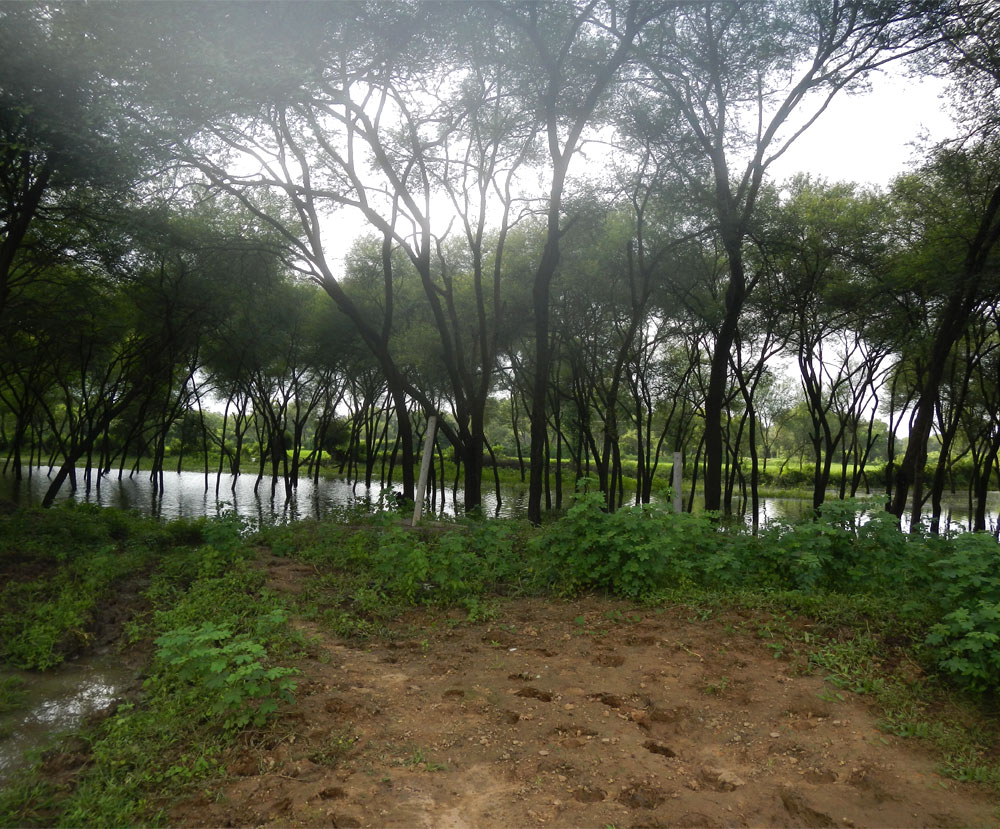
Gujarat is preparing a large-scale ecological intervention along its river systems, with the state government moving to green the banks of every major and minor river as part of a broader climate adaptation and air quality strategy. The initiative, covering all 185 rivers across diverse ecological zones, marks one of the most extensive riverine afforestation efforts attempted by any Indian state.
Officials involved in the planning say the programme is intended to address multiple challenges at once: declining green cover, rising urban and industrial emissions, soil degradation, and increasing climate variability. By transforming river edges into continuous green buffers, the state aims to strengthen natural carbon sinks while improving microclimates in nearby settlements and agricultural zones. Data from the latest national forest assessment shows Gujarat’s forest and tree cover remains below the national average, occupying just over a tenth of the state’s land area. Environmental planners argue that riverbanks offer a rare opportunity to expand green infrastructure without competing directly with urban growth or productive farmland, provided land identification is done carefully.
To that end, the forest department has begun a detailed mapping exercise using geographic information systems to demarcate river boundaries and identify suitable parcels for plantation. Officials say the process will include verification of government-owned and unused land, ensuring that future infrastructure corridors, flood-control works, and irrigation assets are not compromised. Once earmarked, these stretches will be reserved exclusively for ecological restoration. The scope of the programme spans the state’s varied geography, including rivers in the industrial belts of south Gujarat, the semi-arid landscapes of Saurashtra, and the ecologically sensitive zones of Kutch. Urban development experts note that riverbank greening in fast-growing cities can also serve as a natural defence against flooding, heat stress, and erosion risks that are expected to intensify with climate change.
Beyond environmental benefits, the initiative carries economic implications. Health researchers link increased tree cover with lower particulate pollution and reduced public health costs over time. Rural economists also point out that stabilised riverbanks and improved soil moisture can support downstream agriculture, particularly in rain-dependent regions. Industry observers say the success of the programme will depend on species selection, maintenance, and community participation. Past plantation drives have sometimes struggled with survival rates due to inadequate aftercare and water stress. Officials involved in the planning indicate that region-specific native species will be prioritised to improve resilience and biodiversity outcomes.
Urban planners see the move as part of a gradual shift towards nature-based solutions in infrastructure planning. As cities expand and climate risks grow, integrating green systems into land-use decisions is increasingly viewed as essential rather than optional. In the coming months, the state is expected to release district-wise implementation schedules and survival benchmarks. If executed effectively, the riverbank greening drive could redefine how Gujarat balances development with ecological stability using its river networks not just as water channels, but as long-term climate assets.
Gujarat govt plans greening drive along all riverbanks