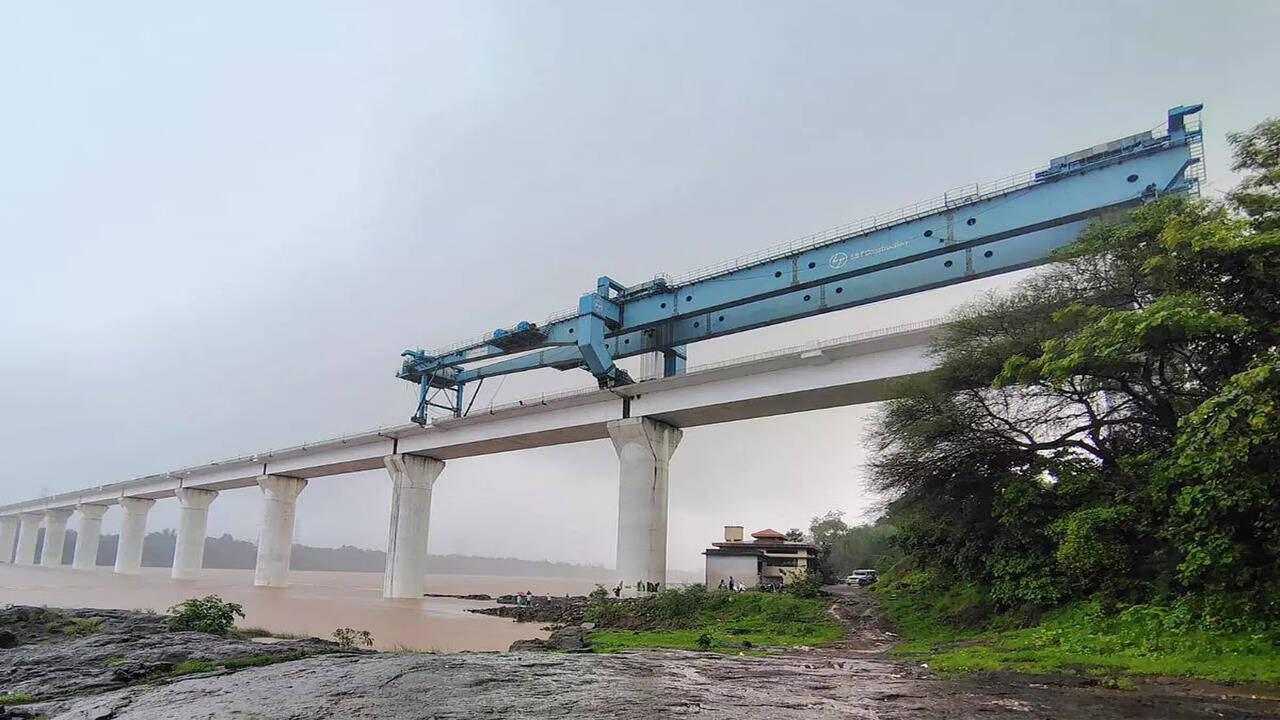
Gujarat Finishes 16th River Bridge for Mumbai-Ahmedabad Bullet Train Project
Gujarat has marked a significant stride in the development of the Mumbai-Ahmedabad Bullet Train project with the National High Speed Rail Corporation Limited (NHSRCL) announcing the completion of a crucial bridge over the Daman Ganga River in Valsad district. This accomplishment represents the sixteenth river bridge finished for the ambitious high-speed rail corridor in Gujarat, out of a total of twenty-one planned. The completion of this 360-metre structure is a testament to the accelerated pace of infrastructure development, promising enhanced connectivity and economic integration across the region, while underlining a commitment to modern, sustainable transportation solutions.
The completion of the Daman Ganga river bridge signifies a major milestone, as it means all five river bridges within Valsad district for the Mumbai-Ahmedabad High-Speed Rail project are now finished. This concentrated progress within a single district highlights the focused execution strategy employed by the NHSRCL. Across the entire corridor, a total of twenty-five river bridges are under construction, each representing a complex engineering challenge that must be overcome to ensure the seamless flow of the high-speed rail network.
The Valsad district section of the bullet train corridor spans approximately 56 kilometres, including a 4.3-kilometre stretch within the Union Territory of Dadra and Nagar Haveli. This segment, extending from Zaroli village to Vaghaldara village, is particularly vital to the project. It not only incorporates the strategically important Vapi bullet train station but also includes a 350-metre tunnel, five river bridges, and one PSC (Pre-stressed Concrete) bridge. The successful completion of these structures is fundamental to maintaining the project’s momentum and adhering to its ambitious timeline.
The newly completed bridge over the Daman Ganga River is an engineering marvel, stretching 360 metres and incorporating nine full-span girders. Its strategic location between the upcoming Boisar and Vapi bullet train stations is crucial for ensuring smooth transitions along the high-speed route. Another significant river bridge, spanning the Darotha River, has already been completed within this critical section, further solidifying the foundational infrastructure required for the bullet train’s operation.
Beyond the Daman Ganga and Darotha rivers, Valsad district has seen the completion of bridges over other key waterways, including the Auranga (320 metres), Par (320 metres), and Kolak (160 metres). Each of these structures represents a complex feat of modern engineering, designed to withstand the rigours of high-speed rail operations and the natural forces of the rivers they traverse. The consistent progress on these bridge constructions demonstrates the technical expertise and logistical efficiency driving the project forward.
The Daman Ganga River itself holds significant ecological and economic importance for the region. Originating from the Sahyadri hills near Valveri village in Maharashtra’s Nashik district, it flows for approximately 131 kilometres, traversing Maharashtra, Dadra and Nagar Haveli, and Daman before merging with the Arabian Sea. The river’s basin is home to vital industrial towns such as Vapi, Dadra, and Silvassa, underscoring its role in regional development and sustenance.
Furthermore, the Madhuban Dam on the Daman Ganga River is a critical water resource project, providing essential irrigation, water supply, and power generation benefits to both Gujarat and the Union Territories of Dadra and Nagar Haveli and Daman and Diu. The construction of the bullet train bridge over such a vital waterway necessitates careful environmental consideration and adherence to sustainable construction practices, ensuring minimal ecological impact while delivering transformative infrastructure.
The ongoing progress of the Mumbai-Ahmedabad Bullet Train project, exemplified by the completion of these critical river bridges, signifies a leap forward in India’s transportation infrastructure. This high-speed corridor is envisioned to not only reduce travel times significantly but also to catalyse economic growth, foster regional integration, and support the development of smart, sustainable cities. The meticulous planning and execution of these complex engineering tasks underscore a national commitment to modern, efficient, and environmentally conscious urban and regional development.