


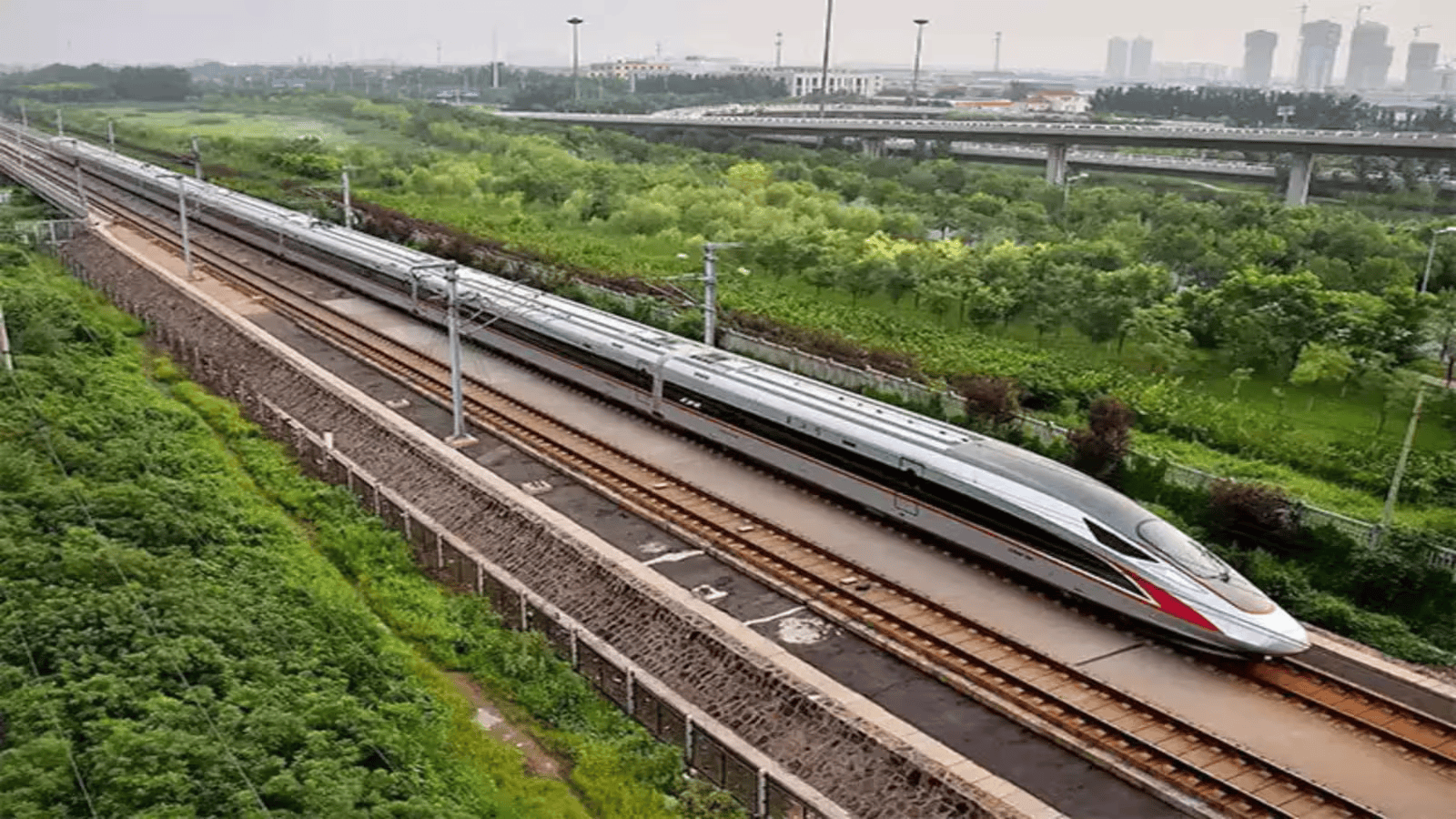
The Mumbai-Ahmedabad high-speed rail corridor has seen significant engineering progress in Gujarat, as over 160 km of track bed has been laid across the state.
The update comes as a boost to India’s ambitions of building an energy-efficient and technologically advanced railway network, aligned with broader goals of sustainable urban development. The National High Speed Rail Corporation Ltd (NHSRCL), which is spearheading the ₹1.1 lakh crore bullet train project, reported that the process of laying track slabs and injecting Cement Asphalt Mortar (CAM) is well underway across multiple viaducts. This precision work is vital to ensure the train’s high-speed safety and alignment on the elevated corridors. More than 39,500 precast track slabs—nearly 197 track kilometres—have already been manufactured and are steadily being installed.
One of the critical technical breakthroughs in this phase is the successful implementation of Flash Butt Welding (FBW), a process that fuses 25-metre-long, 60-kg rails into seamless 200-metre panels. So far, 1,543 such panels—totalling over 154 km of track—have been welded at various construction bases. The mechanised process is key to reducing friction, improving longevity, and ensuring the track remains safe at speeds of up to 320 km/h. What sets this phase apart is the indigenous nature of the machinery involved. In a strong nod to the Make in India initiative, all primary equipment—such as Rail Feeder Cars (RFCs), Track Slab Laying Cars (SLCs), and CAM Injection Cars—have been designed and manufactured domestically.
This not only minimises import reliance but also strengthens India’s engineering capabilities for future infrastructure projects. Operating currently in cities like Surat, Bilimora, Vadodara, and Anand, these machines are laying temporary and permanent tracks with precision and speed. The Rail Feeder Cars have helped install over 78 km of temporary tracks, which are essential for moving material and machinery during construction. Meanwhile, the SLCs and CAM Injectors ensure the precast slabs are accurately placed and cemented into position—maintaining exacting standards necessary for bullet train operations.
This high-speed corridor is not just an infrastructure story; it is a narrative of green ambition and urban transformation. When completed, the Mumbai-Ahmedabad bullet train is expected to significantly reduce carbon emissions by shifting road and air travellers to a cleaner rail-based system. The use of CAM technology, elevated viaducts, and indigenous systems further reduce the project’s ecological footprint. While the project continues to face scrutiny over delays and land acquisition issues, the latest construction milestones underscore the engineering resolve behind one of India’s most ambitious transport initiatives.
It is not only a story of fast trains but also of how India is recalibrating its urban transport future—one kilometre at a time. As the bullet train route steadily takes shape in Gujarat, it signals more than just speed. It is an indication of the country’s maturing technological strength, a push for greener mobility, and a new era for Indian railways that values both velocity and sustainability.
Also Read :High Speed Mumbai Ahmedabad Bullet Train by 2028
